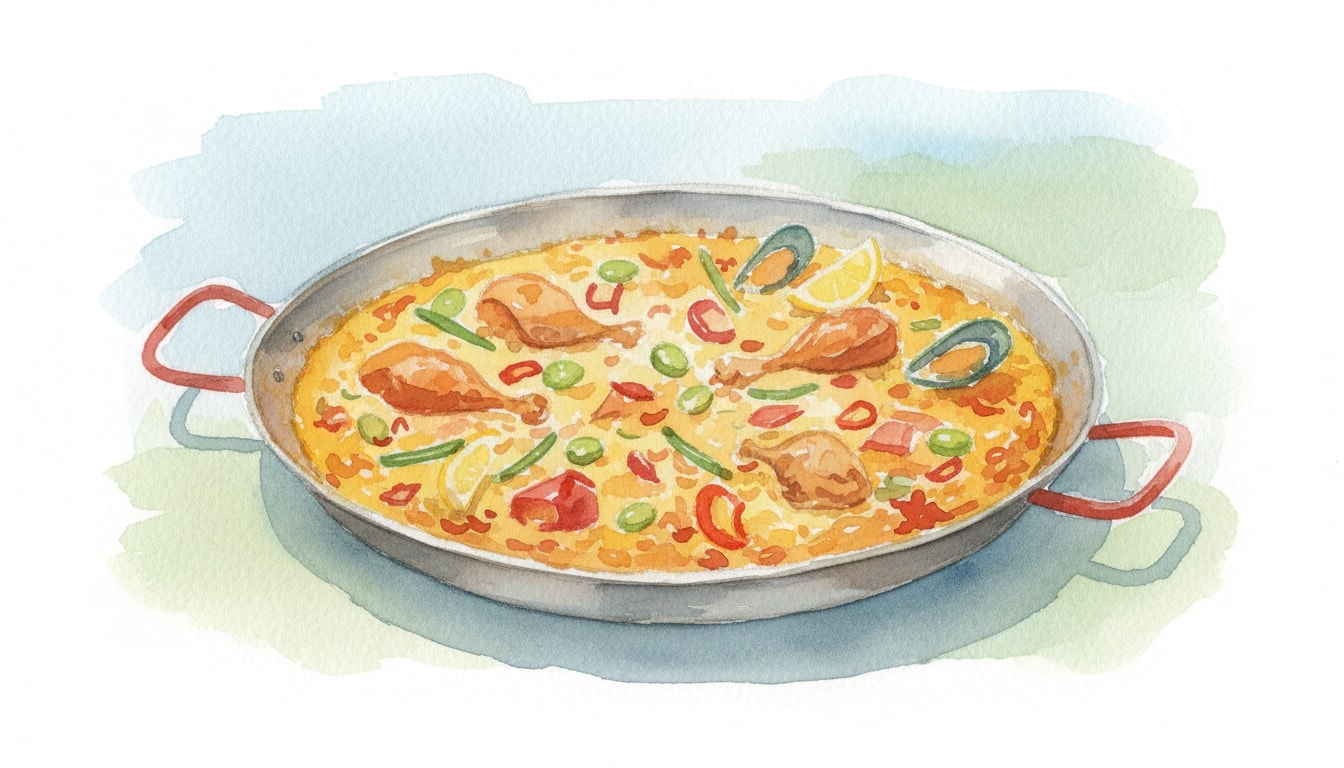
Equipment
Ingredients
Proteins
- 500 g chicken thighs and drumsticks, bone-in, skin-on, chopped into 5cm pieces
- 400 g rabbit, cleaned, chopped into 5cm pieces
Vegetables & Aromatics
- 250 g flat green beans (ferraura), trimmed and cut into 3cm lengths
- 150 g butter beans (garrofó), fresh or hydrated dried
- 200 g ripe tomatoes, grated, skin discarded
- 120 ml extra virgin olive oil
- 1 fresh rosemary, whole sprig
Rice & Spices
- 400 g bomba rice, uncooked
- ½ g saffron threads, crushed slightly
- 5 g sweet paprika (pimentón dulce)
- 1200 ml water, hot
- 12 g salt
Nutrition (per serving)
Nutrition is estimated per serving. Nutrients without complete source data are omitted.
Full nutrition
- Calories
- 1272 kcal
- Protein
- 68 g
- Carbohydrates
- 111 g
- Fat
- 60 g
- Fiber
- 11 g
- Sugar
- 7 g
- Sodium
- 1331 mg
- Saturated Fat
- 13 g
- Trans Fat
- 0 g
- Monounsaturated Fat
- 33 g
- Polyunsaturated Fat
- 10 g
- Cholesterol
- 209 mg
- Potassium
- 1600 mg
- Calcium
- 128 mg
- Iron
- 11.6 mg
- Magnesium
- 178 mg
- Phosphorus
- 722 mg
- Zinc
- 6.4 mg
- Vitamin A
- 102 mcg
- Vitamin C
- 15 mg
- Vitamin D
- 0.1 mcg
- Vitamin E
- 6.3 mg
- Vitamin K
- 56 mcg
- Vitamin B6
- 1.3 mg
- Vitamin B12
- 7.3 mcg
- Thiamin
- 1.00 mg
- Riboflavin
- 0.56 mg
- Niacin
- 18.6 mg
- Folate
- 421 mcg
- Water
- 561 g
Sources: USDA FoodData Central
Method
Place the paella pan over medium heat and ensure it is perfectly level. Add the olive oil and sprinkle a pinch of salt around the rim of the pan (this helps prevent burning later).
Add the chicken and rabbit pieces. Fry slowly and patiently until deeply golden brown on all sides. This step is crucial for flavor development.
Push the meat to the outer edges of the pan. Add the flat green beans and butter beans to the center. Sauté until the beans begin to blister slightly.
Push the vegetables to the edge with the meat. Add the grated tomato to the center. Cook until the water from the tomato evaporates and it turns into a dark red paste. Just before adding water, stir in the paprika for 10 seconds (do not burn it).
Pour in the water. Stir everything to combine the meat, vegetables, and fond. Increase heat to high and bring to a vigorous boil. Add the saffron and rosemary sprig. Boil for 5-8 minutes to infuse the broth.
Remove the rosemary sprig. Add the rice, distributing it evenly across the pan. You can arrange it in a cross shape first to ensure quantity is right relative to liquid, then spread it. Once spread, DO NOT STIR again.
Reduce heat to medium-low. Allow the liquid to simmer gently until it has almost completely evaporated. The rice should be tender but with a slight bite ('al dente').
To form the 'socarrat': Increase heat to high for 60-90 seconds. Listen closely for a crackling sound (like frying), which indicates the bottom layer is caramelizing. If you smell burning, remove immediately.
Remove from heat. Cover the pan with a clean kitchen towel or newspaper and let it rest for 5 minutes before serving. This allows the moisture to equalize and the rice to finish cooking in its own steam.
Chef's Notes
- True Paella Valenciana never contains chorizo or seafood (that is 'Paella Mixta').
- If you cannot find rabbit, you can use all chicken, but the flavor profile will lack the traditional gaminess.
- The water hardness matters; traditional recipes often rely on the mineral content of Valencia's water. If your tap water is very soft, add a pinch more salt.
- Serve directly from the pan, ideally with wooden spoons, scraping the socarrat from the bottom.
Storage
Refrigerator: 2 days — Rice texture degrades in fridge; loses the crispy texture.
Reheating: Reheat in a pan with a splash of water to steam, but initial quality cannot be fully restored.
Troubleshooting
Rice is hard but liquid is gone
Cause: Heat was too high, evaporating liquid before rice cooked
Fix: Add small amount of hot water if very undercooked, but this affects texture
Prevention: Maintain a steady boil, not a violent one
Rice is mushy
Cause: Too much water, too much stirring, or wrong rice variety
Prevention: Measure liquid precisely (3:1 for Bomba); do not stir
Socarrat is black and bitter
Cause: Heat too high or left too long during finishing step
Fix: Serve top layer carefully
Prevention: Trust your nose; smell toast, not charcoal
Cultural Context
Paella originated in the fields of Valencia near the Albufera lagoon. It was a lunchtime meal for farmers, cooked over orange wood fires, using ingredients available in the countryside: rice, tomatoes, beans, and small game.