Equipment
Ingredients
Protein and Base
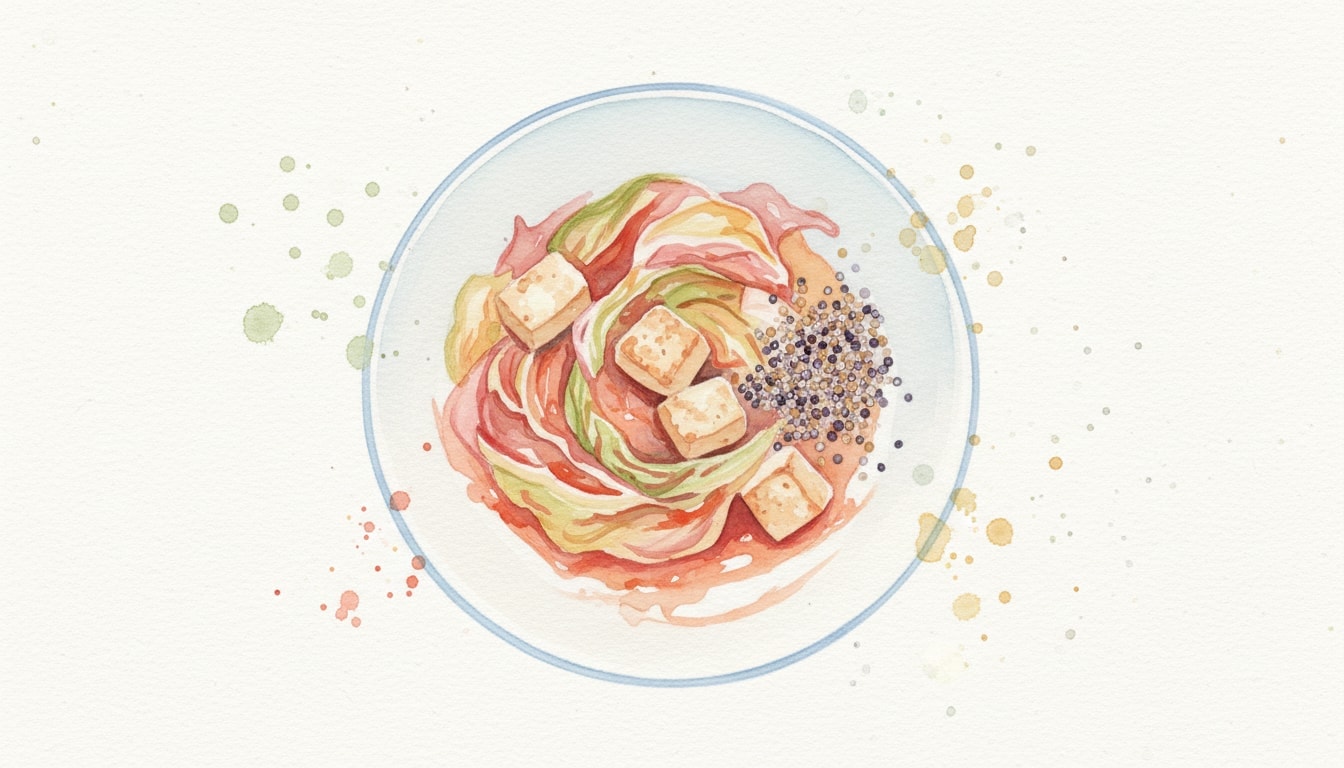
- 340 g extra-firm tofu, cut into 0.5cm x 1cm x 4cm slabs
- 30 ml vegetable oil
- 1 cabbage, quartered, cored, and sliced crosswise
Aromatics and Seasoning
- 100 g onion, sliced
- 1 scallion, thinly sliced, whites and greens separated
- 2 garlic, minced
- 15 g ginger, minced
- 15 ml soy sauce
- 1 g cayenne pepper, ground
- 45 ml sherry vinegar
- 17 g granulated sugar
- 6 g sesame seeds, toasted
Serving
- 200 g bulgur, cooked
Nutrition (per serving)
Nutrition is estimated per serving. Nutrients without complete source data are omitted.
Full nutrition
- Calories
- 404 kcal
- Protein
- 17 g
- Carbohydrates
- 63 g
- Fat
- 13 g
- Fiber
- 12 g
- Sugar
- 13 g
- Sodium
- 268 mg
- Saturated Fat
- 1 g
- Trans Fat
- 0 g
- Monounsaturated Fat
- 7 g
- Polyunsaturated Fat
- 4 g
- Potassium
- 736 mg
- Calcium
- 423 mg
- Iron
- 8.4 mg
- Magnesium
- 144 mg
- Phosphorus
- 312 mg
- Zinc
- 2.2 mg
- Vitamin A
- 17 mcg
- Vitamin C
- 77 mg
- Vitamin E
- 2.1 mg
- Vitamin K
- 163 mcg
- Vitamin B6
- 0.5 mg
- Thiamin
- 0.34 mg
- Riboflavin
- 0.21 mg
- Niacin
- 3.5 mg
- Folate
- 122 mcg
- Water
- 293 g
Sources: Aggregated Public Data, USDA FoodData Central
Method
Pat the tofu slabs dry using paper towels to ensure a crisp sear.
Heat 15ml (1 tbsp) of vegetable oil in a wok or large nonstick skillet over medium-high heat (190°C/375°F).
Add the tofu to the hot oil and cook for 2 to 3 minutes, turning occasionally, until the surfaces are lightly browned.
Pour 15ml (1 tbsp) of soy sauce over the tofu and stir-fry for 30 seconds to coat.
Transfer the seasoned tofu from the pan to a plate and set aside.
Add the remaining 15ml (1 tbsp) of oil to the same pan over medium-high heat (190°C/375°F).
Add the sliced onion and stir-fry for 3 minutes until it becomes crisp-tender.
Add the scallion whites, minced garlic, and minced ginger to the pan and stir-fry for 30 seconds until aromatic.
Add the cayenne pepper and the sliced cabbage to the pan, stir-frying for 2 minutes until the cabbage begins to wilt.
Stir in the sherry vinegar and sugar, then continue cooking for 3 to 5 minutes until the cabbage reaches a crisp-tender texture.
Return the tofu to the pan and toss with the cabbage. Season with additional soy sauce to taste, then stir in the scallion greens and optional sesame seeds.
Remove from heat and serve immediately over bulgur or your choice of grains.
Chef's Notes
- For extra crispy tofu, press it thoroughly to remove as much water as possible before slicing. You can also lightly dust the tofu with cornstarch before frying for an even crispier exterior.
- Don't overcrowd the pan when searing the tofu. Cook in batches if necessary to ensure all sides get a good sear and don't steam.
- The key to crisp-tender cabbage is to not overcook it. It should retain some bite and its vibrant green color. Stir-frying over high heat helps achieve this quickly.
- Taste and adjust the sweet and sour balance to your preference. You can add a touch more vinegar for more tang or sugar for more sweetness. A pinch of salt can also enhance the overall flavor.
- Toasted sesame seeds add a nutty aroma and visual appeal. Toast them gently in a dry pan over medium heat until fragrant, being careful not to burn them.
Storage
Refrigerator: 3 days — Store in an airtight container; cabbage will soften over time.
Reheating: Microwave or stir-fry briefly in a hot pan until warmed through.
Troubleshooting
Tofu sticks to the pan
Cause: Pan was not sufficiently heated or tofu was too wet
Fix: Allow tofu to sear undisturbed for longer until it releases naturally from the surface.
Prevention: Ensure oil is shimmering and tofu is thoroughly patted dry before adding to the pan.
Cabbage is soggy rather than crisp-tender
Cause: Pan was overcrowded or heat was too low, causing the cabbage to steam in its own moisture
Fix: Cannot be fixed
Prevention: Use the largest pan available and maintain high heat throughout the stir-fry process.
Cultural Context
Sweet and sour flavors are a hallmark of many Chinese regional cuisines, particularly Cantonese and Sichuan. This dish reflects the balance of 'yin' (sour) and 'yang' (sweet) in food, a fundamental concept in Chinese culinary philosophy. It's a versatile dish that can be adapted with various vegetables and proteins, showcasing the adaptability of home-style Chinese cooking.