
Equipment
* optional
Ingredients
Duck
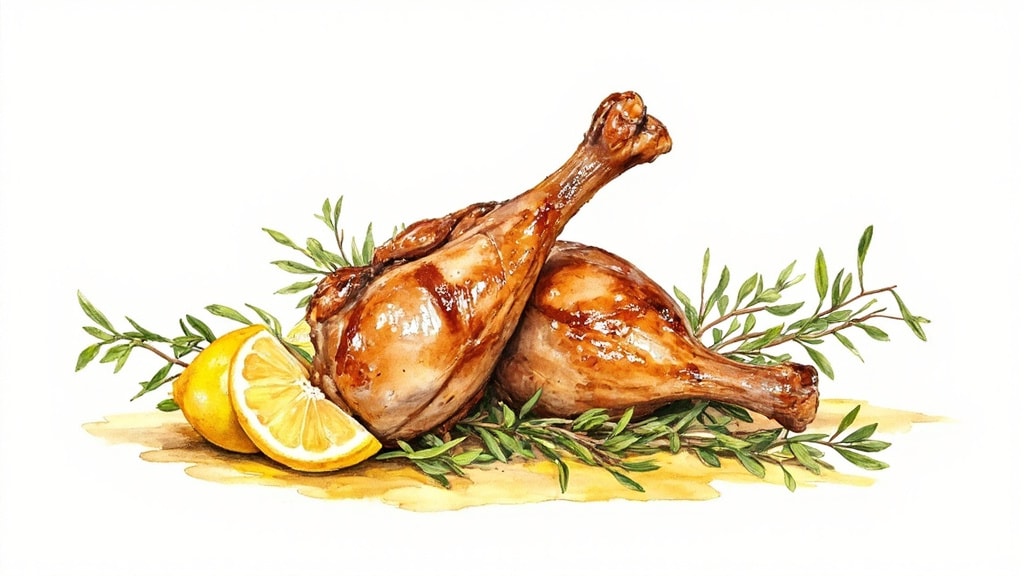
- 4 duck legs, whole, bone-in, skin-on
Seasoning
- 45 ml olive oil, extra virgin
- 6 garlic, crushed and minced
- 6 fresh thyme, leaves stripped from stems
- 10 g fine sea salt
- 3 g black pepper, freshly ground
- 1 lemon, halved
Nutrition (per serving)
Nutrition is estimated per serving. Nutrients without complete source data are omitted.
Full nutrition
- Calories
- 496 kcal
- Protein
- 49 g
- Carbohydrates
- 3 g
- Fat
- 31 g
- Sodium
- 1184 mg
- Saturated Fat
- 7 g
- Calcium
- 42 mg
- Iron
- 4.1 mg
- Vitamin C
- 10 mg
- Water
- 121 g
Sources: USDA FoodData Central, Aggregated Public Data
Method
Pat the duck legs completely dry with kitchen paper towels. Using a sharp knife, score the skin in a shallow crosshatch pattern, cutting through the skin and fat but not into the meat. This helps the fat render under the broiler.
In a mixing bowl, combine the olive oil, minced garlic, thyme leaves, salt, and black pepper. Stir into a loose paste.
Rub the seasoning paste all over the duck legs, working it into the scored skin. Place in the bowl or on a plate, cover, and leave to marinate at room temperature for 30 minutes, or refrigerate up to 4 hours and bring back toward room temperature for 20 minutes before cooking.
Position an oven rack so the duck will sit 15-20 cm/6-8 inches below the broiler element. Preheat the broiler to high, about 230-260°C/450-500°F, for 10 minutes. Set the duck legs skin-side down on the rack over the baking sheet and place the lemon half cut-side up beside them.
Broil skin-side down for 10 minutes, watching for smoke or flare-ups from dripping fat. The meat side should take on deep golden color and the edges should sizzle steadily.
Turn the legs skin-side up with tongs. Broil for a further 12-18 minutes, until an instant-read thermometer inserted into the thickest part of the thigh without touching bone reads 74°C/165°F, the juices run clear, and the skin is deeply browned and crisp. If the skin darkens too fast before the meat is done, move the rack one level lower or tent loosely with foil.
Transfer the duck legs to a warm plate and rest for 8-10 minutes. Resting lets the juices redistribute so the meat stays moist.
Plate the duck legs and squeeze the broiled lemon half over the top. Serve immediately while the skin is at its crispest, passing the fresh lemon half at the table.
Chef's Notes
- Score the skin shallowly but evenly; deep cuts into the meat let juices escape and dry out the leg under intense broiler heat.
- Duck legs are far more forgiving than breast under the broiler because their higher connective tissue and fat content stay succulent while reaching a fully cooked 74°C/165°F.
- Save the rendered fat from the baking sheet: strained and refrigerated, it keeps for weeks and makes exceptional roasted potatoes.
- A brief room-temperature temper before cooking promotes even doneness, so the center reaches safe temperature before the exterior over-browns.
- Broiling the lemon half caramelizes its sugars and softens its acidity, giving a rounder, sweeter squeeze over the rich meat.
Storage
Refrigerator: 3 days — Cool within 2 hours and store in an airtight container. Keep meat and rendered juices together to prevent drying.
Freezer: 3 months — Remove meat from the bone before freezing for best texture. Wrap tightly to prevent freezer burn.
Reheating: Reheat in a 175°C/350°F oven, covered loosely with foil, until the meat reaches 74°C/165°F throughout, about 15-20 minutes. Uncover for the last 5 minutes to re-crisp the skin.
Troubleshooting
Skin is browned but the meat has not reached 74°C/165°F inside
Cause: Broiler heat is too fierce relative to leg thickness, or the legs went in too cold from the refrigerator
Fix: Move the rack down one level, tent the legs loosely with foil, and continue cooking, checking the temperature every 5 minutes until it reaches 74°C/165°F
Prevention: Temper the duck 20-30 minutes before cooking and keep the rack 15-20 cm below the element
Heavy smoke or flare-ups in the oven
Cause: Rendered duck fat dripping onto a hot surface too close to the element
Fix: Switch the broiler off, open a window, move the pan to a lower rack, and finish at 200°C/400°F conventional heat until the meat reaches 74°C/165°F
Prevention: Always use a rack over a deep rimmed sheet so fat falls away, and pour off accumulated fat midway if needed
Skin is rubbery instead of crisp
Cause: Skin was damp before cooking or was not scored, trapping fat beneath it
Fix: Return the legs skin-side up under the hot broiler for 2-3 minutes, watching constantly; confirm the meat still reads at least 74°C/165°F before serving
Prevention: Pat the legs thoroughly dry and score the skin in a crosshatch before seasoning
Garlic tastes burnt and bitter
Cause: Minced garlic left exposed on the skin's surface scorched under direct heat
Fix: Gently scrape off blackened bits before serving and finish with fresh lemon to lift the flavor
Prevention: Rub most of the garlic into the scored cuts and the underside, keeping the top skin mostly coated in oil
Cultural Context
Duck is a cornerstone of French regional cooking, especially in the southwest, where birds are prized for both meat and their precious rendered fat. Rustic preparations like this one, with garlic, thyme, and olive oil, echo the farmhouse cooking of Gascony and the Dordogne, where simple seasoning lets the quality of the bird speak for itself. Serving duck fully cooked through, as home French cooks traditionally do with leg cuts, ensures both tenderness and safety.


