Equipment
Ingredients
Vegetables & Aromatics
- 400 g cauliflower, cut into small florets
- 250 g cherry tomatoes, whole
- 4 garlic, unpeeled cloves
Pantry Items
- 30 ml olive oil
- 200 ml vegetable broth
- 2 g red pepper flakes
- 5 g salt
- 2 g black pepper, freshly ground
Pasta
- 320 g penne pasta
Nutrition (per serving)
Nutrition is estimated per serving. Nutrients without complete source data are omitted.
Full nutrition
- Calories
- 410 kcal
- Protein
- 13 g
- Carbohydrates
- 69 g
- Fat
- 9 g
- Fiber
- 6 g
- Sugar
- 7 g
- Sodium
- 675 mg
- Saturated Fat
- 1 g
- Monounsaturated Fat
- 6 g
- Polyunsaturated Fat
- 1 g
- Potassium
- 654 mg
- Calcium
- 56 mg
- Iron
- 2.3 mg
- Magnesium
- 66 mg
- Phosphorus
- 217 mg
- Zinc
- 1.6 mg
- Vitamin A
- 7 mcg
- Vitamin C
- 58 mg
- Vitamin E
- 1.3 mg
- Vitamin K
- 21 mcg
- Vitamin B6
- 0.3 mg
- Thiamin
- 0.14 mg
- Riboflavin
- 0.12 mg
- Niacin
- 1.9 mg
- Folate
- 72 mcg
- Water
- 151 g
Sources: Aggregated Public Data, USDA FoodData Central
Method
Preheat the oven to 200 degrees Celsius or 400 degrees Fahrenheit. Line a baking sheet with parchment paper.
Place the cauliflower florets, whole cherry tomatoes, and unpeeled garlic cloves on the prepared baking sheet. Drizzle with the olive oil and toss well to coat everything evenly. Roast for 25 minutes until the cauliflower is tender with browned edges and the tomatoes have burst.
While the vegetables are roasting, bring a large pot of heavily salted water to a rolling boil. Add the penne and cook according to package instructions until al dente, usually about 10 minutes. Reserve 100 milliliters of the starchy pasta water before draining.
Remove the roasted vegetables from the oven. Carefully squeeze the softened garlic out of their skins, discarding the papery peels.
Transfer the roasted cauliflower, burst tomatoes, peeled roasted garlic, vegetable broth, red pepper flakes, salt, and black pepper into a high-speed blender. Blend on high until completely smooth and velvety.
Return the drained penne to the large pot over low heat. Pour the blended cauliflower-tomato sauce over the pasta. Toss gently to coat, adding the reserved pasta water a splash at a time until the sauce reaches a glossy consistency that clings tightly to the penne.
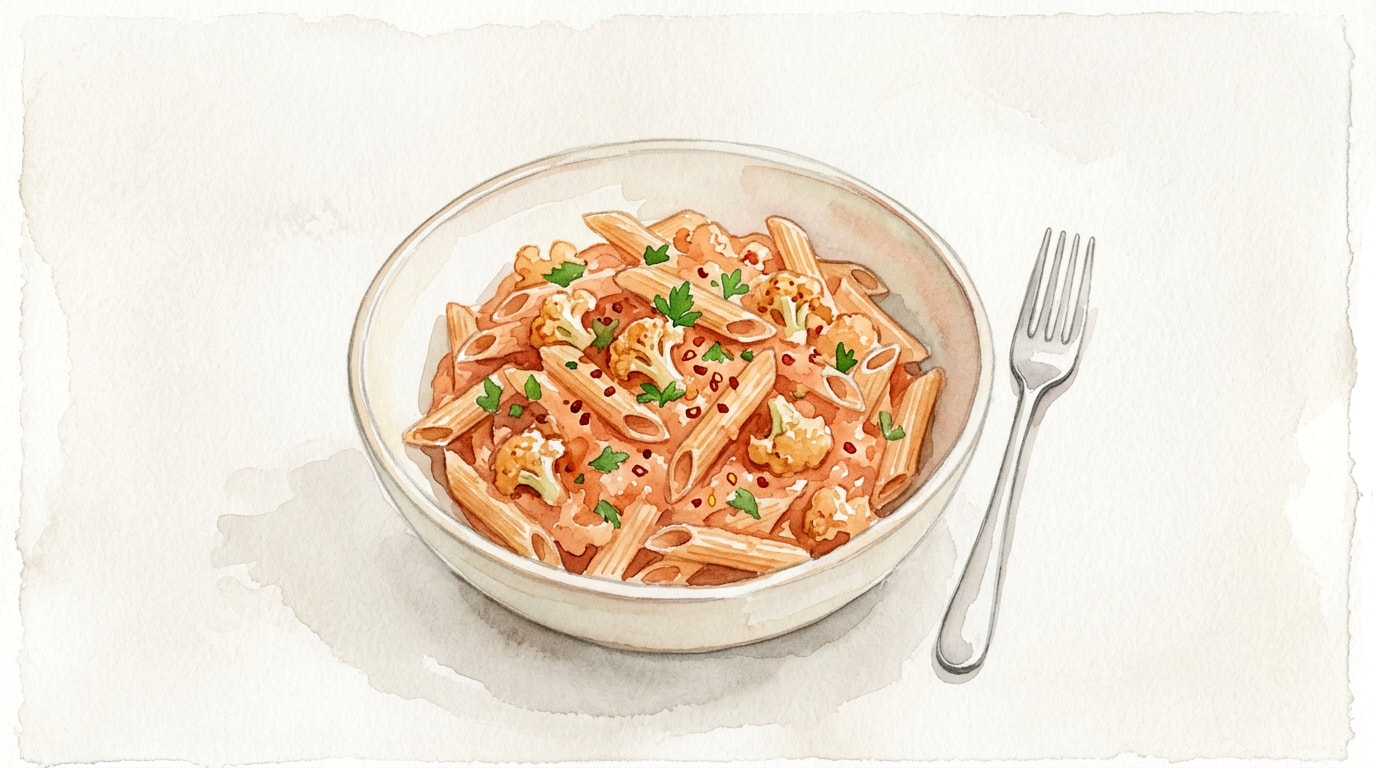
Divide the creamy, spicy pasta among warmed bowls. Garnish with an extra pinch of red pepper flakes and a light drizzle of fresh olive oil if desired. Serve immediately.
Chef's Notes
- Roasting the garlic in its skin protects it from burning in the high heat while developing a sweet, mellow, almost jammy flavor profile.
- Do not skip reserving the pasta water. The starches in the water are crucial for emulsifying the plant-based sauce so it clings beautifully to the ridges of the penne.
- For an even richer sauce profile, you can substitute a quarter of the vegetable broth with unsweetened oat milk, cashew cream, or full-fat coconut milk.
- To adjust the spice level safely, start with half the recommended amount of red pepper flakes. You can always blend more in after tasting the finished sauce.
Storage
Refrigerator: 3 days — Store sauce and pasta separately if possible to prevent the pasta from becoming mushy.
Freezer: 1 month — Freeze the sauce only. Do not freeze combined pasta.
Reheating: Reheat gently on the stovetop over medium-low heat, adding a splash of water or broth to loosen the sauce to its original creamy texture.
Troubleshooting
Sauce feels gritty or grainy instead of smooth
Cause: The cauliflower was under-roasted or the blender is not powerful enough
Fix: Continue blending for an additional 1 to 2 minutes, adding a tablespoon of hot water or olive oil to encourage a smoother emulsion
Prevention: Ensure cauliflower is roasted until completely soft before blending
Sauce is too thick and clumpy when mixed with pasta
Cause: Not enough liquid to coat the volume of pasta
Fix: Stir in warm vegetable broth or hot water 15 milliliters at a time until the sauce loosens
Prevention: Always reserve starchy pasta water before draining the noodles
Cultural Context
While traditional Italian cream sauces rely heavily on dairy elements like heavy cream, butter, and cheese, modern adaptations frequently utilize vegetables like cauliflower to achieve similar velvety textures. This technique honors the historical Italian philosophy of cucina povera, resourcefully transforming humble, accessible ingredients into rich, comforting meals.