Equipment
Ingredients
Pasta and Aromatics
- 400 g spaghetti
- 4000 ml water
- 30 g kosher salt
- 15 ml olive oil
- 2 garlic, minced
Sauce Components
- 100 g prosciutto, torn into bite-sized pieces
- 200 ml heavy cream
- 150 g frozen peas
- 50 g parmesan cheese, freshly grated
- 2 g black pepper, freshly cracked
Nutrition (per serving)
Nutrition is estimated per serving. Nutrients without complete source data are omitted.
Full nutrition
- Calories
- 718 kcal
- Protein
- 28 g
- Carbohydrates
- 79 g
- Fat
- 30 g
- Fiber
- 5 g
- Sugar
- 6 g
- Sodium
- 3364 mg
- Saturated Fat
- 15 g
- Trans Fat
- 1 g
- Monounsaturated Fat
- 8 g
- Polyunsaturated Fat
- 1 g
- Cholesterol
- 65 mg
- Potassium
- 475 mg
- Calcium
- 215 mg
- Iron
- 3.2 mg
- Magnesium
- 20 mg
- Phosphorus
- 322 mg
- Zinc
- 0.8 mg
- Vitamin A
- 270 mcg
- Vitamin C
- 8 mg
- Vitamin D
- 0.9 mcg
- Vitamin E
- 1.0 mg
- Vitamin K
- 15 mcg
- Vitamin B6
- 0.1 mg
- Vitamin B12
- 0.2 mcg
- Thiamin
- 0.12 mg
- Riboflavin
- 0.18 mg
- Niacin
- 0.7 mg
- Folate
- 23 mcg
- Water
- 64 g
Sources: Aggregated Public Data, USDA FoodData Central
Method
Bring the water to a rolling boil at 100°C/212°F in a large pot. Add the kosher salt. The water should taste quite salty.
Add the spaghetti to the boiling water. Stir immediately to prevent sticking. Cook for 1 minute less than the package instructions dictate for al dente.
While the pasta is boiling, heat the olive oil in a large skillet over medium heat. Add the torn prosciutto and cook until the fat renders and the edges become crispy.
Add the minced garlic to the skillet with the prosciutto. Stir constantly and cook just until fragrant, avoiding any browning on the garlic.
Pour the heavy cream into the skillet and add the frozen peas. Bring the mixture to a gentle simmer and let it bubble slightly to thicken the cream and warm the peas through.
Using a ladle or measuring cup, scoop out about 120ml of the starchy pasta cooking water and set it aside.
Using tongs, transfer the cooked spaghetti directly from the pot into the skillet. Add the freshly grated parmesan cheese and half of the reserved pasta water. Toss vigorously.
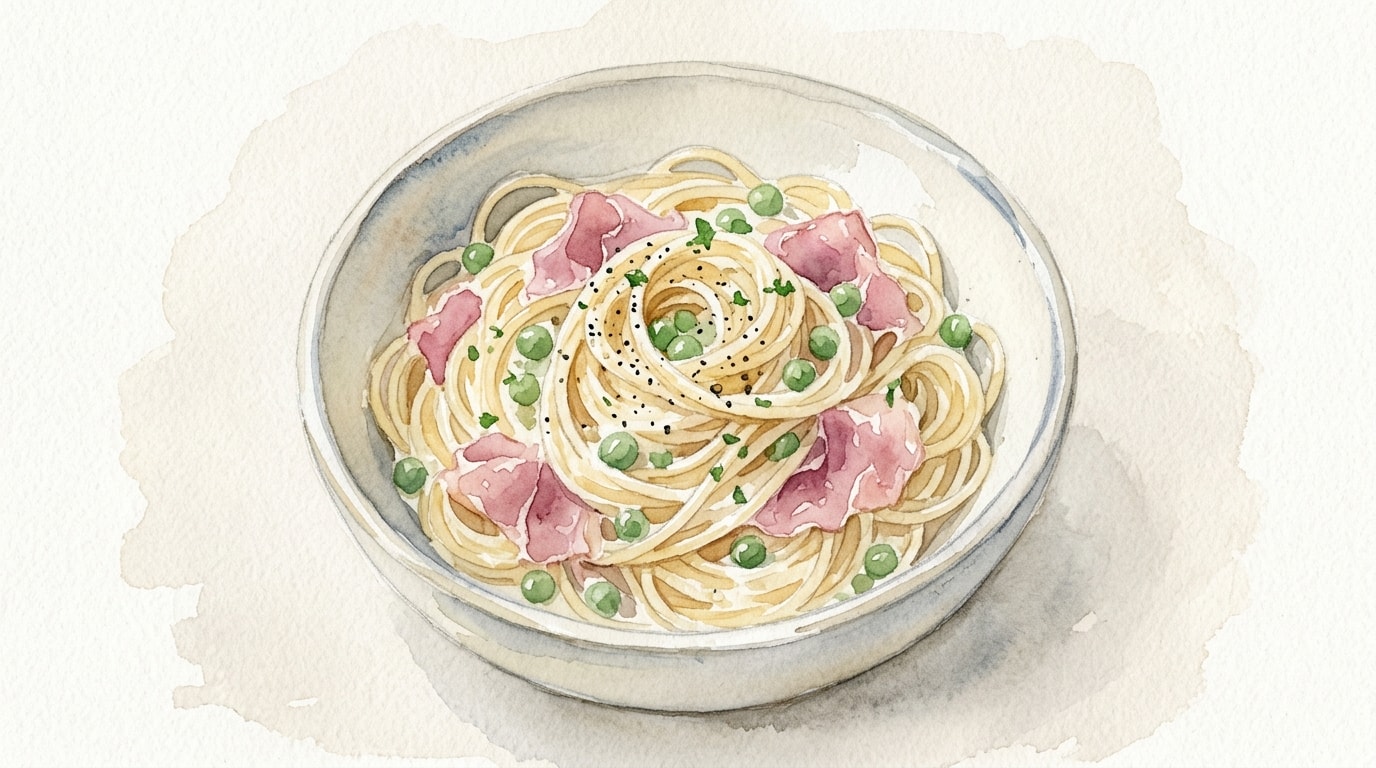
Divide the pasta evenly among four warm serving bowls. Top with a generous amount of freshly cracked black pepper.
Chef's Notes
- Always reserve more pasta water than you think you need. It is the culinary glue that binds the cream, cheese, and pasta starches into a cohesive, silky sauce.
- Tear the prosciutto by hand rather than chopping it with a knife. The rustic, irregular edges crisp up much better in the pan.
- Do not substitute milk for the heavy cream. The lower fat content in milk makes it highly prone to splitting or curdling when boiled or mixed with acidic ingredients and hot pasta.
- Take the skillet off the direct heat when adding the Parmesan. Extreme heat can cause the cheese to separate, leaving you with a grainy texture and pools of oil.
Storage
Refrigerator: 3 days — Store in an airtight container. The sauce will thicken significantly as it cools.
Reheating: Reheat gently on the stovetop over low heat, adding a splash of milk or water to reconstitute the sauce.
Troubleshooting
Sauce is too thick or clumpy
Cause: The cheese melted unevenly or the pasta absorbed all the liquid
Fix: Vigorously stir in a splash of hot pasta water over very low heat to smooth it out.
Prevention: Remove the skillet from direct heat before adding the cheese to prevent the proteins from seizing.
Prosciutto is tough and chewy rather than crisp
Cause: Cut too thickly or crowded in the pan
Fix: Cannot be fixed once mixed into the sauce, but will still taste delicious.
Prevention: Ensure prosciutto is sliced paper-thin and separated before adding to the pan.
Cultural Context
Pasta with peas and cured pork is a staple flavor combination in Italian home cooking, traditionally utilizing pancetta or guanciale in a broth or egg-based sauce. This quick weeknight adaptation uses thinly sliced prosciutto and heavy cream, leaning closer to an Italian-American comfort dish. It perfectly demonstrates the culinary principle of balancing salty, rich, and sweet elements in a single pan.