Equipment
* optional
Ingredients
Sweet Pastry (Pâte Sucrée)
- 200 g all-purpose flour, sifted
- 100 g unsalted butter, chilled, cubed
- 60 g icing sugar
- 1 g salt
- 2 egg yolks, large
- 15 ml cold water
Seville Orange Filling
- 45 g cornstarch
- 250 g granulated sugar
- 200 ml water
- 150 ml seville orange juice
- 10 g seville orange zest
- 4 egg yolks
- 60 g unsalted butter, cubed
Meringue
- 4 egg whites, room temperature
- 220 g caster sugar
- 10 g cornstarch
Nutrition (per serving)
Nutrition is estimated per serving. Nutrients without complete source data are omitted.
Full nutrition
- Calories
- 578 kcal
- Protein
- 7 g
- Carbohydrates
- 94 g
- Fat
- 20 g
- Fiber
- 1 g
- Sugar
- 68 g
- Sodium
- 85 mg
- Saturated Fat
- 11 g
- Monounsaturated Fat
- 6 g
- Polyunsaturated Fat
- 1 g
- Cholesterol
- 189 mg
- Potassium
- 113 mg
- Calcium
- 32 mg
- Iron
- 0.8 mg
- Magnesium
- 11 mg
- Phosphorus
- 91 mg
- Zinc
- 0.5 mg
- Vitamin A
- 192 mcg
- Vitamin C
- 11 mg
- Vitamin D
- 0.7 mcg
- Vitamin E
- 0.8 mg
- Vitamin K
- 2 mcg
- Vitamin B6
- 0.1 mg
- Vitamin B12
- 0.3 mcg
- Thiamin
- 0.07 mg
- Riboflavin
- 0.17 mg
- Niacin
- 0.4 mg
- Folate
- 33 mcg
- Water
- 70 g
Sources: Aggregated Public Data, USDA FoodData Central
Method
Combine flour, icing sugar, and salt in a food processor. Pulse briefly to mix, then add cold cubed butter and pulse until the mixture resembles fine breadcrumbs.
Add the egg yolks and pulse until the dough just starts to clump together. If too dry, add cold water 1 teaspoon at a time. Form into a disc, wrap in plastic, and chill for 30 minutes.
Preheat oven to 190°C/375°F. Roll out the pastry on a lightly floured surface to 3mm thickness. Line a 23cm tart tin, trim excess, dock the base with a fork, and chill for another 15 minutes.
Line the pastry case with parchment paper and fill with baking beans. Blind bake for 15 minutes. Remove beans and paper, then bake for another 5-10 minutes until the base is pale golden and sandy to the touch. Reduce oven to 160°C/320°F.
While the shell finishes baking, make the filling. Whisk sugar, cornstarch, water, Seville orange juice, and zest in a saucepan. Cook over medium heat, whisking constantly, until the mixture bubbles and thickens significantly.
Remove from heat. Whisk a small amount of the hot mixture into the egg yolks to temper them, then pour the yolks back into the saucepan. Return to low heat and whisk vigorously for 1-2 minutes without boiling. Stir in the butter until melted.
Pour the hot filling directly into the baked pastry shell. It is important the filling is hot when the meringue is added to help cook the base of the meringue.
In a clean, grease-free bowl, whisk egg whites until soft peaks form. Gradually add the caster sugar mixed with cornstarch, a tablespoon at a time, whisking continuously until the meringue is stiff, glossy, and holds sharp peaks.
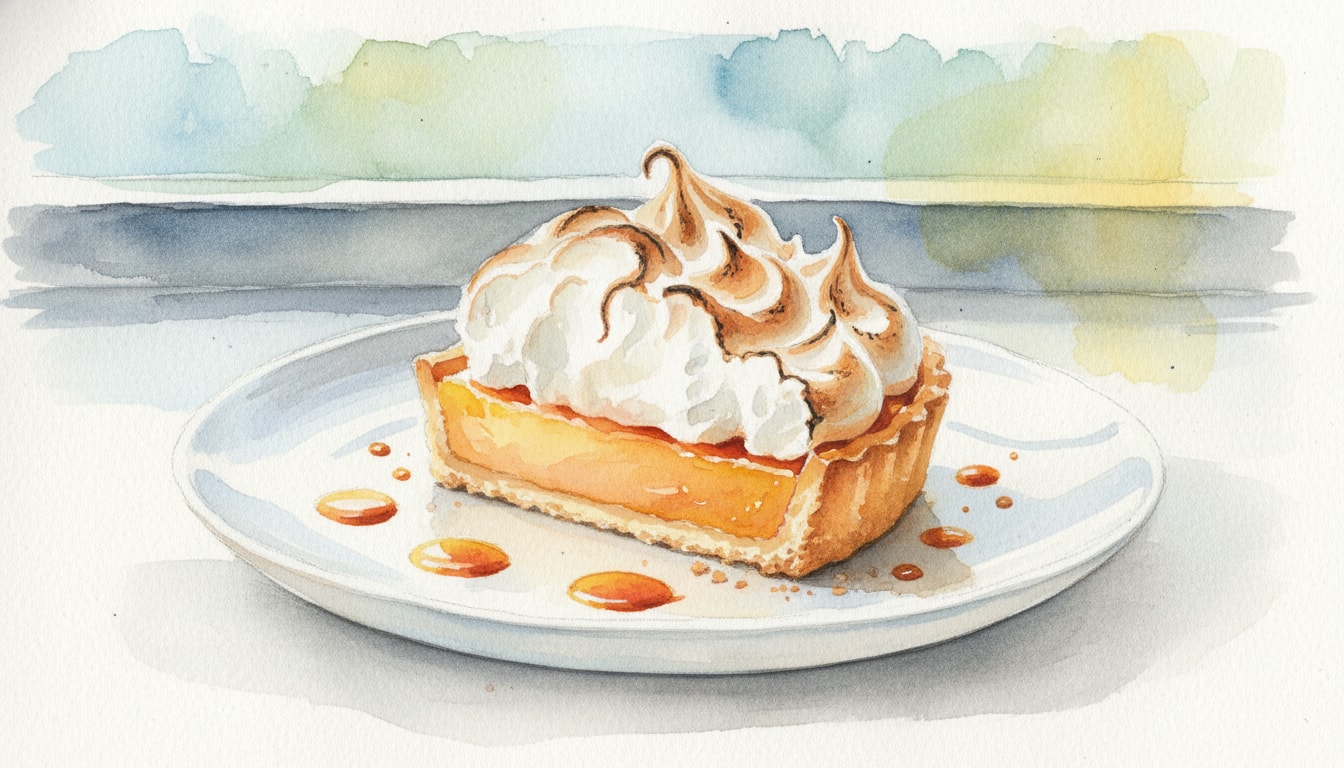
Spoon the meringue over the hot filling, starting at the edges and sealing the meringue against the pastry crust to prevent shrinking. Use a spoon to create swirls and peaks.
Bake at 160°C/320°F for 25-30 minutes until the meringue is crisp on the outside and lightly golden brown. Allow to cool completely in the tin before slicing.
Chef's Notes
- Seville oranges are only in season briefly in winter (usually January/February). If unavailable, use a mix of 2 parts sweet orange juice to 1 part lemon juice and zest.
- Adding cornstarch to the meringue (a technique often used in Pavlova) helps stabilise it and reduces the risk of weeping, giving a marshmallow-soft interior.
- When blind baking, scrunch the parchment paper into a ball then unwrap it before lining the pastry; this makes it softer and easier to fit into the corners.
- For the cleanest slices, dip a sharp knife into hot water and wipe dry between each cut.
Storage
Refrigerator: 2 days — Meringue may weep (release liquid) over time; best eaten within 24 hours.
Troubleshooting
Meringue is 'weeping' (liquid pooling between filling and topping)
Cause: Meringue was spread onto a cool filling, preventing the base of the meringue from cooking
Fix: Cannot be fixed once baked; serve immediately
Prevention: Ensure the orange filling is piping hot when you top it with the meringue
Pastry bottom is soggy
Cause: Under-baked during the blind baking stage
Fix: Bake on a preheated heavy baking tray or pizza stone to boost bottom heat
Prevention: Ensure the pastry is fully dry and sandy to touch before adding the wet filling
Cultural Context
While the meringue tart structure is rooted in French pâtisserie (tarte au citron meringuée), the use of Seville oranges connects this dish firmly to the British love affair with this specific bitter orange, traditionally reserved for the annual ritual of making marmalade.