Equipment
Ingredients
Noodles
- 500 g dry spaghetti
Garlic Butter Sauce
- 80 g unsalted butter, cut into cubes
- 12 garlic, finely minced
- 45 ml oyster sauce
- 15 ml soy sauce
- 15 ml fish sauce
Finishing
- 50 g parmigiano-reggiano, freshly grated
- 15 g scallions, thinly sliced
Nutrition (per serving)
Nutrition is estimated per serving. Nutrients without complete source data are omitted.
Full nutrition
- Calories
- 681 kcal
- Protein
- 22 g
- Carbohydrates
- 99 g
- Fat
- 21 g
- Fiber
- 4 g
- Sugar
- 4 g
- Sodium
- 967 mg
- Saturated Fat
- 12 g
- Monounsaturated Fat
- 6 g
- Polyunsaturated Fat
- 1 g
- Cholesterol
- 52 mg
- Potassium
- 379 mg
- Calcium
- 206 mg
- Iron
- 4.6 mg
- Magnesium
- 85 mg
- Phosphorus
- 353 mg
- Zinc
- 2.3 mg
- Vitamin A
- 165 mcg
- Vitamin C
- 4 mg
- Vitamin D
- 0.1 mcg
- Vitamin E
- 0.7 mg
- Vitamin K
- 10 mcg
- Vitamin B6
- 0.3 mg
- Vitamin B12
- 0.3 mcg
- Thiamin
- 1.14 mg
- Riboflavin
- 0.58 mg
- Niacin
- 9.4 mg
- Folate
- 305 mcg
- Water
- 43 g
Sources: USDA FoodData Central
Method
Peel and finely mince the garlic cloves. Prepare all sauces in a small bowl to ensure a quick cooking process.
Bring a large pot of salted water to a rolling boil at 100 degrees Celsius or 212 degrees Fahrenheit. Add the spaghetti and cook according to package directions until al dente, approximately 9 to 11 minutes. Reserve at least 60ml of the starchy pasta cooking water before draining the noodles in a colander.
While the pasta cooks, melt the unsalted butter in a large skillet or wok over medium-low heat. Add the minced garlic and gently saute for 3 to 4 minutes until deeply fragrant and softened. Constantly stir and ensure the garlic does not brown.
Whisk the oyster sauce, soy sauce, and fish sauce directly into the fragrant garlic butter until fully incorporated.
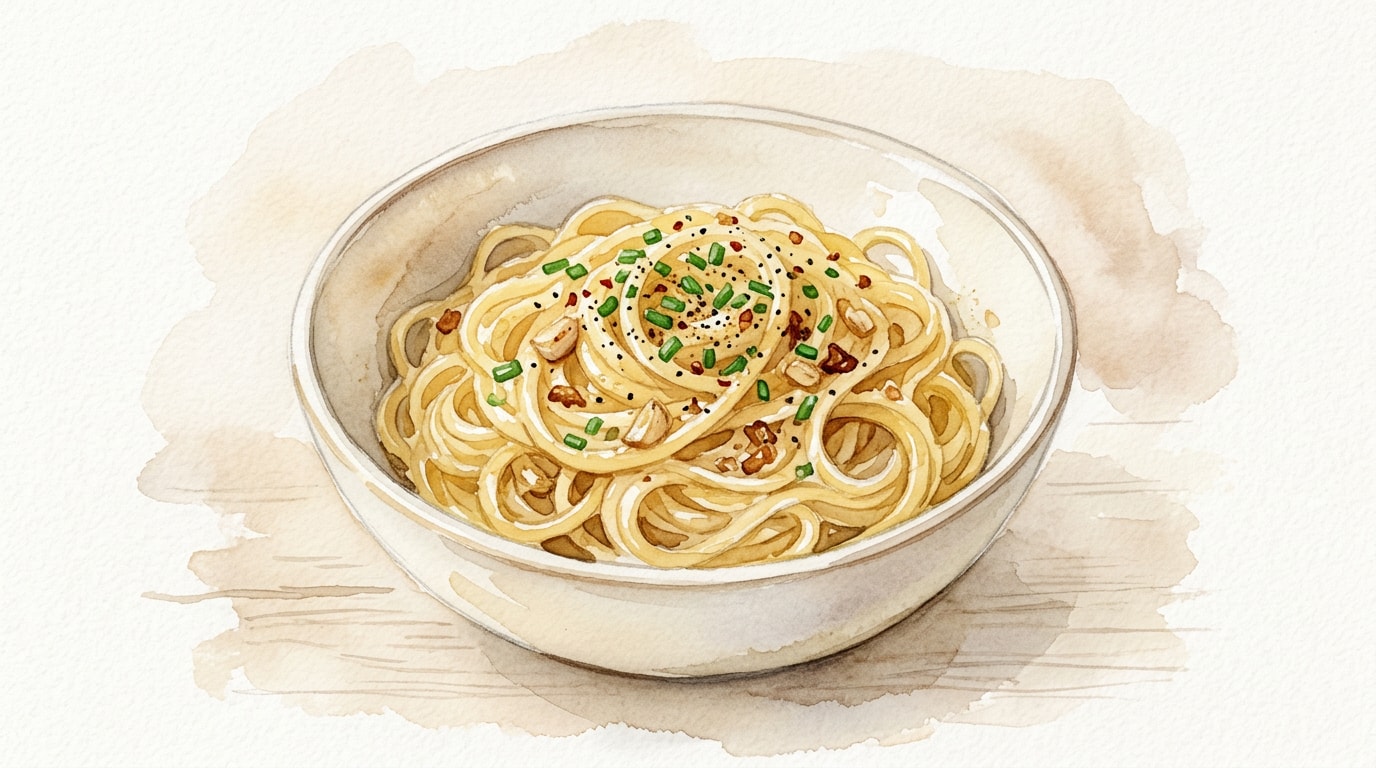
Transfer the drained hot spaghetti to the skillet along with a splash of the reserved pasta water. Using tongs, toss the noodles vigorously over medium heat for 1 to 2 minutes. The friction and starches will cause the butter and liquids to emulsify into a rich, glossy sauce that coats every strand.
Remove the skillet from the heat. Gradually fold in the freshly grated Parmigiano-Reggiano cheese, tossing constantly until it melts smoothly into the sauce without clumping.
Transfer the coated noodles to a large serving platter or individual plates. Garnish with thinly sliced scallions if desired and serve immediately.
Chef's Notes
- The secret to the authentic San Francisco flavor is the unorthodox but brilliant combination of Asian umami sauces with Italian Parmigiano-Reggiano. Do not skip the cheese; it acts as a magical bridge between the flavor profiles.
- Using a microplane to grate your garlic instead of mincing it will create a more intense, uniform garlic flavor that entirely melts into the butter sauce, though traditionalists often prefer a fine knife mince for subtle texture.
- Always reserve more pasta water than you think you need. The starches extracted into the water during boiling are the key mechanical ingredient for binding the fats and liquid sauces into a cohesive glaze.
- For a deeper, slightly caramelized profile, swap one teaspoon of the soy sauce for Maggi Seasoning, which brings a distinct roasted vegetable complexity favored in Vietnamese cooking.
Storage
Refrigerator: 3 days — Store in an airtight container. Noodles will absorb sauce and become drier.
Reheating: Toss gently in a warm skillet with a splash of water to revive the emulsified butter sauce.
Troubleshooting
Garlic tastes bitter and acrid
Cause: Heat was too high, causing the minced garlic to burn before fully softening in the butter
Fix: Cannot be fixed
Prevention: Keep the heat strictly at medium-low and stir constantly. Use a heavier-bottomed pan for better heat distribution.
Sauce is greasy and pooling at the bottom of the pan
Cause: The butter and sauce mixture failed to emulsify with the pasta
Fix: Add another tablespoon of hot pasta water and toss rapidly over medium heat until the sauce comes together.
Prevention: Vigorously toss the pasta in the pan with a sufficient amount of starchy pasta water to bind the fats and liquids.
Cheese clumped together instead of melting
Cause: Pan was too hot, cheese was added while on the heating element, or cheese was pre-shredded with anti-caking agents
Fix: Add a tiny splash of pasta water and stir vigorously off the heat.
Prevention: Always grate cheese fresh from a block. Remove the pan from the heat entirely before folding the cheese in gradually.
Cultural Context
These legendary garlic noodles are heavily inspired by the iconic dish created in the 1970s by Helene An at Thanh Long restaurant in San Francisco's Sunset District. By blending traditional Vietnamese culinary concepts with Western ingredients like butter and Italian cheese to appease local palates, the dish became a closely guarded family secret and a foundational recipe of modern Vietnamese-American fusion cuisine.