Equipment
Ingredients
Fish
- 300 g halibut fillets, skinless
- 2 g salt
- 1 g black pepper, freshly ground
Stew
- 100 g cured spanish chorizo, diced
- 240 g butter beans, drained and rinsed
- 1 shallot, finely chopped
- 2 garlic, minced
- 150 g cherry tomatoes, halved
- 100 ml chicken stock
- 2 g smoked paprika
Garnish
- 15 ml lemon juice, freshly squeezed
- 5 g fresh parsley, finely chopped
Nutrition (per serving)
Nutrition is estimated per serving. Nutrients without complete source data are omitted.
Full nutrition
- Calories
- 566 kcal
- Protein
- 53 g
- Carbohydrates
- 32 g
- Fat
- 25 g
- Fiber
- 8 g
- Sugar
- 6 g
- Sodium
- 1259 mg
- Saturated Fat
- 3 g
- Monounsaturated Fat
- 2 g
- Polyunsaturated Fat
- 2 g
- Cholesterol
- 108 mg
- Potassium
- 1353 mg
- Calcium
- 86 mg
- Iron
- 3.9 mg
- Magnesium
- 108 mg
- Phosphorus
- 529 mg
- Zinc
- 2.6 mg
- Vitamin A
- 106 mcg
- Vitamin C
- 19 mg
- Vitamin E
- 3.2 mg
- Vitamin K
- 43 mcg
- Vitamin B6
- 0.8 mg
- Vitamin B12
- 2.7 mcg
- Thiamin
- 0.20 mg
- Riboflavin
- 0.17 mg
- Niacin
- 9.2 mg
- Folate
- 95 mcg
- Water
- 230 g
Sources: Aggregated Public Data, USDA FoodData Central
Method
Preheat the oven to 200 degrees Celsius (400 degrees Fahrenheit).
Using a chef's knife and cutting board, dice the cured Spanish chorizo, halve the cherry tomatoes, chop the shallot, and mince the garlic.
Place the oven-proof skillet over medium heat. Add the diced chorizo and fry until it releases its bright red, smoky oil and becomes slightly crisp at the edges.
Add the finely chopped shallot and minced garlic to the skillet, stirring continuously so they cook gently in the rendered chorizo oil without burning.
Stir in the halved cherry tomatoes, smoked paprika, and chicken stock. Bring the mixture to a gentle bubble to help the tomatoes break down slightly.
Fold the drained butter beans into the tomato and chorizo mixture. Simmer briefly until the liquid reduces into a light sauce that coats the beans.
Pat the halibut fillets completely dry with paper towels. Season both sides evenly with the measured salt and black pepper.
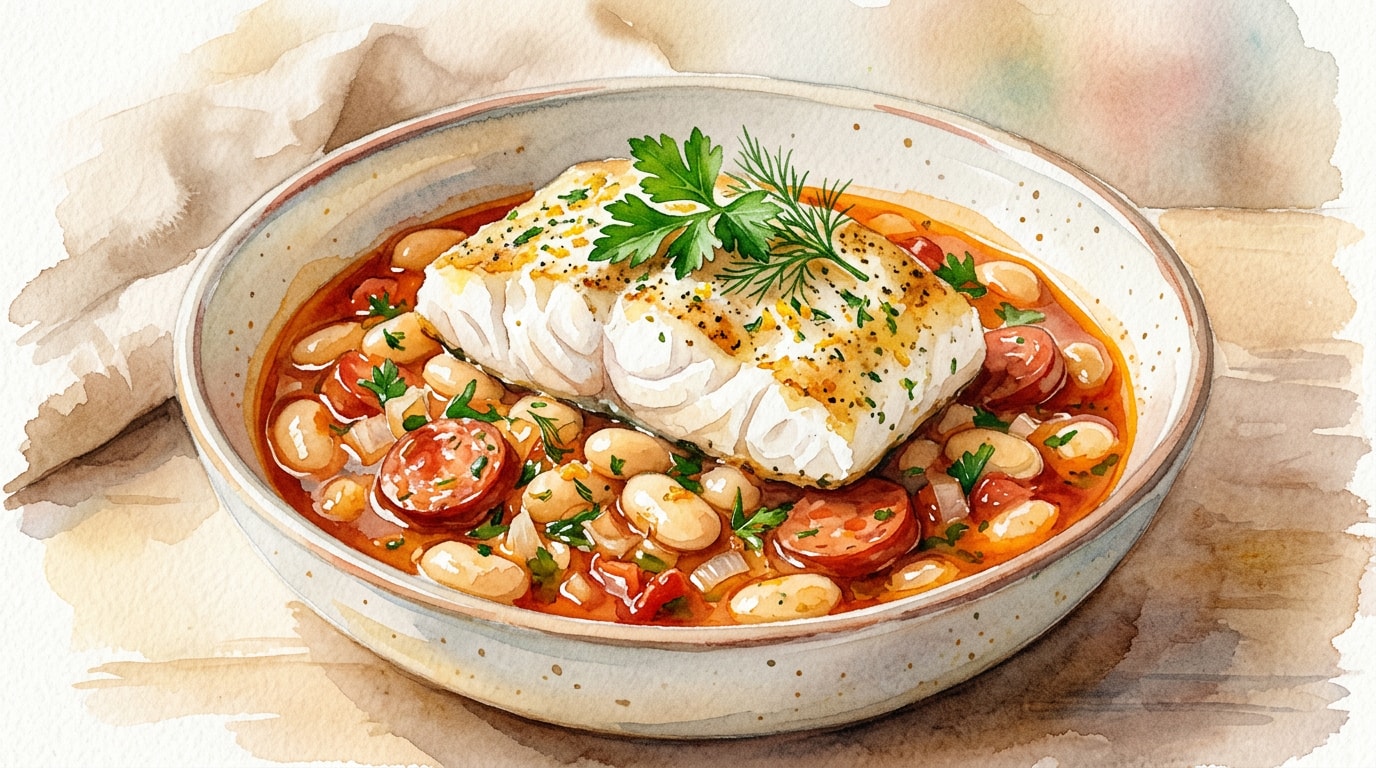
Gently nestle the seasoned halibut fillets directly into the simmering butter bean and chorizo stew in the skillet.
Transfer the skillet to the preheated oven. Roast until the fish turns opaque, flakes easily with a fork, and reaches an internal temperature of 54 degrees Celsius (130 degrees Fahrenheit).
Remove the skillet from the oven using a heat-proof mitt. Squeeze the fresh lemon juice over the fish and stew, then sprinkle generously with chopped parsley before serving immediately.
Chef's Notes
- Always purchase dry-cured Spanish chorizo rather than raw Mexican chorizo for this application. The dry-cured sausage renders a vibrant, deeply flavoured paprika oil that forms the foundation of the stew.
- Butter beans, also known as lima beans, are exceptional at absorbing flavours. Allowing them to simmer in the reduced stock and chorizo fat ensures they taste robust entirely through.
- Patting fish dry is a non-negotiable step. Excess surface moisture prevents proper seasoning adherence and can cause the fish to steam unevenly rather than roast.
- To elevate the presentation, use a mix of yellow and red cherry tomatoes to introduce more vibrant colours to the rich red stew.
Storage
Refrigerator: 2 days — Store in an airtight container. The fish will lose its delicate texture upon reheating.
Reheating: Warm the stew gently on the stovetop over low heat. Add the fish during the last few minutes just until warmed through to 54 degrees Celsius, taking care not to overcook it.
Troubleshooting
Halibut is dry, tough, or rubbery
Cause: The fish was left in the oven too long or the cooking temperature was too high for the thickness of the fillet.
Fix: Flake the overcooked fish directly into the smoky broth so it can absorb some moisture, though the ideal flaky texture cannot be fully restored.
Prevention: Use a digital meat thermometer and remove the fish as soon as the center hits 54 degrees Celsius. The residual heat will finish the cooking process.
The stew is too watery when the fish is done
Cause: The tomatoes released excess moisture or the stock was not reduced sufficiently before the fish was added.
Fix: Carefully transfer the cooked fish to a warm plate and return the skillet to the stovetop over high heat for 2-3 minutes to rapidly reduce the liquid.
Prevention: Ensure the stew simmers uncovered on the stovetop until the liquid resembles a light glaze before adding the fish.
Cultural Context
Pairing delicate white fish with highly seasoned cured meats is a hallmark of Iberian coastal cooking. This dish exemplifies a rustic surf and turf harmony, utilizing the bold, smoky paprika from the chorizo to impart massive flavour into a humble bean stew without overpowering the sweet, mild profile of the fresh catch.