Equipment
Ingredients
Shrimp Broth
- 500 g whole shrimp with shells, raw
- 1200 ml water
- 2 garlic, smashed
- 1 bay leaf, dried
Risotto Base
- 45 ml extra virgin olive oil
- 150 g yellow onion, finely diced
- 300 g arborio rice
- 120 ml dry white wine
- 150 g sweet green peas, fresh or thawed from frozen
- 1 lemon, zested
- g salt
- g black pepper
- 15 g fresh parsley, finely chopped
Nutrition (per serving)
Nutrition is estimated per serving. Nutrients without complete source data are omitted.
Full nutrition
- Calories
- 549 kcal
- Protein
- 33 g
- Carbohydrates
- 70 g
- Fat
- 13 g
- Fiber
- 3 g
- Sugar
- 4 g
- Sodium
- 650 mg
- Saturated Fat
- 2 g
- Monounsaturated Fat
- 8 g
- Polyunsaturated Fat
- 2 g
- Cholesterol
- 201 mg
- Potassium
- 591 mg
- Calcium
- 120 mg
- Iron
- 2.3 mg
- Magnesium
- 86 mg
- Phosphorus
- 401 mg
- Zinc
- 3.1 mg
- Vitamin A
- 30 mcg
- Vitamin C
- 24 mg
- Vitamin E
- 1.7 mg
- Vitamin K
- 79 mcg
- Vitamin B6
- 0.3 mg
- Thiamin
- 0.18 mg
- Riboflavin
- 0.11 mg
- Niacin
- 2.1 mg
- Folate
- 42 mcg
- Water
- 502 g
- Alcohol
- 3 g
Sources: Aggregated Public Data, USDA FoodData Central
Method
Peel the shrimp, reserving the shells for the broth. Devein the shrimp meat, place it in an airtight container in the refrigerator, and immediately wash your hands, cutting board, and utensils thoroughly to prevent raw seafood cross-contamination.
In a medium saucepan, combine the reserved shrimp shells, smashed garlic, bay leaf, and water. Bring to a boil over medium-high heat (100°C/212°F).
Reduce the heat to low and let the shells simmer gently to extract the flavor.
Strain the shrimp broth through a fine-mesh sieve into a bowl, discarding the solids. Return the clear liquid to the saucepan and keep it warm over lowest heat.
In a large heavy-bottomed pot, heat the extra virgin olive oil over medium heat. Add the finely diced onion and cook until translucent and soft, ensuring it does not take on any brown color.
Add the arborio rice to the pot with the onions. Stir continuously to coat the grains in oil and toast them until the edges turn slightly translucent while the centers remain opaque.
Pour the dry white wine into the rice mixture. Stir constantly until the liquid is completely absorbed and the smell of raw alcohol has cooked off.
Begin adding the warm shrimp broth one ladle (about 120ml) at a time. Stir frequently, allowing the rice to absorb the liquid almost entirely before adding the next ladle. Continue until the rice is creamy and mostly cooked but retains a slight bite in the center.
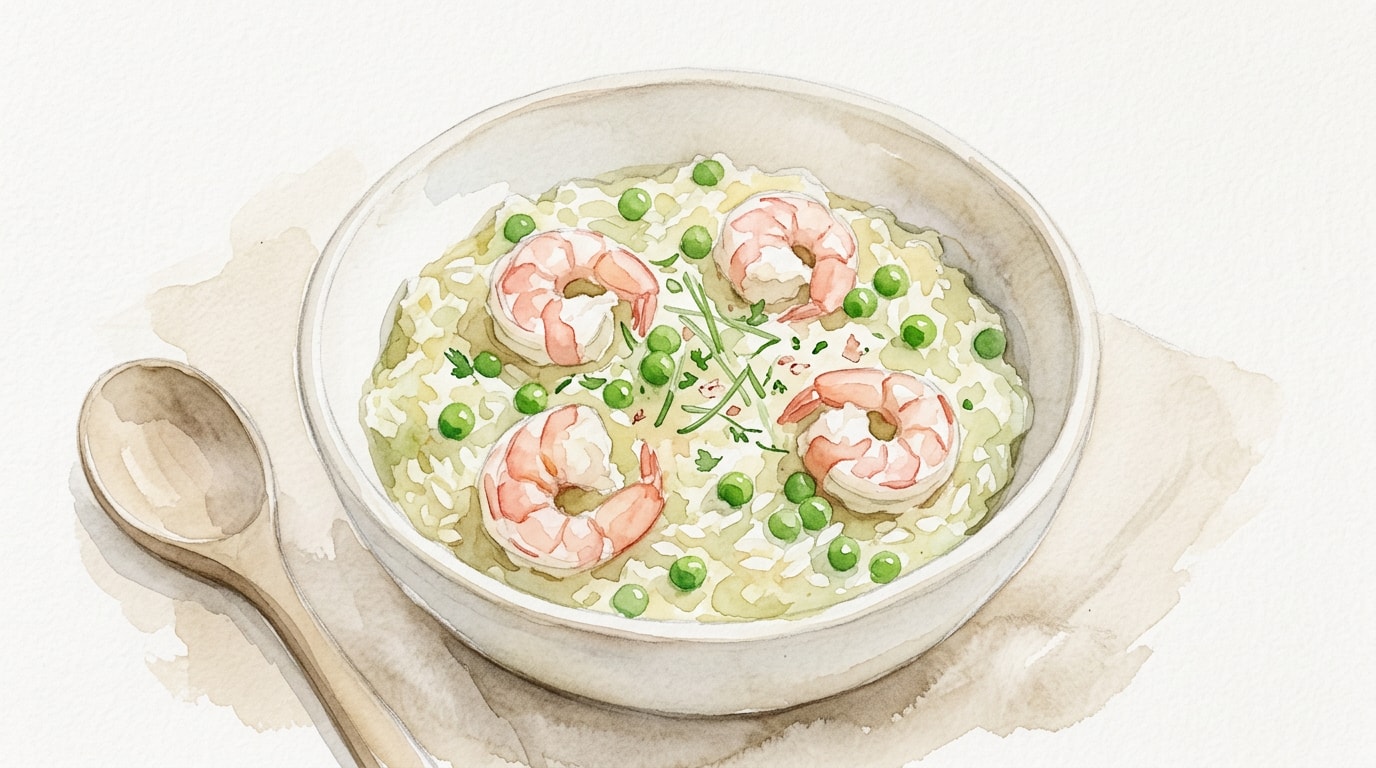
Fold the reserved raw shrimp, sweet peas, and lemon zest into the simmering rice. Cook until the shrimp turn pink, curl into a C-shape, and reach a safe internal temperature of 63°C/145°F.
Remove the pot from the heat completely. Stir the risotto vigorously for one minute to agitate the remaining starches, which creates a velvety, creamy emulsion without needing dairy. Season to taste with salt and black pepper.
Portion the risotto into shallow bowls. Garnish evenly with finely chopped fresh parsley and serve immediately.
Chef's Notes
- To achieve a creamy, dairy-free risotto, the key is the vigorous stirring phase (known as mantecatura) off the heat at the very end. The starch from the arborio rice mixed with the residual olive oil and broth forms a natural, creamy emulsion.
- Making a quick stock from the discarded shrimp shells maximizes flavor with zero food waste. If your simmering liquid reduces too quickly while cooking the rice, you can supplement with warm tap water.
- Ensure the broth is kept hot while adding it to the rice. Adding cold liquid will drop the temperature of the main pot, shocking the rice grain exteriors and hindering the creamy starch release.
- For an even richer mouthfeel while remaining dairy-free, you can puree a small handful of the sweet peas with a splash of olive oil and fold the mixture back into the risotto right before serving.
Storage
Refrigerator: 3 days — Store in an airtight container.
Reheating: Reheat gently on stovetop over low heat, adding a splash of water or vegetable broth to restore the creamy emulsion.
Troubleshooting
Risotto is mushy or gummy
Cause: Broth was added too quickly or the rice was overcooked past the al dente stage.
Fix: Cannot be fixed to return to al dente, but immediately spreading the risotto onto a flat baking tray will cool it quickly and halt further carryover cooking.
Prevention: Add hot broth slowly, only when the previous addition is absorbed. Taste frequently after 15 minutes of cooking.
Shrimp are tough and rubbery
Cause: Shrimp were added too early and overcooked.
Fix: Cannot be fixed
Prevention: Only add shrimp in the final 3 minutes of the cooking process.
Risotto lacks creaminess
Cause: Not enough stirring, or the broth was cold when added to the rice.
Fix: Vigorously stir in an extra splash of hot water or broth off the heat to manually emulsify the remaining starches.
Prevention: Keep the broth simmering in a separate pot and stir the rice frequently to encourage starch release.
Cultural Context
Risotto is a cornerstone of Northern Italian cuisine, traditionally utilizing the starchy, short-grain rice varieties grown in the Po Valley. While classic inland preparations often rely heavily on butter and Parmigiano-Reggiano for their finishing steps, coastal Italian communities have long embraced olive oil-based seafood risottos. Skipping dairy allows the delicate, sweet flavors of the ocean and fresh spring produce to shine unmasked.