Equipment
Ingredients
Sandwich Components
- 2 white bread
- 30 g peanut butter, creamy or crunchy
- 30 g chocolate hazelnut spread, room temperature
- 15 g unsalted butter, softened
Nutrition (per serving)
Nutrition is estimated per serving. Nutrients without complete source data are omitted.
Full nutrition
- Calories
- 650 kcal
- Protein
- 15 g
- Carbohydrates
- 63 g
- Fat
- 39 g
- Fiber
- 5 g
- Sugar
- 23 g
- Sodium
- 451 mg
- Saturated Fat
- 10 g
- Monounsaturated Fat
- 11 g
- Polyunsaturated Fat
- 6 g
- Cholesterol
- 33 mg
- Potassium
- 442 mg
- Calcium
- 132 mg
- Iron
- 4.2 mg
- Magnesium
- 85 mg
- Phosphorus
- 216 mg
- Zinc
- 1.6 mg
- Vitamin A
- 103 mcg
- Vitamin E
- 3.2 mg
- Vitamin K
- 4 mcg
- Vitamin B6
- 0.2 mg
- Vitamin B12
- 0.0 mcg
- Thiamin
- 0.33 mg
- Riboflavin
- 0.27 mg
- Niacin
- 6.9 mg
- Folate
- 101 mcg
- Water
- 24 g
Sources: Aggregated Public Data, USDA FoodData Central
Method
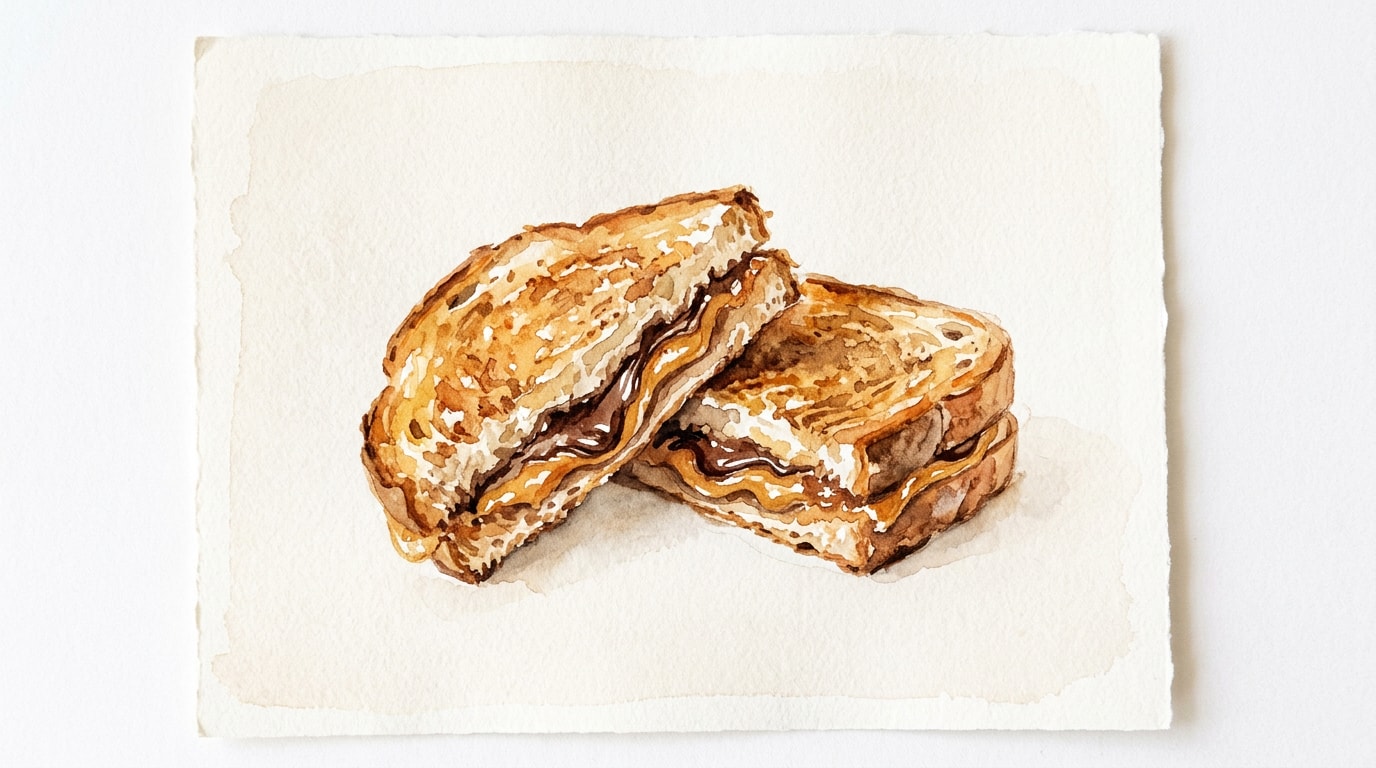
Using a butter knife, spread the peanut butter evenly onto one slice of bread, and spread the chocolate hazelnut spread onto the other slice.
Press the two slices of bread together so the spreads meet in the center. Spread the softened butter evenly across the outside facing layer of the top slice of bread.
Place a skillet over medium-low heat and allow it to warm up for about 1 minute.
Place the sandwich into the skillet with the buttered side down. While the first side cooks, spread the remaining softened butter over the dry piece of bread now facing upward.
Using a spatula, carefully flip the sandwich over to cook the other side until it is equally toasted and the fillings are warm and melted.
Transfer the sandwich to a cutting board, let it rest for a moment so the hot fillings stabilize, then slice in half diagonally and serve warm.
Chef's Notes
- Mayonnaise substitution: You can use a thin layer of full-fat mayonnaise instead of butter on the outside of the bread. It spreads effortlessly, prevents tearing, and creates an exceptionally even, crispy crust without leaving any mayonnaise flavor.
- Heat control: Patience is essential. Low and slow cooking ensures the bread crisps beautifully while giving the dense peanut butter and chocolate hazelnut spread enough time to become warm and molten.
- Salt balance: If using an unsalted peanut butter, lightly sprinkle a tiny pinch of flaky sea salt on the chocolate hazelnut spread before closing the sandwich. The salt will perfectly cut the sweetness and enhance the chocolate flavor.
Storage
Reheating: If necessary, reheat in a dry skillet over medium-low heat or an air fryer at 160C to restore crispness. Do not microwave.
Troubleshooting
Bread burns before the fillings are warmed
Cause: Skillet temperature was too high
Fix: Cannot be fixed once burned, but scraping off the charred surface with a serrated knife can salvage the sandwich
Prevention: Keep the stove set to medium-low to allow the heat to penetrate the dense spreads gently
Bread tears while spreading the butter
Cause: Butter was too cold and stiff
Fix: Press the torn bread back together and patch the hole with more butter; it will seal as it grills
Prevention: Ensure butter is fully at room temperature, or substitute mayonnaise for an easier spread
Cultural Context
The grilled peanut butter sandwich is a comforting variation of the classic American grilled cheese, trading savory fillings for sweet. By adding the globally beloved chocolate hazelnut spread, first invented in Italy, this humble diner staple is elevated into a decadent, dessert-like treat that bridges two iconic childhood flavors.