Equipment
Ingredients
Core Components
- 280 g cooked lobster meat, cut into large chunks
- 70 g salted butter, divided
- 2 top-split hot dog buns
Finishing Touches
- 15 ml lemon juice, freshly squeezed
- 5 g chives, finely chopped
Nutrition (per serving)
Nutrition is estimated per serving. Nutrients without complete source data are omitted.
Full nutrition
- Calories
- 509 kcal
- Protein
- 30 g
- Carbohydrates
- 14 g
- Fat
- 31 g
- Fiber
- 1 g
- Sugar
- 1 g
- Sodium
- 1031 mg
- Saturated Fat
- 18 g
- Trans Fat
- 1 g
- Monounsaturated Fat
- 8 g
- Polyunsaturated Fat
- 2 g
- Cholesterol
- 280 mg
- Potassium
- 378 mg
- Calcium
- 177 mg
- Iron
- 1.1 mg
- Magnesium
- 62 mg
- Phosphorus
- 269 mg
- Zinc
- 5.7 mg
- Vitamin A
- 257 mcg
- Vitamin C
- 4 mg
- Vitamin E
- 2.2 mg
- Vitamin K
- 2 mcg
- Vitamin B6
- 0.2 mg
- Vitamin B12
- 2.1 mcg
- Thiamin
- 0.04 mg
- Riboflavin
- 0.04 mg
- Niacin
- 2.6 mg
- Folate
- 18 mcg
- Water
- 122 g
Sources: Aggregated Public Data, USDA FoodData Central
Method
Inspect the cooked lobster meat and remove any lingering cartilage or shell fragments. Cut the meat into large, distinct chunks to preserve the luxurious texture.
Melt 10g of the salted butter in a large skillet over medium heat. Place the top-split buns flat-side down in the skillet and toast until deeply golden brown and crisp, about 2 minutes per side. Remove the buns and set aside.
Wipe the skillet clean if necessary and reduce the heat to low. Melt the remaining 60g of salted butter. Add the lobster chunks and gently toss in the butter to poach just until heated through, targeting an internal temperature of about 45°C/115°F. Do not let the butter boil.
Remove the skillet from the heat entirely. Stir the fresh lemon juice into the warm butter and lobster mixture to brighten the rich sauce.
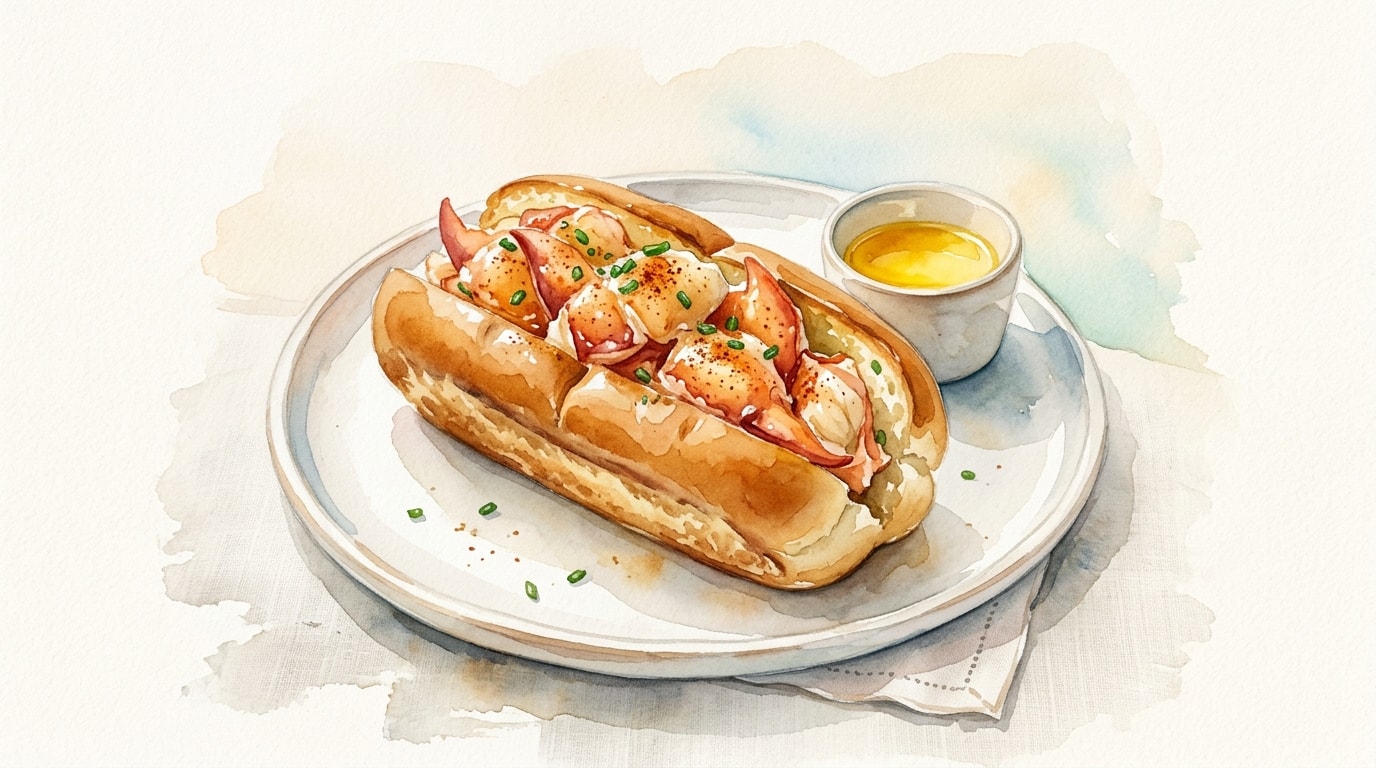
Divide the warm, buttered lobster meat evenly between the two toasted buns. Drizzle any remaining lemon-butter sauce from the pan over the top of the meat, garnish generously with chopped chives, and serve immediately.
Chef's Notes
- Always seek out top-split, flat-sided buns, often called New England or Frankfort style. Their exposed crumb provides maximum surface area for absorbing butter and developing a crispy, toasted exterior.
- Do not chop the lobster meat too finely. Large, distinct chunks of claw and knuckle meat provide the luxurious mouthfeel expected in a premium roll.
- Using salted butter is traditional for Connecticut-style rolls. The salt perfectly enhances the briny sweetness of the seafood without requiring additional seasoning.
- Lemon juice is technically optional in the most purist historic recipes, but adding it off the heat emulsifies slightly with the butter to create a brighter, more balanced finish.
Storage
Refrigerator: 1 day — Store leftover lobster meat and buns separately. Assembled rolls become soggy quickly.
Reheating: Warm leftover lobster gently in a skillet over low heat just until the chill is removed to prevent rubbery texture.
Troubleshooting
Lobster meat is tough and rubbery
Cause: Heating the lobster over a temperature that was too high, or leaving it in the pan for too long
Fix: Cannot be fixed
Prevention: Keep the stovetop heat strictly on low and only warm the lobster until the refrigerator chill is gone
Buns are greasy rather than crispy
Cause: Pan temperature was too low during toasting, causing the bread to absorb butter without browning
Fix: Increase heat slightly and toast for another minute until crisp
Prevention: Ensure the skillet is preheated to medium before adding the buns, allowing them to fry in the butter
Cultural Context
Originating in Milford, Connecticut at a restaurant called Perry's in the 1920s, the hot buttered lobster roll stands in stark contrast to the chilled, mayonnaise-dressed Maine style. This minimalist preparation was designed exclusively to showcase the pure, unadulterated flavor and sweet maritime essence of freshly caught Atlantic lobster.