Equipment
Ingredients
Protein
- 1000 g chicken thighs, bone-in, skin-on
Adobo Base
- 120 ml soy sauce
- 120 ml cane vinegar
- 240 ml water
- garlic, smashed and peeled
- 5 g whole black peppercorns, lightly crushed
- dried bay leaves
- 15 g brown sugar
Cooking Fat
- 15 ml vegetable oil
Nutrition (per serving)
Nutrition is estimated per serving. Nutrients without complete source data are omitted.
Full nutrition
- Calories
- 389 kcal
- Protein
- 52 g
- Carbohydrates
- 9 g
- Fat
- 14 g
- Fiber
- 1 g
- Sugar
- 4 g
- Sodium
- 1890 mg
- Saturated Fat
- 3 g
- Trans Fat
- 0 g
- Monounsaturated Fat
- 4 g
- Polyunsaturated Fat
- 2 g
- Cholesterol
- 235 mg
- Potassium
- 798 mg
- Calcium
- 57 mg
- Iron
- 2.8 mg
- Magnesium
- 86 mg
- Phosphorus
- 531 mg
- Zinc
- 4.3 mg
- Vitamin A
- 18 mcg
- Vitamin C
- 3 mg
- Vitamin E
- 0.5 mg
- Vitamin K
- 9 mcg
- Vitamin B6
- 1.3 mg
- Vitamin B12
- 1.5 mcg
- Thiamin
- 0.26 mg
- Riboflavin
- 0.56 mg
- Niacin
- 14.7 mg
- Folate
- 15 mcg
- Water
- 306 g
Sources: Aggregated Public Data, USDA FoodData Central
Method
In a large bowl, combine the chicken thighs, soy sauce, smashed garlic, and black peppercorns. Toss to coat evenly. Let marinate at room temperature for 20 minutes, or up to overnight in the refrigerator for deeper flavor.
Heat the vegetable oil in a large Dutch oven over medium-high heat. Remove the chicken from the marinade, reserving the liquid and garlic. Place the chicken skin-side down in the pot and sear until well browned, about 5 to 7 minutes. Flip and sear the other side for 3 minutes.
Pour the reserved marinade, garlic, cane vinegar, water, bay leaves, and brown sugar into the pot with the chicken. Bring the liquid to a boil. Do not stir the pot at this stage to allow the raw edge of the vinegar to cook off.
Once boiling, reduce the heat to low, cover the pot, and gently simmer for 25 to 30 minutes, or until the chicken is completely tender and reaches an internal temperature of at least 74 C or 165 F.
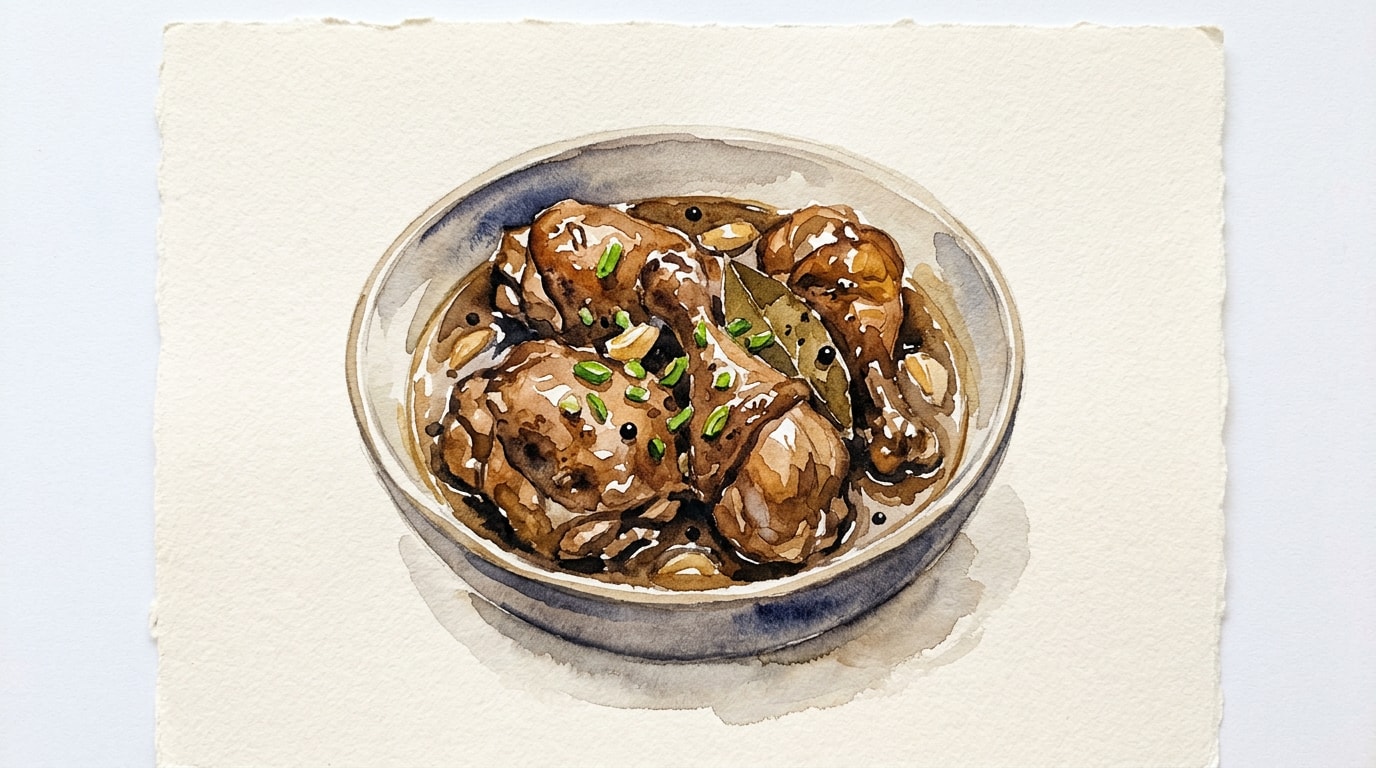
Remove the lid and increase the heat to medium-high. Let the sauce reduce for 5 to 10 minutes until it thickens slightly and creates a glossy glaze over the chicken. Remove from heat and serve hot over steamed white rice.
Chef's Notes
- The golden rule of adobo is to never stir the pot immediately after adding the vinegar. Let it boil undisturbed to cook off the harsh acetic acid vapor.
- Bone-in, skin-on thighs provide essential gelatin and fat that give the adobo sauce its signature lip-smacking, rich body. Boneless breasts will dry out and yield a thin sauce.
- Filipino cane vinegar (sukang maasim) has a distinct mellow sweetness compared to harsh distilled white vinegar. Seek it out at an Asian grocer for the most authentic flavor.
- Adobo is highly personal. Adjust the ratio of soy sauce to vinegar based on your preference for saltiness versus tanginess.
Storage
Refrigerator: 5 days — Adobo famously tastes better the next day as the flavors meld.
Freezer: 3 months — Freeze in an airtight container with the sauce to prevent freezer burn.
Reheating: Gently simmer on the stovetop over medium-low heat until warmed through, or microwave in 1-minute intervals.
Troubleshooting
The sauce is too sour and has a harsh acidic bite.
Cause: The vinegar was stirred before it had a chance to cook off, or boiled covered initially.
Fix: Add an extra 10g of brown sugar and simmer uncovered for another 5 to 10 minutes to mellow the acid.
Prevention: Allow the vinegar to boil uncovered for at least 3 minutes without stirring.
The chicken skin is flabby and rubbery.
Cause: The chicken was not seared adequately before braising.
Fix: Transfer the cooked chicken pieces to a baking sheet and broil for 3 to 5 minutes to crisp the skin, then return to the sauce.
Prevention: Ensure the pan is hot and give the skin-side enough time to render its fat during the searing step.
Cultural Context
Adobo is widely considered the unofficial national dish of the Philippines. The indigenous cooking method of braising meats in vinegar and salt predates Spanish colonization and was originally developed as a highly effective way to preserve food in the tropical climate. Chinese traders later introduced soy sauce, which largely replaced the salt, creating the modern flavor profile we recognize today.