Equipment
Ingredients
Steak
- 1000 g beef t-bone steak, thick cut (3-4cm)
- 15 ml extra virgin olive oil
- 10 g coarse sea salt
- 3 g black pepper, freshly ground
Arugula Salad
- 100 g arugula, washed and dried
- 30 g parmigiano-reggiano, shaved
- 30 ml extra virgin olive oil
- 15 ml lemon juice, freshly squeezed
- 2 g sea salt
- 1 g black pepper
Nutrition (per serving)
Nutrition is estimated per serving. Nutrients without complete source data are omitted.
Full nutrition
- Calories
- 1077 kcal
- Protein
- 117 g
- Carbohydrates
- 4 g
- Fat
- 63 g
- Fiber
- 1 g
- Sugar
- 1 g
- Sodium
- 2694 mg
- Saturated Fat
- 19 g
- Trans Fat
- 2 g
- Monounsaturated Fat
- 33 g
- Polyunsaturated Fat
- 4 g
- Cholesterol
- 305 mg
- Potassium
- 1548 mg
- Calcium
- 373 mg
- Iron
- 9.4 mg
- Magnesium
- 89 mg
- Phosphorus
- 1114 mg
- Zinc
- 20.0 mg
- Vitamin A
- 91 mcg
- Vitamin C
- 10 mg
- Vitamin D
- 0.6 mcg
- Vitamin E
- 4.9 mg
- Vitamin K
- 78 mcg
- Vitamin B6
- 3.2 mg
- Vitamin B12
- 9.1 mcg
- Thiamin
- 0.28 mg
- Riboflavin
- 1.25 mg
- Niacin
- 29.0 mg
- Folate
- 71 mcg
- Water
- 408 g
Sources: USDA FoodData Central
Method
Remove the beef t-bone steak from the refrigerator and let it sit at room temperature for 1 hour. Thoroughly pat dry with paper towels to ensure a good crust can form.
Preheat a grill or heavy cast iron skillet to a very high heat, around 260°C/500°F.
Lightly rub the steak with extra virgin olive oil and generously season both sides and edges with coarse sea salt and freshly ground black pepper.
Place the steak on the grill or skillet. Sear undisturbed for 4-5 minutes until a deeply browned, crusty exterior develops.
Using tongs, flip the steak and cook the other side for another 4-5 minutes. For authentic rare to medium-rare doneness, the internal temperature should reach 50°C/122°F to 54°C/130°F.
Transfer the cooked steak to a carving board and let it rest undisturbed for 10 minutes to allow the juices to redistribute.
While the steak is resting, place the arugula in a mixing bowl. Drizzle with extra virgin olive oil and lemon juice, then sprinkle with sea salt and black pepper. Toss gently to coat, then scatter the shaved Parmigiano-Reggiano over the top.
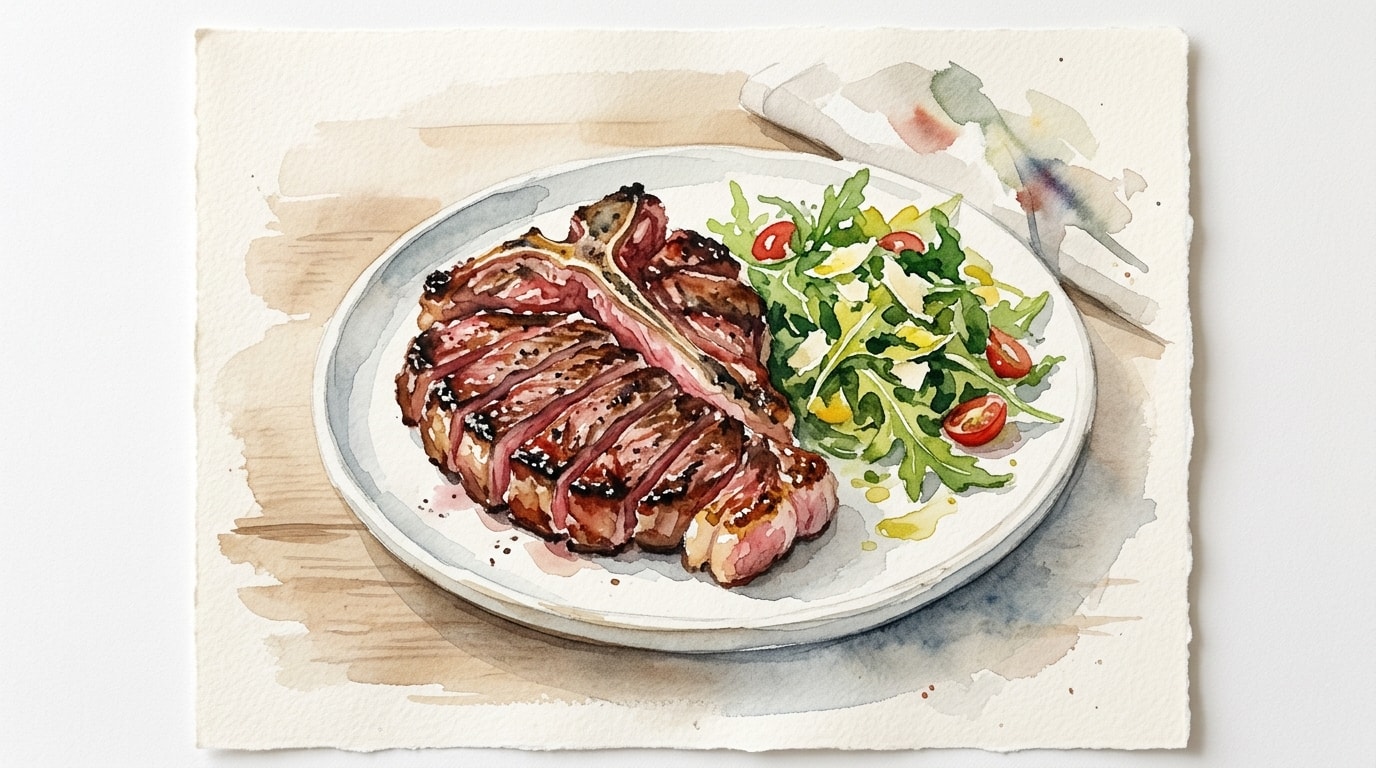
Carve the steak by running a knife along both sides of the central T-bone to detach the strip and the tenderloin. Slice the meat thickly against the grain. Serve immediately on a warmed platter with the fresh salad on the side.
Chef's Notes
- For an authentic Bistecca alla Fiorentina, source a steak cut from the Chianina breed of cattle. The sheer size and thickness (ideally 3 to 4 fingers thick) are essential to achieving the contrast of a charred crust and rare center.
- Resting the meat is absolutely critical. It allows the muscle fibers to relax and reabsorb juices, preventing them from flooding your carving board.
- Dress the arugula salad at the very last moment. The acid in the lemon will quickly break down the delicate greens, losing the crisp texture needed to balance the rich beef.
- Keep seasoning simple. High-quality beef requires only coarse salt and black pepper to shine. Do not use complex spice rubs.
Storage
Refrigerator: 3 days — Store steak and salad separately. The dressed salad will wilt immediately and does not keep.
Reheating: Gently slice and warm in a skillet over low heat, or serve cold. Do not microwave to avoid overcooking the rare center.
Troubleshooting
Steak has a gray, uncharred exterior
Cause: The grill or skillet was not hot enough, or the steak surface was too wet with moisture
Fix: Cannot be fixed
Prevention: Ensure the cooking surface is heavily preheated and pat the steak thoroughly dry before seasoning
Steak is bleeding heavily onto the cutting board when sliced
Cause: The meat was not rested long enough after cooking
Fix: Spoon the rested juices back over the sliced meat when serving
Prevention: Always rest thick cuts of meat for at least 10 minutes
Cultural Context
Bistecca alla Fiorentina is a legendary Tuscan dish deeply tied to Florence's history. Traditionally served during the Feast of Saint Lawrence in August, it celebrates culinary simplicity, relying entirely on the pristine quality of local Chianina beef, superior olive oil, and the mastery of a hot wood fire.