
Equipment
Ingredients
Rice Component
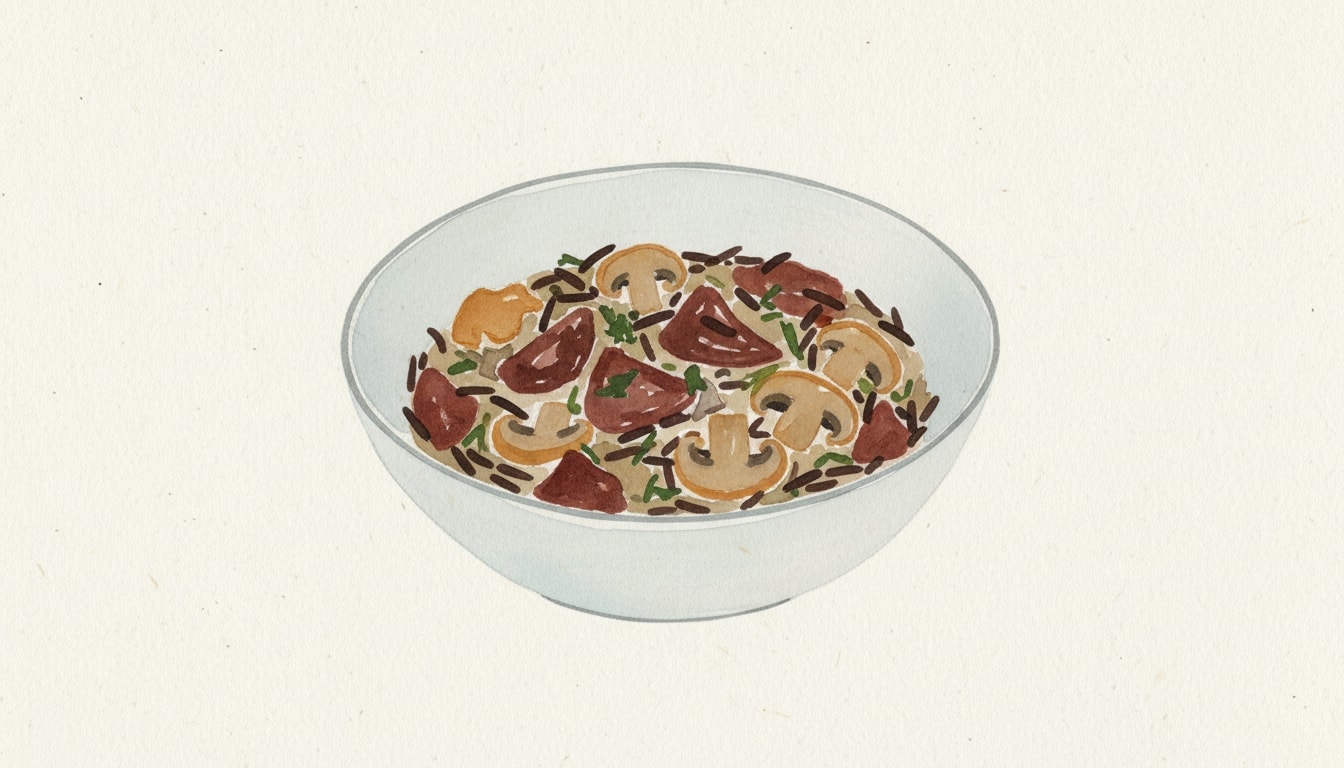
- 180 g wild rice
- 525 ml water, cold
- 2 g salt
Sauté Component
- 1 duck liver, finely chopped
- 115 g mushrooms, cubed
- 30 g unsalted butter
- 30 g white onion, finely chopped
- 1 g black pepper, freshly ground
Nutrition (per serving)
Nutrition is estimated per serving. Nutrients without complete source data are omitted.
Full nutrition
- Calories
- 241 kcal
- Protein
- 10 g
- Carbohydrates
- 36 g
- Fat
- 7 g
- Fiber
- 3 g
- Sugar
- 2 g
- Sodium
- 223 mg
- Saturated Fat
- 4 g
- Monounsaturated Fat
- 2 g
- Polyunsaturated Fat
- 1 g
- Cholesterol
- 81 mg
- Potassium
- 328 mg
- Calcium
- 20 mg
- Iron
- 4.9 mg
- Magnesium
- 88 mg
- Phosphorus
- 258 mg
- Zinc
- 3.3 mg
- Vitamin A
- 1552 mcg
- Vitamin C
- 2 mg
- Vitamin D
- 0.1 mcg
- Vitamin E
- 0.6 mg
- Vitamin K
- 2 mcg
- Vitamin B6
- 0.3 mg
- Vitamin B12
- 6.8 mcg
- Thiamin
- 0.15 mg
- Riboflavin
- 0.35 mg
- Niacin
- 4.9 mg
- Folate
- 142 mcg
- Water
- 178 g
Sources: USDA FoodData Central
Method
Rinse the wild rice under cold running water in a fine-mesh strainer until the water runs clear.
Combine the rinsed rice, 525ml cold water, and salt in a saucepan.
Bring the rice mixture to a boil over high heat.
Reduce heat to low and simmer for 60 minutes, or until the rice grains have puffed open.
Drain the cooked rice thoroughly to remove any excess liquid.
Finely chop the duck liver into uniform pieces.
Cut the mushrooms into 1.25 cm (1/2 inch) cubes.
Melt the butter in a skillet over medium heat (approx. 175°C/350°F).
Add the cubed mushrooms to the skillet and cook for 30 seconds, stirring constantly.
Add the chopped liver to the skillet and cook for another 30 seconds while stirring.
Stir in the finely chopped onion and cook for 15 seconds; season the mixture with pepper and additional salt.
Add the drained wild rice to the skillet and stir until the mixture is thoroughly heated through.
Chef's Notes
- Wild rice requires a longer cooking time than cultivated rice; ensure it's fully tender and the grains have 'puffed' open, indicating they are cooked through.
- Don't overcook the duck liver. It should be cooked just until it changes color to avoid a tough or mealy texture. The residual heat will continue to cook it slightly once combined with the rice.
- For a richer flavor, consider deglazing the pan with a splash of dry sherry or brandy after sautéing the vegetables and liver, before adding the rice.
- Wild rice can vary in cooking time. It's best to check for doneness after 50 minutes and adjust as needed, adding a little more water if it becomes too dry before it's tender.
- Taste and adjust seasoning (salt and pepper) at the very end, after all ingredients are combined, as the liver and any pan drippings will contribute to the overall saltiness.
Storage
Refrigerator: 72 hours — Store in an airtight container.
Reheating: Reheat in a skillet over medium heat with a splash of water or butter until internal temperature reaches 74°C/165°F.
Troubleshooting
Wild rice is tough or crunchy
Cause: Insufficient cooking time or water evaporated too quickly
Fix: Add 50ml water and simmer for an additional 10 minutes, or let stand in hot water.
Prevention: Ensure the saucepan lid is tight-fitting during the simmer phase.
Liver is dry and grainy
Cause: Overcooked liver
Fix: Cannot be fixed
Prevention: Strictly follow the 30-second sauté time for the liver.
Cultural Context
Wild rice, native to North America, was a staple food for Indigenous peoples. This preparation, incorporating liver and mushrooms, reflects a traditional approach to utilizing all parts of hunted game, offering a hearty and nutrient-rich side dish often found in rustic or game-focused American cuisine.


