
Equipment
* optional
Ingredients
Whole Lemon Puree
- 2 lemons, whole, washed
Cake Batter
- 4 eggs, room temperature
- 200 g caster sugar
- 150 g almond meal
- 100 g all-purpose flour
- 10 g baking powder
- 3 g fine sea salt
- 100 ml mild olive oil
Mascarpone Filling
- 250 g mascarpone cheese, chilled
- 150 ml heavy cream, chilled, minimum 35 percent fat
- 50 g icing sugar, sifted
- 5 ml vanilla extract
Candied Lemon Peel
- 1 lemon, peel only, julienned
- 100 g granulated sugar
- 100 ml water
Nutrition (per serving)
Nutrition is estimated per serving. Nutrients without complete source data are omitted.
Full nutrition
- Calories
- 539 kcal
- Protein
- 9 g
- Carbohydrates
- 57 g
- Fat
- 35 g
- Fiber
- 3 g
- Sugar
- 39 g
- Sodium
- 162 mg
- Saturated Fat
- 12 g
- Trans Fat
- 0 g
- Monounsaturated Fat
- 14 g
- Polyunsaturated Fat
- 4 g
- Cholesterol
- 91 mg
- Potassium
- 302 mg
- Calcium
- 168 mg
- Iron
- 1.4 mg
- Magnesium
- 49 mg
- Phosphorus
- 204 mg
- Zinc
- 0.9 mg
- Vitamin A
- 228 mcg
- Vitamin C
- 14 mg
- Vitamin D
- 0.6 mcg
- Vitamin E
- 5.7 mg
- Vitamin K
- 7 mcg
- Vitamin B6
- 0.1 mg
- Vitamin B12
- 0.2 mcg
- Thiamin
- 0.06 mg
- Riboflavin
- 0.31 mg
- Niacin
- 0.7 mg
- Folate
- 22 mcg
- Water
- 60 g
- Alcohol
- 0 g
Sources: Aggregated Public Data, USDA FoodData Central
Method
Place the whole lemons for the puree in a medium saucepan and cover completely with water. Bring to a boil, then reduce the heat and simmer until the lemons are entirely soft and easily pierced with a fork.
Carefully remove the boiled lemons and let them cool slightly. Cut them open to meticulously remove and discard every seed. Transfer the remaining peel, pith, and flesh to a food processor and blend into a smooth puree.
Preheat the oven to 170 degrees Celsius (340 degrees Fahrenheit). Grease two 20cm round cake pans and line the bottoms with parchment paper.
In a stand mixer fitted with the whisk attachment, beat the eggs and caster sugar on high speed until the mixture is pale, airy, and leaves a ribbon trail when the whisk is lifted.
Gently fold the lemon puree and mild olive oil into the whipped egg mixture. Sift the all-purpose flour, baking powder, and salt over the bowl, add the almond meal, and fold together using a large spatula until just combined.
Divide the batter evenly between the two prepared pans. Bake in the preheated oven at 170 degrees Celsius (340 degrees Fahrenheit) until the cakes are golden brown and a skewer inserted into the center comes out clean.
Allow the cakes to cool in their pans for 10 minutes, then carefully turn them out onto a wire rack to cool completely.
To begin the candied peel, blanch the julienned lemon peel by placing it in a small saucepan of boiling water for one minute, then drain. This removes the harsh bitterness from the peel.
In the same small saucepan, combine the blanched peel with the granulated sugar and 100ml water. Simmer gently over medium-low heat until the peel is translucent and the syrup has thickened.
In a clean mixing bowl, combine the chilled mascarpone, chilled heavy cream, sifted icing sugar, and vanilla extract. Whisk on medium speed just until the mixture holds firm peaks.
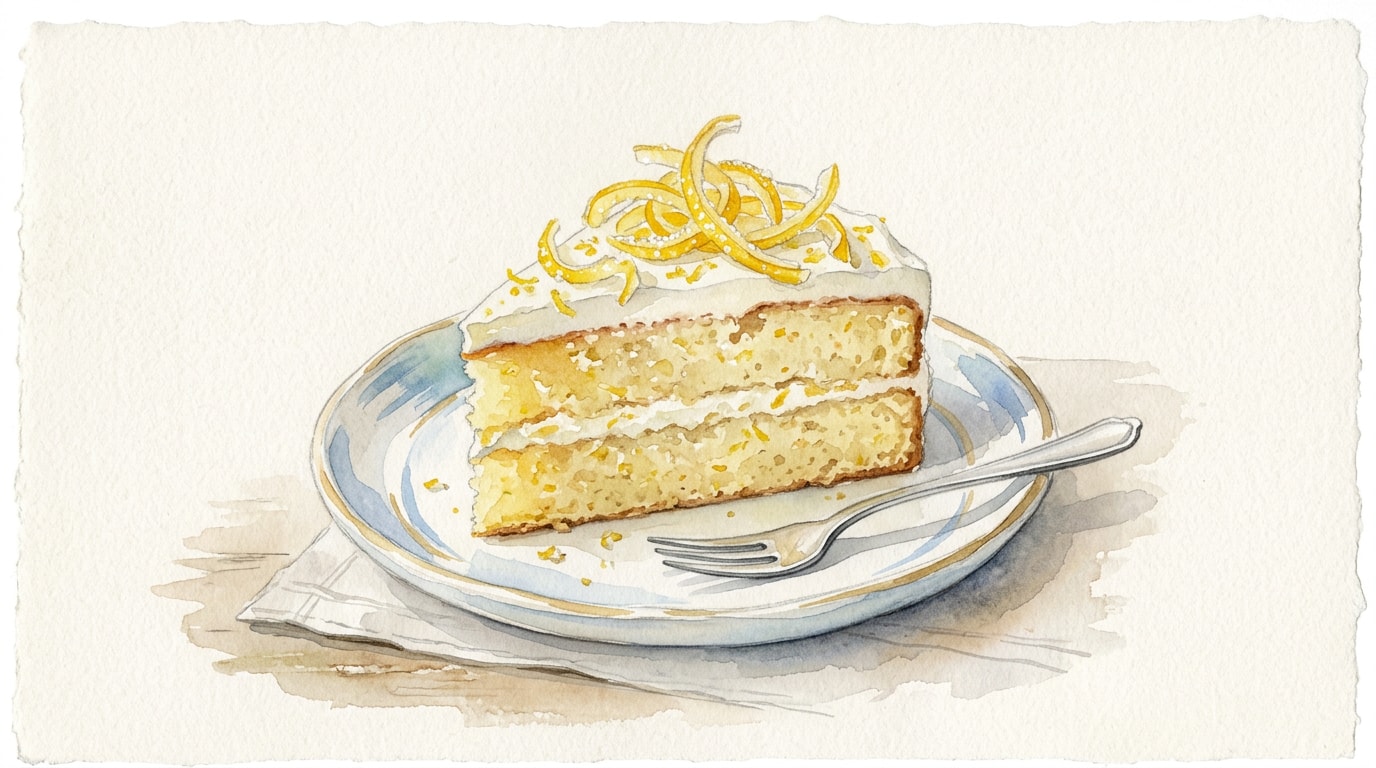
Place one completely cooled cake layer on a serving platter. Spread the mascarpone filling evenly over the top using an offset spatula. Gently place the second cake layer on top.
Garnish the top of the cake by arranging the cooled candied lemon peel in the center. Drizzle a small amount of the leftover lemon syrup over the top for a glossy finish.
Chef's Notes
- Boiling the whole lemons softens the rind and breaks down the bitter compounds in the pith, transforming the entire fruit into a deeply aromatic flavor base.
- Almond meal provides an excellent structural support for this cake, holding onto moisture from the lemon puree while keeping the crumb incredibly tender.
- If your lemons are extremely thick-skinned, you may need to increase the boiling time by 15 to 20 minutes to ensure they are adequately tender before pureeing.
- Always ensure your cake layers are completely cold to the touch before attempting to spread the mascarpone filling, otherwise the cheese will melt and slide off the cake.
Storage
Refrigerator: 4 days — Store in an airtight container to prevent the mascarpone from absorbing fridge odors.
Freezer: 2 months — Freeze un-assembled cake layers only. Thaw overnight in the refrigerator before assembling.
Troubleshooting
Cake has a sharp, astringent, or bitter taste
Cause: Lemon seeds were blended into the puree
Fix: Cannot be fixed
Prevention: Inspect the boiled lemons meticulously after cutting them open to ensure every single seed is discarded.
Mascarpone filling looks grainy or has split into butter and liquid
Cause: The mixture was over-whipped, or the mascarpone and cream were not sufficiently chilled
Fix: If caught early, gently fold in one to two tablespoons of unwhipped cold heavy cream to smooth the emulsion. If fully separated, it cannot be fixed.
Prevention: Keep dairy exceptionally cold and stop whisking the moment the cream holds firm peaks.
Cake layers sink in the middle after baking
Cause: The oven door was opened too early, or the dry ingredients were over-folded and deflated the eggs
Fix: Fill the sunken center with extra mascarpone cream during assembly to level the cake.
Prevention: Do not open the oven door during the first 25 minutes of baking. Fold dry ingredients with a gentle, sweeping motion.
Cultural Context
The technique of boiling whole citrus fruits to create a cake batter originates from Mediterranean and Sephardic Jewish baking traditions, famously popularized by Claudia Roden. Utilizing the entire fruit ensures zero waste while capturing the intense essential oils locked within the peel. The addition of mascarpone provides a distinctly Italian richness, cutting through the sharp citrus notes with its mild, buttery profile.


