
Equipment
* optional
Ingredients
Base Vegetables
- 400 g carrots, peeled and roughly chopped
- 100 g celery, finely diced
- 50 g red onion, finely diced
- 60 g dill pickles, finely diced
Creamy Dressing
- 120 g vegan mayonnaise
- 15 g dijon mustard
- 15 ml lemon juice, freshly squeezed
- 5 g fresh dill, finely chopped
- 2 g kelp flakes
- 3 g salt
- 1 g black pepper, freshly ground
Nutrition (per serving)
Nutrition is estimated per serving. Nutrients without complete source data are omitted.
Full nutrition
- Calories
- 125 kcal
- Protein
- 2 g
- Carbohydrates
- 17 g
- Fat
- 6 g
- Fiber
- 4 g
- Sugar
- 8 g
- Sodium
- 694 mg
- Saturated Fat
- 1 g
- Monounsaturated Fat
- 1 g
- Polyunsaturated Fat
- 3 g
- Cholesterol
- 7 mg
- Potassium
- 446 mg
- Calcium
- 62 mg
- Iron
- 0.6 mg
- Magnesium
- 21 mg
- Phosphorus
- 53 mg
- Zinc
- 0.4 mg
- Vitamin A
- 847 mcg
- Vitamin C
- 10 mg
- Vitamin E
- 1.4 mg
- Vitamin K
- 37 mcg
- Vitamin B6
- 0.2 mg
- Thiamin
- 0.10 mg
- Riboflavin
- 0.10 mg
- Niacin
- 1.1 mg
- Folate
- 35 mcg
- Water
- 164 g
Sources: USDA FoodData Central
Method
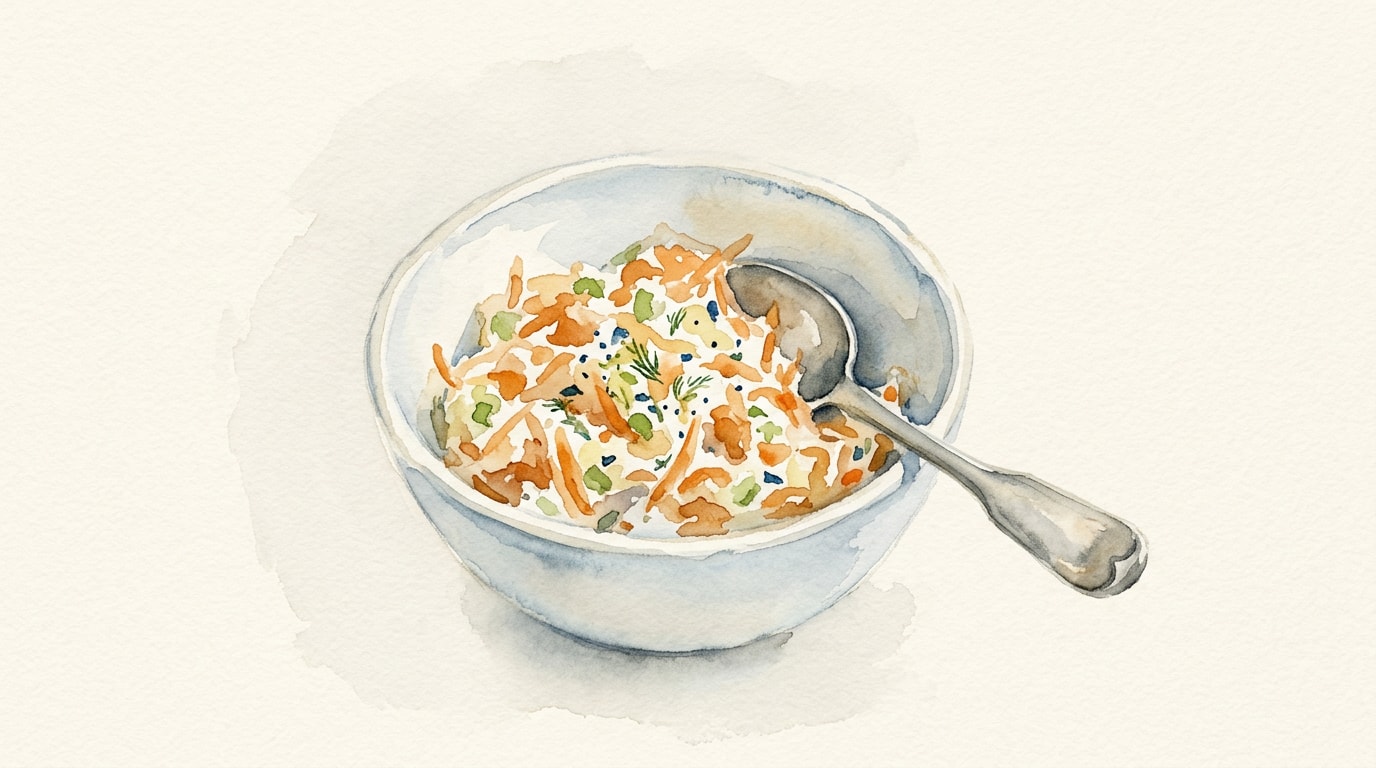
Place the roughly chopped carrots into a food processor. Pulse briefly until the carrots are broken down into small, flaky pieces that resemble the texture of canned tuna. Do not over-process into a puree. If using a box grater, grate the carrots on the large holes, then roughly chop them to shorten the strands.
In a large mixing bowl, combine the vegan mayonnaise, Dijon mustard, lemon juice, fresh dill, kelp flakes, salt, and black pepper. Whisk until perfectly smooth and evenly combined.
Add the pulsed carrots, diced celery, diced red onion, and diced dill pickles to the bowl with the dressing. Fold gently with a spatula until all the vegetables are evenly coated in the creamy mixture.
Cover the bowl tightly and refrigerate for at least 30 minutes. This resting period allows the carrots to soften slightly in the acidic dressing and gives the flavors time to meld.
Serve the mock tuna chilled. It can be enjoyed scooped onto toasted bread, stuffed into avocado halves, wrapped in tortillas, or served over a bed of mixed greens.
Chef's Notes
- The secret to a true 'tuna' experience without fish lies in the addition of seaweed. Kelp flakes or crushed nori provide the necessary brine and ocean notes.
- Texture is paramount here. Pulsing the carrots rather than grating them prevents the salad from feeling like a traditional coleslaw, yielding a much closer bite to flaked fish.
- For an extra punch of umami, try adding a half teaspoon of light soy sauce or tamari to the dressing mixture.
- If raw red onion is too sharp for your palate, soak the diced onion in cold water for 10 minutes, then drain and pat dry before adding to the salad.
Storage
Refrigerator: 4 days — Store in an airtight container. Stir well before serving as dressing may separate slightly.
Troubleshooting
The salad is too watery
Cause: The carrots released excess moisture, or the pickles were not drained well enough
Fix: Stir in a spoonful of chia seeds or extra chopped celery to absorb excess liquid
Prevention: Pat the diced pickles dry before adding, and ensure carrots are fresh and firm
The salad lacks the characteristic 'tuna' flavor
Cause: Omission of the kelp flakes or insufficient acidity
Fix: Add a pinch more kelp flakes or an extra splash of pickle brine to taste
Prevention: Include seaweed elements and adequate lemon juice
Cultural Context
Tuna salad has been a staple of American diner culture and home lunches for over a century, prized for its convenience and satisfying texture. This plant-based adaptation reimagines the nostalgic classic, trading canned fish for nutrient-dense carrots while preserving the comforting, creamy, and crunchy profile of the original dish.


