Equipment
Ingredients
Herb Broth
- 750 ml fish stock, low-sodium, cold
- 100 ml dry white wine
- 1 shallot, peeled and thinly sliced
- 30 g flat-leaf parsley stems
- 4 fresh thyme, whole sprigs
- 1 bay leaf
- 6 black peppercorns
- 1 lemon zest, 3 wide strips from 1 unwaxed lemon, white pith removed
Turbot
- 4 turbot fillets, skin on, pin bones removed
- 3 g fine sea salt
- 1 g white pepper
Garden Vegetables
- 200 g baby carrots, tops trimmed, scrubbed or peeled
- 200 g asparagus spears, woody ends snapped off
- 150 g sugar snap peas, strings removed
- 150 g pearl onions, peeled
- 30 g unsalted butter
- 2 g fine sea salt
Finishing
- 40 g unsalted butter, cold, cut into 1 cm cubes
- 20 ml lemon juice, freshly squeezed and strained
- 4 g fresh chervil, leaves picked
- 8 g fresh chives, snipped into 1 cm pieces
Nutrition (per serving)
Nutrition is estimated per serving. Nutrients without complete source data are omitted.
Full nutrition
- Calories
- 413 kcal
- Protein
- 36 g
- Carbohydrates
- 16 g
- Fat
- 21 g
- Fiber
- 5 g
- Sodium
- 1094 mg
- Potassium
- 1085 mg
- Calcium
- 105 mg
- Iron
- 3.3 mg
- Magnesium
- 131 mg
- Phosphorus
- 401 mg
- Zinc
- 1.1 mg
- Vitamin A
- 548 mcg
- Vitamin C
- 26 mg
Sources: Aggregated Public Data, USDA FoodData Central
Method
Set up a cutting board. Peel the shallot and slice it thinly. Strip the parsley leaves from the stems and reserve the stems for the broth. Using a vegetable peeler, remove 3 wide strips of lemon zest from an unwaxed lemon, taking care to avoid the bitter white pith.
In a medium saucepan, combine the fish stock, white wine, sliced shallot, parsley stems, thyme sprigs, bay leaf, peppercorns, and lemon zest strips. Bring to a gentle simmer over medium heat, then lower the heat so the liquid barely trembles, around 80°C/176°F. Infuse for 15 minutes without allowing a rolling boil.
Set a fine mesh strainer over a wide shallow pan and pour the infused broth through, pressing gently on the solids to release their flavor. Discard the aromatics. You should have roughly 700 ml of clear, fragrant broth.
On the cutting board with the chef's knife, trim the baby carrots, cut the asparagus on the diagonal into 5 cm pieces, and de-string the sugar snap peas. If any pearl onions resist peeling, score a small X at the root end and blanch for 20 seconds to loosen the skins.
Bring a separate pot of well-salted water to a rolling boil. Drop the pearl onions in and blanch for 3 minutes until just tender, then lift them out with a slotted spoon and plunge into the ice bath bowl.
Add the baby carrots to the same boiling water and blanch for 2 minutes. Lift out with the slotted spoon and transfer to the ice bath.
Using tongs, lower the asparagus pieces and sugar snap peas into the boiling water together and blanch for 1 minute only, then transfer to the ice bath to lock in the color.
Drain the chilled vegetables in a colander, spread them on a clean kitchen towel, and pat dry. Reserve at room temperature while you cook the fish.
Pat the turbot fillets dry with paper towels and season both sides with the fine sea salt and white pepper, distributing evenly.
Return the strained herb broth to a bare quiver in the wide shallow pan, about 70°C/158°F. Gently lower the turbot fillets into the broth skin side up, arranging them in a single layer so they are mostly submerged. Poach undisturbed for 6 to 8 minutes.
Check the internal temperature at the thickest part of one fillet with the instant read thermometer. The turbot reaches the safe minimum of 63°C/145°F; the flesh should appear opaque white and flake cleanly when nudged with a knife. Slide the pan off the heat the moment the target temperature is reached.
Lift the turbot fillets from the broth with a slotted spoon and set them on a warm plate. Tent loosely with foil and rest for 2 minutes while you finish the sauce.
Return the pan of broth to medium heat and reduce by about one third to concentrate the flavor, aiming for roughly 450 ml. This takes 5 to 7 minutes.
Pull the pan off the heat. Whisk in the cold butter cubes one at a time, letting each piece melt and emulsify before adding the next, until the broth turns glossy and just slightly thickened.
Stir the lemon juice into the finished broth. Taste and add a small pinch of salt if needed. Keep the broth warm but not hot.
Melt the 30 g of butter in a wide sauté pan over medium heat. Add the blanched vegetables with a pinch of salt and toss gently for 2 minutes until heated through and glossy.
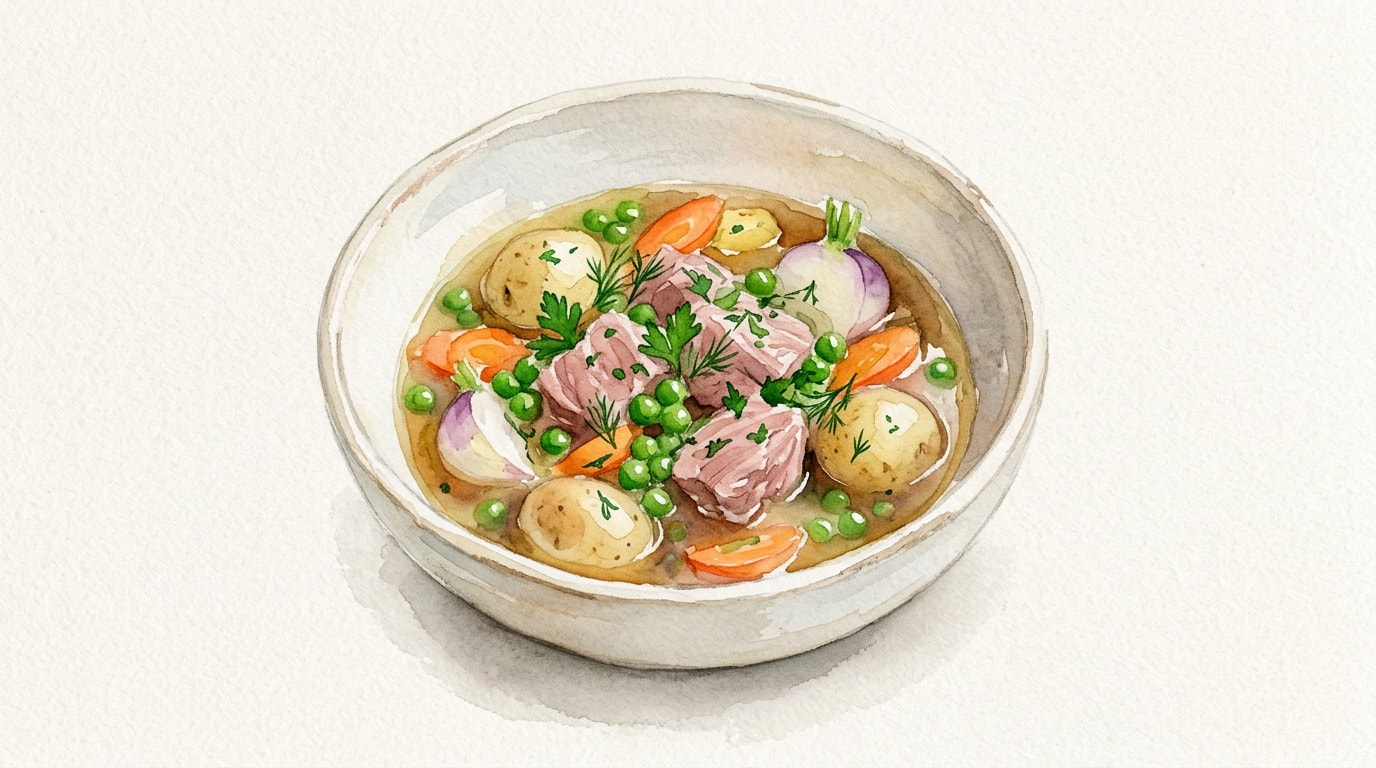
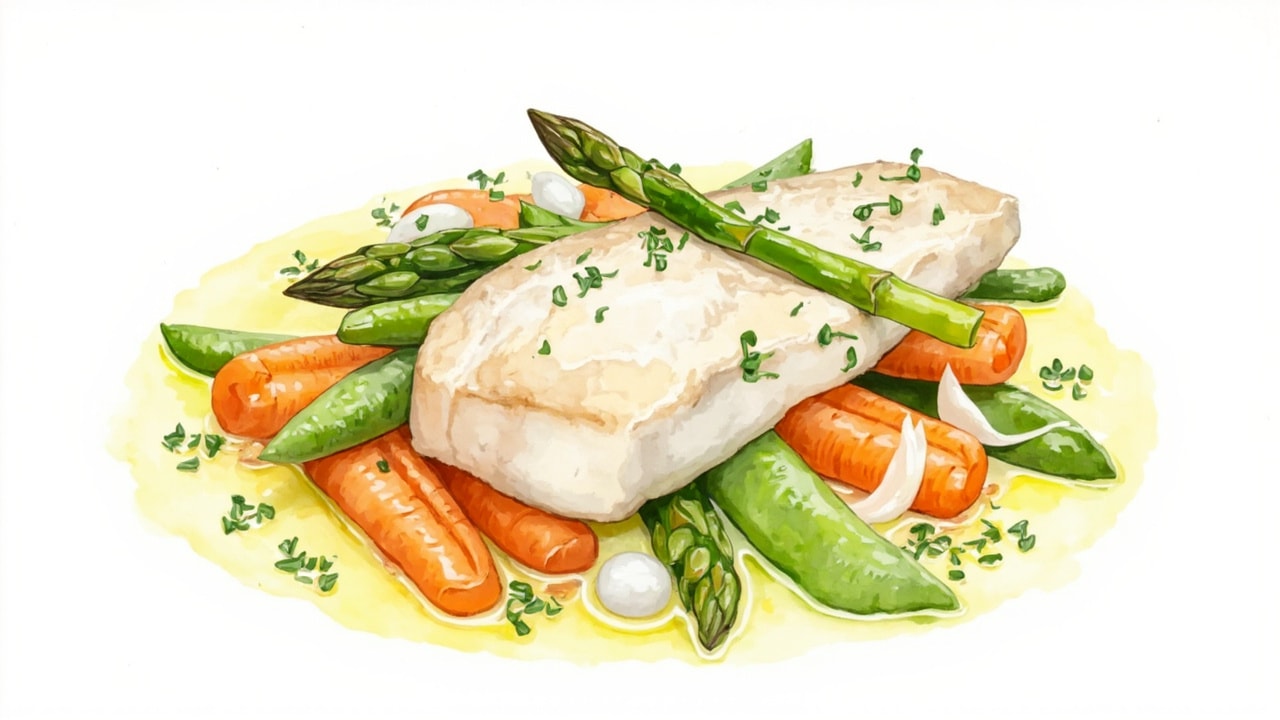
Divide the warm vegetables evenly among four shallow bowls, mounding them slightly off center.
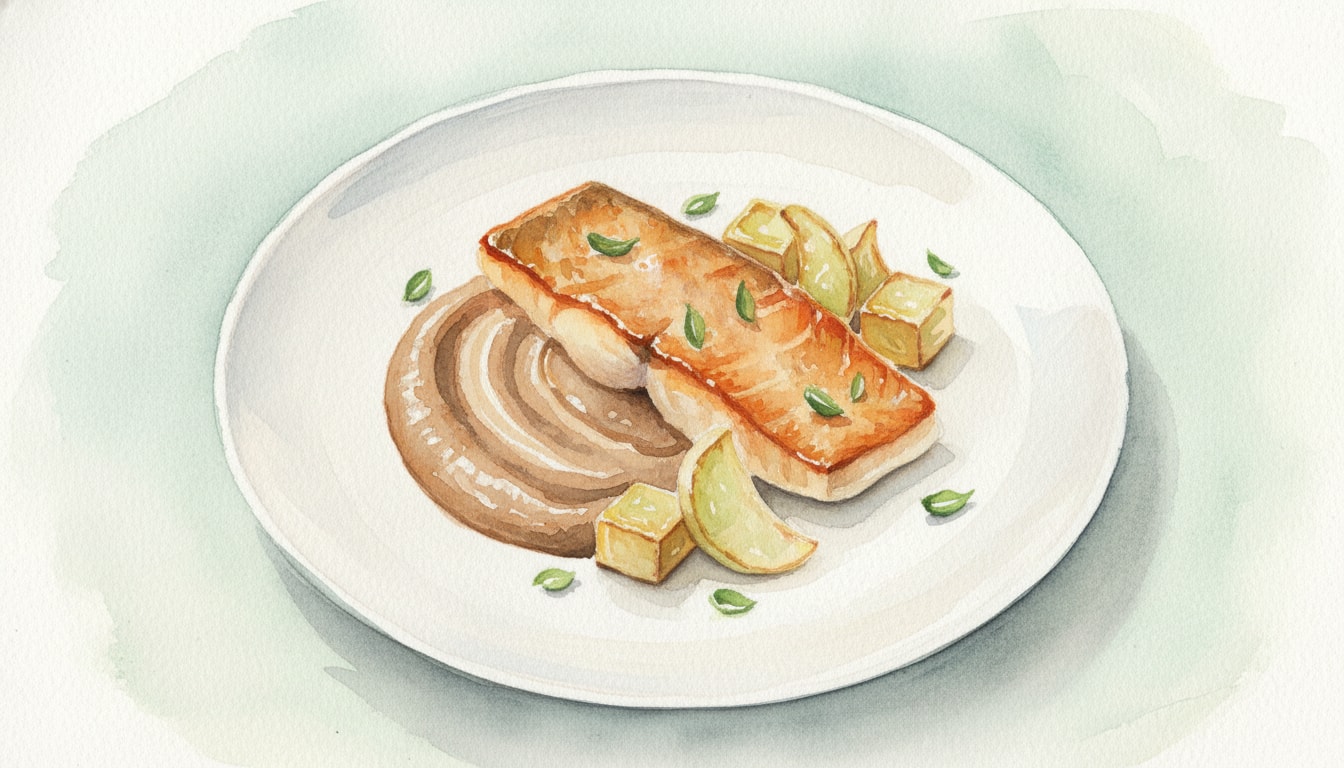
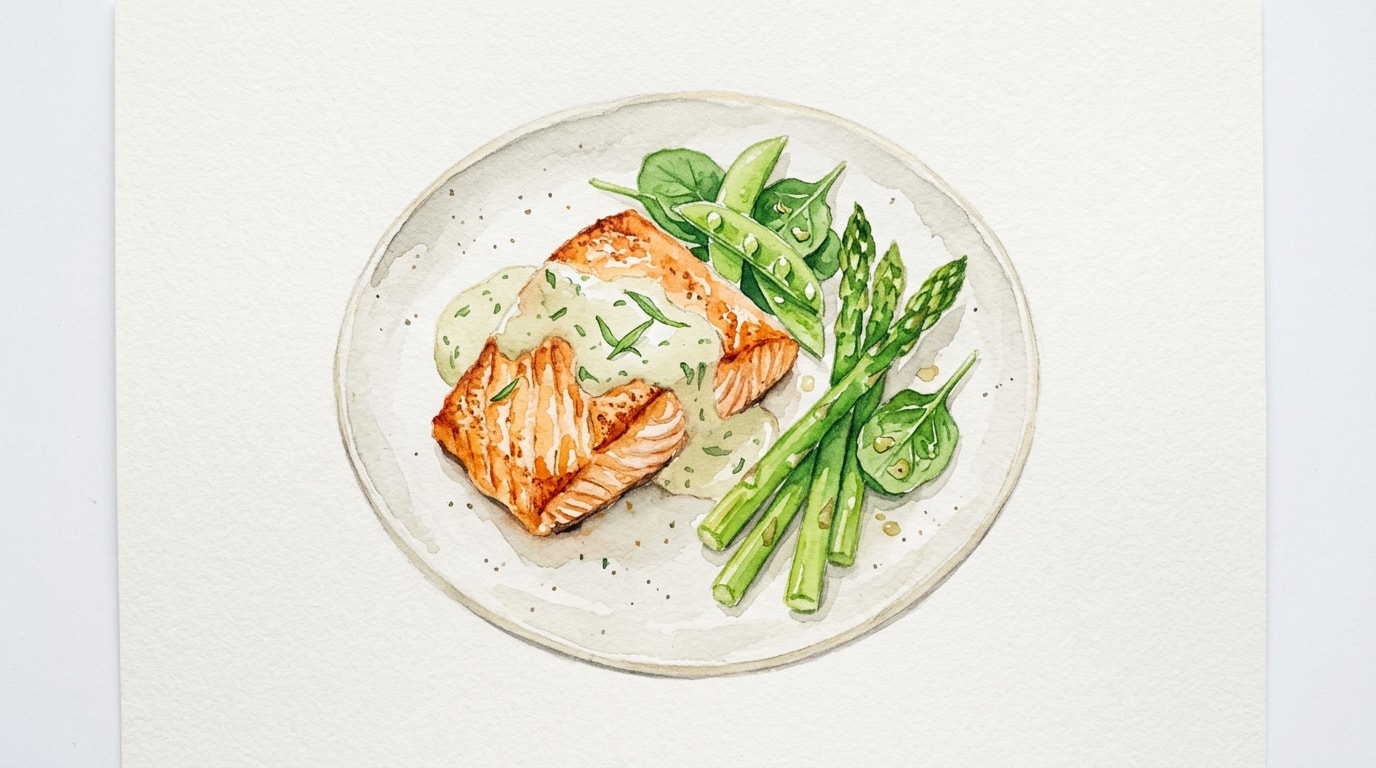
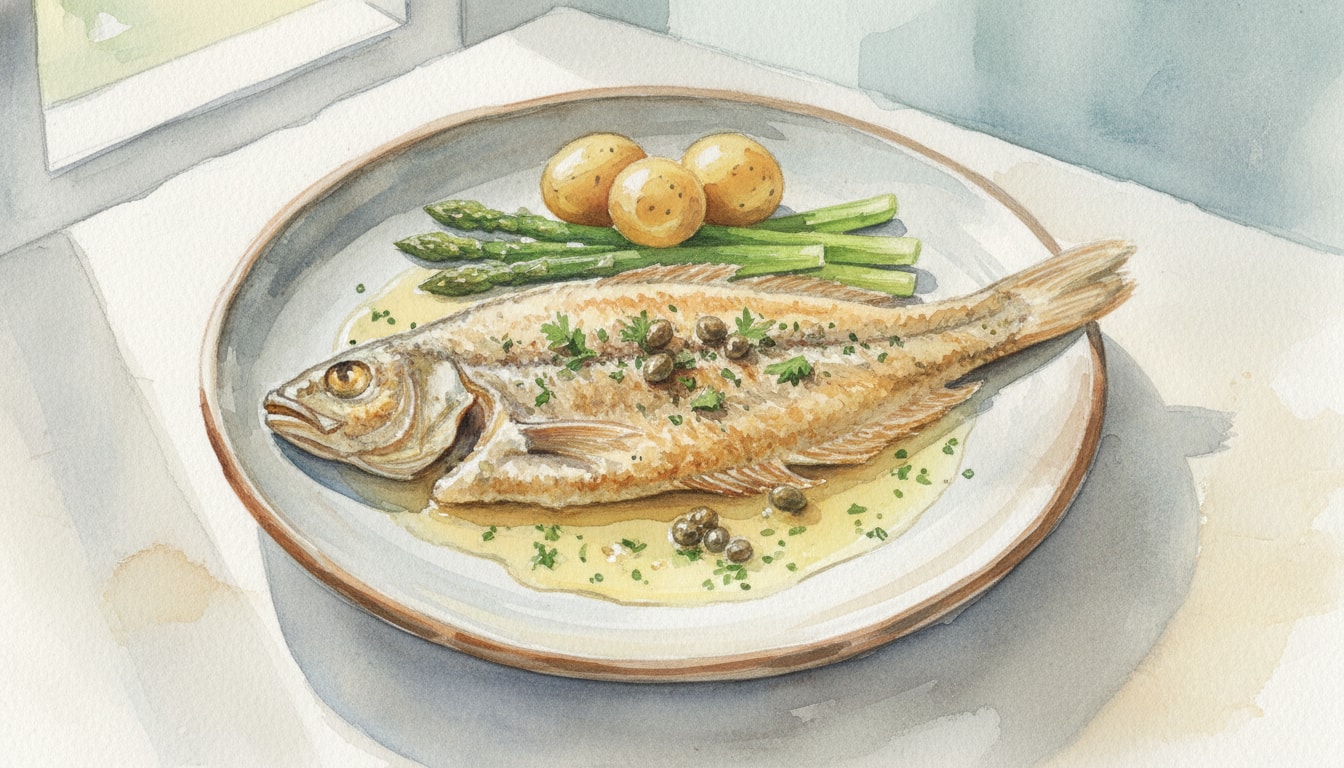
Lay a turbot fillet over the vegetables on each plate, draping it gently to show its curve.
Spoon 3 to 4 tablespoons of the herb-lemon broth around each fillet, letting the vegetables peek through rather than drowning them.
Scatter the chervil leaves and snipped chives over the top and serve immediately, with lemon wedges alongside.
Chef's Notes
- Turbot naturally releases gelatin during cooking, which is why a whisper of butter is enough to give the broth body. Avoid aggressive boiling that drives off this natural silkiness.
- Use a wide shallow pan rather than a deep pot for the poaching. A single layer of fillets cooks more evenly and you keep the broth clear enough to double as a finishing sauce.
- Pulling the fish at the exact safe minimum and resting it covered keeps the flesh glossy. Any extra minutes on the heat translate directly to dryness.
- The ice bath is non-negotiable for vibrant vegetables. It stops enzymatic browning and locks in the snap that makes the dish feel fresh.
- Wash hands and sanitize the cutting board after handling raw turbot to avoid cross-contamination with the vegetables and other kitchen surfaces.
Storage
Refrigerator: 1 day — Cooked fish is best enjoyed the same day. Refrigerate promptly in a sealed container and consume within 24 hours.
Reheating: Gently warm fish in a covered pan over low heat with a splash of water for 3-4 minutes until just heated through to 63°C/145°F. Do not microwave.
Troubleshooting
Turbot is dry or rubbery
Cause: Overcooked; turbot tightens quickly once its internal temperature passes 65°C/150°F
Fix: Cannot be reversed once overcooked; slice the fish and toss gently with a few extra spoonfuls of warm broth to add moisture at the table
Prevention: Remove the pan from the heat the instant the thermometer reads 63°C/145°F at the thickest point
Broth looks cloudy or greasy
Cause: Boiled too vigorously during infusion or the butter was whisked in over direct heat, breaking the emulsion
Fix: Strain the broth through a paper towel lined strainer to clarify, then re-mount with fresh cold butter off the heat
Prevention: Keep the broth at a bare quiver during infusion and pull the pan off the heat before whisking in the cold butter cubes
Vegetables are dull and limp
Cause: Overcooked during blanching or left sitting in the hot water too long
Fix: Refresh briefly in fresh ice water and reduce the final sauté time to about 30 seconds
Prevention: Move the vegetables to the ice bath the instant their time is up to halt the cooking
Lemon flavor is sharp and bitter
Cause: Too much pith on the zest strips, or lemon juice was added while the broth was still boiling
Fix: Whisk in 10 g of cold butter and a splash of warm broth to mellow the acidity
Prevention: Take zest strips with no white pith and always add lemon juice off the heat
Cultural Context
This preparation draws on the French technique of poaching delicate flatfish in a court-bouillon, a method perfected in coastal kitchens from Brittany to Normandy where turbot is revered as the king of flatfish. Pairing the fish with a small plate of seasonal spring vegetables and a butter-mounted broth reflects the classic bistro philosophy of letting two or three pristine ingredients speak without a heavy sauce.