Equipment
Ingredients
Seafood
- 1000 g live mussels, scrubbed and debearded
Pasta
- 400 g linguine, dried
Sauce Aromatics & Base
- 45 ml extra virgin olive oil
- 2 shallots, finely diced
- 4 garlic, minced
- red pepper flakes
- 120 ml dry white wine
- 400 g crushed tomatoes, canned
Seasoning & Garnish
- kosher salt
- black pepper
- 15 g fresh parsley, finely chopped
Nutrition (per serving)
Nutrition is estimated per serving. Nutrients without complete source data are omitted.
Full nutrition
- Calories
- 767 kcal
- Protein
- 46 g
- Carbohydrates
- 94 g
- Fat
- 20 g
- Fiber
- 6 g
- Sugar
- 8 g
- Sodium
- 1423 mg
- Saturated Fat
- 3 g
- Monounsaturated Fat
- 10 g
- Polyunsaturated Fat
- 3 g
- Cholesterol
- 70 mg
- Potassium
- 1664 mg
- Calcium
- 164 mg
- Iron
- 14.8 mg
- Magnesium
- 220 mg
- Phosphorus
- 915 mg
- Zinc
- 7.3 mg
- Vitamin A
- 158 mcg
- Vitamin C
- 37 mg
- Vitamin E
- 3.0 mg
- Vitamin K
- 70 mcg
- Vitamin B6
- 0.2 mg
- Vitamin B12
- 30.0 mcg
- Thiamin
- 0.42 mg
- Riboflavin
- 0.54 mg
- Niacin
- 4.1 mg
- Folate
- 115 mcg
- Water
- 243 g
- Alcohol
- 3 g
Sources: Aggregated Public Data, USDA FoodData Central
Method
Bring a large pot of heavily salted water to a rolling boil at 100°C/212°F. Add the linguine and cook until exactly one minute shy of al dente.
While the pasta boils, heat the extra virgin olive oil in a large heavy-bottomed pan over medium heat. Add the diced shallots and gently cook until they become translucent and tender.
Add the minced garlic and red pepper flakes to the pan, cooking briefly just until their aromas are released.
Pour the dry white wine into the pan to deglaze, scraping the bottom with a wooden spoon to release any caramelized bits. Allow the liquid to bubble vigorously and reduce by half.
Stir in the crushed tomatoes, season lightly with black pepper, and bring the mixture to a steady, gentle simmer.
Place the cleaned fresh mussels evenly into the simmering tomato sauce. Cover the pan immediately with a tight-fitting lid to trap the steam and allow the mussels to open.
Drain the cooked linguine in a colander, reserving a small cup of the starchy pasta cooking water for binding the sauce.
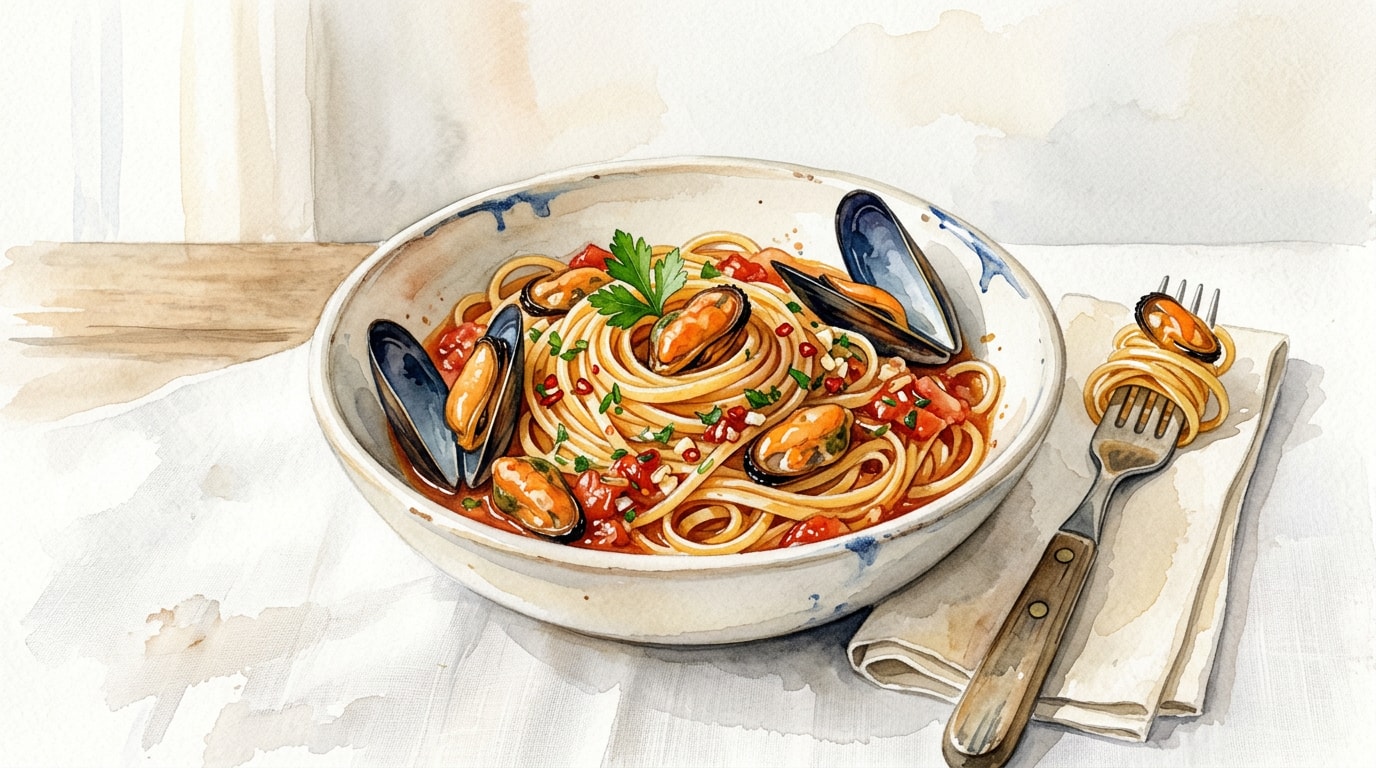
Using kitchen tongs, transfer the drained linguine directly into the pan containing the mussels and tomato sauce. Toss everything together vigorously, adding a splash of the reserved pasta water if the sauce needs loosening.
Sprinkle the fresh chopped parsley evenly over the dish, toss one final time to distribute the herbs, and portion immediately into warm, shallow bowls.
Chef's Notes
- Always purchase live mussels on the absolute same day you intend to cook them. Store them in the coldest part of your refrigerator loosely covered with a damp kitchen towel, never sealed in airtight plastic.
- The internal liquor trapped inside fresh mussels acts as an intensely flavorful, natural seafood stock. Let this liquid merge completely into your tomato base before doing your final seasoning check.
- Selecting a crisp, high-acid dry white wine is critical. Sweet wines will clash horribly with the garlic and tomatoes, leaving a cloying aftertaste. Muscadet is the classic French coastal pairing.
- Do not rinse the linguine after draining it. The surface starches clinging to the hot pasta are essential for emulsifying the tomato and wine base into a sauce that clings beautifully rather than pooling at the bottom of the bowl.
Storage
Refrigerator: 1 day — Remove mussels from their shells before storing to preserve texture and save container space.
Reheating: Reheat gently in a saucepan over medium-low heat with a small splash of water until just warmed through. Do not microwave.
Troubleshooting
Several mussels remain completely closed after steaming
Cause: The mussels were dead before cooking and are unsafe to consume
Fix: Discard any tightly closed mussels immediately. Do not attempt to pry them open or eat them.
Prevention: Inspect all mussels closely during prep; tap open shells to ensure they respond and tightly close
The mussel meat is shriveled, tough, and rubbery
Cause: The steaming process went on too long, overcooking the delicate protein
Fix: Cannot be fixed
Prevention: Remove the pan from the heat the exact moment the majority of shells have popped wide open
Sauce tastes overly salty and harsh
Cause: Excess salt was added early on, and the natural briny liquor from the mussels pushed it over the edge
Fix: Add a squeeze of fresh lemon juice or an extra splash of unsalted crushed tomatoes to dilute the salinity
Prevention: Under-season the sauce base initially, waiting until after the mussels release their juices to adjust final salt levels
Cultural Context
Rooted in the sun-drenched coastal traditions of southern France, variations of this dish are widely celebrated from Marseille to the Italian border. Originally adapted from classic Moules à la Provençale, tossing the rich, briny tomato broth with long pasta strands perfectly captures the culinary crossover of French maritime ingredients and Italian pasta mastery.