Equipment
Ingredients
Pork Roast
- 1000 g pork loin roast, boneless, with fat cap and rind on
- 15 g coarse sea salt
- 15 ml olive oil
- 5 g fennel seeds, crushed
Braised Apples and Fennel
- 3 granny smith apples, cored and sliced into wedges
- 1 fennel bulb, halved and thinly sliced
- 30 g unsalted butter
- 30 ml apple cider vinegar
- 15 g light brown sugar
- 5 g fresh thyme, leaves picked
Wilted Cavolo Nero
- 250 g cavolo nero, stems removed, leaves roughly chopped
- 2 garlic, thinly sliced
- 15 ml olive oil
- ½ lemon, juiced
- salt
Nutrition (per serving)
Nutrition is estimated per serving. Nutrients without complete source data are omitted.
Full nutrition
- Calories
- 738 kcal
- Protein
- 53 g
- Carbohydrates
- 28 g
- Fat
- 46 g
- Fiber
- 8 g
- Sugar
- 18 g
- Sodium
- 1892 mg
- Saturated Fat
- 16 g
- Trans Fat
- 0 g
- Monounsaturated Fat
- 20 g
- Polyunsaturated Fat
- 6 g
- Cholesterol
- 174 mg
- Potassium
- 1387 mg
- Calcium
- 314 mg
- Iron
- 3.9 mg
- Magnesium
- 88 mg
- Phosphorus
- 611 mg
- Zinc
- 6.9 mg
- Vitamin A
- 256 mcg
- Vitamin C
- 70 mg
- Vitamin D
- 1.8 mcg
- Vitamin E
- 2.8 mg
- Vitamin K
- 292 mcg
- Vitamin B6
- 1.3 mg
- Vitamin B12
- 1.4 mcg
- Thiamin
- 1.36 mg
- Riboflavin
- 1.07 mg
- Niacin
- 18.2 mg
- Folate
- 61 mcg
- Water
- 392 g
Sources: USDA FoodData Central
Method
Preheat your oven to 240C/465F. Thoroughly dry the pork rind with paper towels. Score the rind at 1cm intervals using a sharp knife, being careful not to cut into the meat. Rub the olive oil, crushed fennel seeds, and coarse sea salt deeply into the scores.
Place the pork in a roasting pan and roast at 240C/465F for 25 minutes until the skin begins to blister and crackle. Reduce the oven temperature to 180C/355F and continue to roast for another 35 to 45 minutes.
Check the internal temperature of the pork; it should read 63C/145F for a juicy, slightly pink center. Remove from the oven, transfer the meat to a cutting board, and let it rest uncovered for 20 minutes to allow juices to redistribute.
While the pork rests, melt the butter in a large skillet over medium heat. Add the sliced fennel and saute for 5 minutes until softened and beginning to caramelize.
Add the apple wedges, apple cider vinegar, brown sugar, and fresh thyme to the skillet. Reduce the heat to medium-low, cover, and braise for 8 to 10 minutes until the apples are tender but still hold their shape.
Transfer the apple and fennel mixture to a bowl and cover to keep warm. Wipe the skillet clean, return to medium heat, and add the remaining olive oil. Sauté the sliced garlic for 30 seconds until fragrant.
Add the chopped cavolo nero to the skillet with a splash of water. Toss continuously for 3 to 4 minutes until wilted and tender. Remove from heat, stir in the lemon juice, and season to taste with salt.
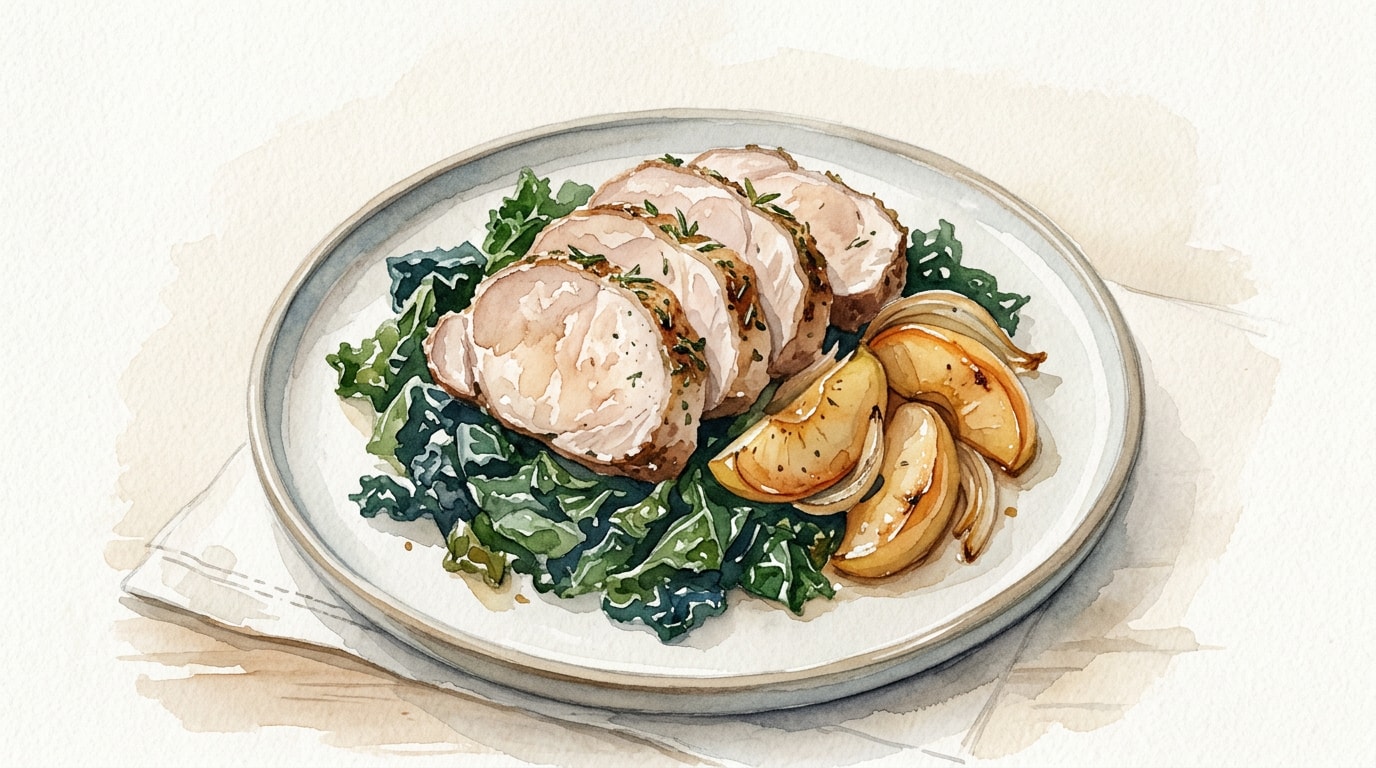
Carve the rested pork loin into thick slices, ensuring each slice has a piece of crackling. Serve immediately alongside the braised apples, fennel, and wilted cavolo nero.
Chef's Notes
- Scoring the pork skin properly into the fat layer, but not piercing the meat underneath, ensures the fat renders effectively and the skin crisps beautifully.
- Using a firm, highly acidic apple like Granny Smith balances the rich, fatty nature of the pork loin. Softer apples will turn to applesauce during braising.
- Do not skip the resting period. Cutting into the hot roast immediately will cause the interior juices to bleed out onto the cutting board, resulting in dry meat.
- Massaging the raw cavolo nero briefly with a few drops of oil before cooking breaks down its tough cellular structure, ensuring it becomes perfectly tender.
Storage
Refrigerator: 3 days — Store pork, apples, and cavolo nero in separate airtight containers. Crackling will lose its crispness.
Freezer: 1 month — Pork and braised apples can be frozen. Cavolo nero is best made fresh.
Reheating: Reheat pork gently in a 150C/300F oven until warm. Re-crisp crackling separately under a broiler.
Troubleshooting
Crackling is rubbery or tough rather than crispy and blistered.
Cause: The pork skin held too much moisture before roasting or the initial oven temperature was not hot enough.
Fix: Carefully slice the rind off the rested pork and place it under a hot broiler for 2-4 minutes, watching continuously so it does not burn.
Prevention: Thoroughly pat the skin dry with paper towels. For best results, leave the meat uncovered in the refrigerator for 24 hours prior to roasting to dehydrate the rind.
Pork loin is dry and chalky.
Cause: The meat was cooked past 63C/145F. Lean cuts like pork loin have very little intramuscular fat and dry out quickly if overcooked.
Fix: Slice the meat thinly and drizzle with the resting juices or a little extra olive oil to restore moisture.
Prevention: Use a digital meat thermometer and pull the roast from the oven exactly at 63C/145F, relying on carryover cooking during the resting phase.
Cultural Context
Roast pork paired with apples is a historic flavor combination deeply rooted in Northern European and British culinary traditions, prized for how the tart fruit cuts through the rich, savory meat. The integration of fennel introduces a subtle Mediterranean anise note that acts as a bridge between the sweet apples and the salty pork. Cavolo nero, an ancient Italian staple from Tuscany, grounds the modern plate with an earthy, mineral-rich bite that balances the inherent sweetness of the dish.