
Equipment
Ingredients
Mussels
- 1500 g live mussels, scrubbed and debearded
Aromatics
- 1 fennel bulb, cored and very thinly sliced
- 1 yellow onion, finely diced
- 4 garlic, minced
Broth
- 30 ml olive oil
- 240 ml dry white wine
- 400 g crushed tomatoes, canned
- 1 g red pepper flakes
- salt
- 2 g black pepper, freshly ground
Garnish
- 15 g fresh parsley, finely chopped
Nutrition (per serving)
Nutrition is estimated per serving. Nutrients without complete source data are omitted.
Full nutrition
- Calories
- 512 kcal
- Protein
- 48 g
- Carbohydrates
- 32 g
- Fat
- 16 g
- Fiber
- 5 g
- Sugar
- 9 g
- Sodium
- 1408 mg
- Saturated Fat
- 3 g
- Monounsaturated Fat
- 7 g
- Polyunsaturated Fat
- 3 g
- Cholesterol
- 105 mg
- Potassium
- 1866 mg
- Calcium
- 185 mg
- Iron
- 17.5 mg
- Magnesium
- 169 mg
- Phosphorus
- 824 mg
- Zinc
- 6.6 mg
- Vitamin A
- 242 mcg
- Vitamin C
- 55 mg
- Vitamin E
- 3.5 mg
- Vitamin K
- 99 mcg
- Vitamin B6
- 0.3 mg
- Vitamin B12
- 45.0 mcg
- Thiamin
- 0.64 mg
- Riboflavin
- 0.83 mg
- Niacin
- 6.5 mg
- Folate
- 185 mcg
- Water
- 438 g
- Alcohol
- 6 g
Sources: Aggregated Public Data, USDA FoodData Central
Method
Using a stiff brush and a dedicated seafood cutting board, clean the live mussels under cold running water. Pull off any fibrous beards. Discard any mussels with cracked shells or open mussels that do not close when tapped to ensure food safety and prevent cross-contamination.
Heat the olive oil in a large Dutch oven over medium heat. Add the thinly sliced fennel and diced yellow onion. Cook, stirring occasionally, until softened and translucent, about 8 to 10 minutes.
Stir the minced garlic and red pepper flakes into the fennel and onion mixture. Cook until deeply fragrant, about 1 minute.
Pour the dry white wine into the pot to deglaze, using a wooden spoon to scrape up any browned bits from the bottom. Simmer until the wine has reduced by half, about 3 minutes.
Stir in the crushed tomatoes and black pepper. Bring the broth to a gentle simmer and let it cook for 5 minutes to meld the flavors. Do not add salt yet, as the mussels will release their natural ocean brine.
Add the cleaned mussels to the simmering broth and stir briefly. Cover tightly with the lid and steam until the shells open wide and the mussel meat reaches a safe internal temperature of 63°C/145°F, about 5 to 7 minutes.
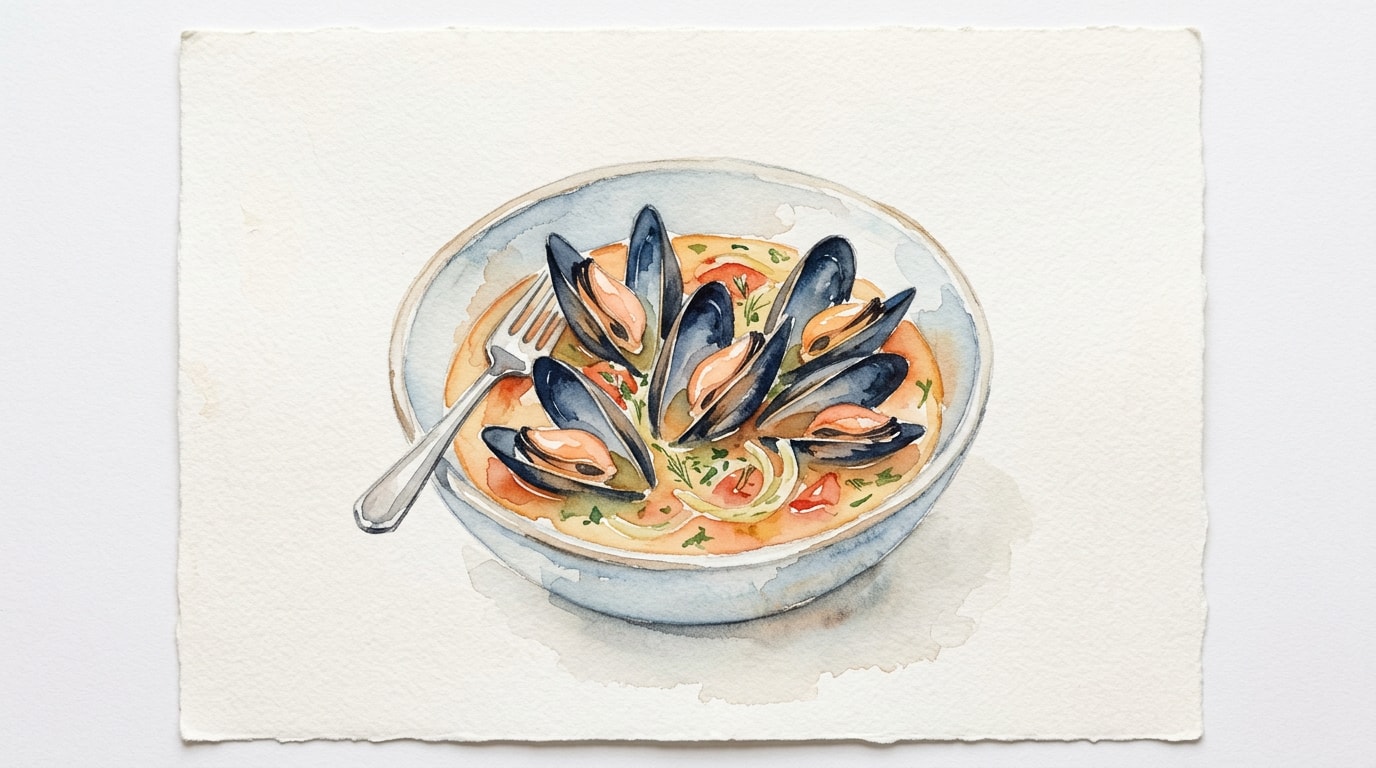
Remove the Dutch oven from the heat immediately. Discard any mussels that remain fully closed after steaming. Use a slotted spoon to divide the open mussels into serving bowls, then use a ladle to pour the hot tomato fennel broth over them. Garnish with chopped fresh parsley and serve.
Chef's Notes
- When selecting wine for the broth, choose a dry, crisp white that you would actually enjoy drinking. A Muscadet or Sauvignon Blanc provides the perfect acidity to balance the rich tomatoes.
- If your fennel bulb comes with fronds attached, save a handful to chop up and mix with the parsley for an extra layer of anise flavor in your garnish.
- Always provide an empty side bowl on the table for your guests to discard their empty mussel shells as they eat.
- Tapping an open raw mussel should cause it to slowly close. If it remains stubbornly open, it is dead and poses a food safety risk. Discard it immediately.
Storage
Refrigerator: 1 day — Remove mussels from their shells and store submerged in the cooking broth to prevent drying out.
Reheating: Warm gently over low heat just until heated through. Do not boil, or the mussels will become tough.
Troubleshooting
Mussels are tough and rubbery.
Cause: Overcooking during the steaming phase.
Fix: Cannot be fixed
Prevention: Remove the pot from the heat exactly when the majority of the shells have opened.
Broth is overly salty.
Cause: Adding salt to the broth before the mussels release their natural ocean brine.
Fix: Stir in a splash of fresh water or a small pinch of sugar to balance the saltiness.
Prevention: Wait to season the broth with salt until after the mussels have cooked and released their juices.
Gritty texture in the broth.
Cause: Mussels were not cleaned thoroughly, or they harbored excess sand.
Fix: Carefully pour the broth through a fine mesh strainer before serving.
Prevention: Scrub mussels vigorously and soak them in cold salt water with a pinch of flour for 20 minutes before cooking to encourage them to expel sand.
Cultural Context
Originating from the coastal regions of Southern France, this style of preparation is deeply rooted in Provençal traditions. The marriage of fresh seafood with tomatoes, fennel, and wine reflects the Mediterranean philosophy of using bright, localized ingredients to elevate simple, rustic meals.


