
Equipment
* optional
Ingredients
Vegetables
- 400 g white radish, peeled and julienned
- 15 g scallion, finely chopped
- 5 g garlic, minced
Dressing
- 10 g gochugaru
- 15 ml rice vinegar
- 10 ml soy sauce
- 10 g sugar
- 2 g salt
- 10 ml toasted sesame oil
- 5 g toasted sesame seeds
Nutrition (per serving)
Nutrition is estimated per serving. Nutrients without complete source data are omitted.
Full nutrition
- Calories
- 70 kcal
- Protein
- 1 g
- Carbohydrates
- 10 g
- Fat
- 4 g
- Fiber
- 3 g
- Sugar
- 6 g
- Sodium
- 355 mg
- Saturated Fat
- 1 g
- Monounsaturated Fat
- 1 g
- Polyunsaturated Fat
- 1 g
- Potassium
- 259 mg
- Calcium
- 54 mg
- Iron
- 3.2 mg
- Magnesium
- 23 mg
- Phosphorus
- 38 mg
- Zinc
- 0.3 mg
- Vitamin A
- 2 mcg
- Vitamin C
- 23 mg
- Vitamin E
- 0.1 mg
- Vitamin K
- 8 mcg
- Vitamin B6
- 0.1 mg
- Thiamin
- 0.04 mg
- Riboflavin
- 0.03 mg
- Niacin
- 0.3 mg
- Folate
- 32 mcg
- Water
- 101 g
Sources: Aggregated Public Data, USDA FoodData Central
Method
Place the julienned white radish into a large mixing bowl. If you are sensitive to spicy ingredients on your skin, put on food prep gloves.
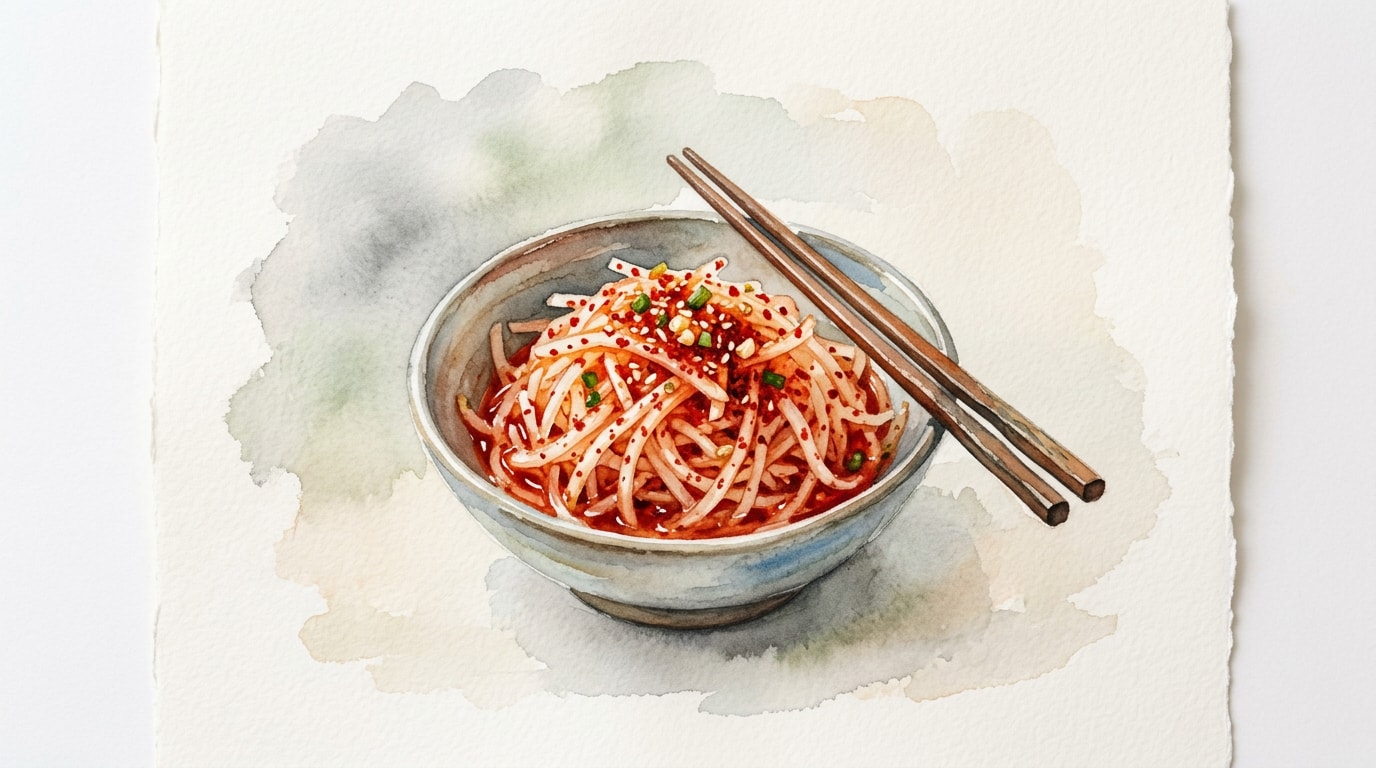
Add the gochugaru to the radish. Using your hands, massage the chili flakes into the radish matchsticks for about 1 to 2 minutes until the radish takes on a uniform, vibrant red color.
Add the rice vinegar, soy sauce, sugar, salt, minced garlic, and chopped scallion to the bowl. Toss thoroughly to combine all the ingredients.
Drizzle the toasted sesame oil over the salad and sprinkle with toasted sesame seeds. Toss gently one final time to distribute the oil and seeds evenly without overworking the vegetables.
Let the salad rest at room temperature for 10 minutes before serving. This brief resting period allows the radish to absorb the dressing and soften slightly while maintaining its crisp texture.
Chef's Notes
- Korean radish (Mu) is firmer, sweeter, and holds less water than Japanese daikon, making it the superior choice for this dish. If using daikon, you may need to add a pinch more sugar to balance the flavor.
- Cutting the radish uniformly ensures that every bite has the same texture and absorbs the dressing evenly. A mandoline slicer can help achieve perfect consistency.
- Toasted sesame oil loses its distinct aroma quickly when heated or overworked, which is why it is added at the very end of the mixing process.
- If you prefer a milder side dish, you can halve the amount of gochugaru. Do not substitute western chili flakes, as they are much spicier and lack the sweet, smoky profile of gochugaru.
Storage
Refrigerator: 4 days — Store in an airtight container. The radish will release more water and the flavor will become more fermented over time.
Troubleshooting
The salad is sitting in a large pool of liquid
Cause: The radish released its natural water content after being salted and dressed
Fix: Drain the excess liquid before serving; the radish will still retain plenty of flavor
Prevention: For a drier salad, lightly salt the julienned radish, let sit for 10 minutes, and squeeze out excess moisture before dressing
The radish lacks crunch
Cause: The radish was cut too thinly or was no longer fresh
Fix: Cannot be fixed
Prevention: Cut the radish into slightly thicker matchsticks (about 3mm) and ensure the vegetable is firm and heavy for its size when purchasing
Cultural Context
Musaengchae is a ubiquitous Korean banchan (side dish) that often accompanies grilled meats or rich stews. Its bright acidity, gentle heat, and refreshing crunch serve as a palate cleanser, cutting through heavy and fatty flavors. It is also a classic topping for bibimbap, adding vital texture to the mixed rice bowl.


