
Equipment
* optional
Ingredients
Spiced Poaching Syrup
- 1000 ml water
- 300 g white sugar
- 3 star anise
- 1 cinnamon stick
- 15 ml lemon juice, freshly squeezed
Pears
- 3 bosc pear, peeled, halved, and cored
Vanilla Pastry Cream
- 250 ml whole milk
- 3 egg yolk
- 50 g white sugar
- 20 g cornstarch
- 1 vanilla bean, split lengthwise and seeds scraped
- 25 g unsalted butter, room temperature
Tart Assembly
- 300 g puff pastry sheet, thawed if frozen, kept very cold
- 1 egg, beaten
- 30 g flaked almonds, toasted
Nutrition (per serving)
Nutrition is estimated per serving. Nutrients without complete source data are omitted.
Full nutrition
- Calories
- 487 kcal
- Protein
- 9 g
- Carbohydrates
- 49 g
- Fat
- 29 g
- Fiber
- 4 g
- Sugar
- 18 g
- Sodium
- 157 mg
- Saturated Fat
- 9 g
- Monounsaturated Fat
- 15 g
- Polyunsaturated Fat
- 4 g
- Cholesterol
- 134 mg
- Potassium
- 229 mg
- Calcium
- 89 mg
- Iron
- 2.0 mg
- Magnesium
- 32 mg
- Phosphorus
- 147 mg
- Zinc
- 0.9 mg
- Vitamin A
- 93 mcg
- Vitamin C
- 3 mg
- Vitamin D
- 1.1 mcg
- Vitamin E
- 2.1 mg
- Vitamin K
- 12 mcg
- Vitamin B6
- 0.1 mg
- Vitamin B12
- 0.4 mcg
- Thiamin
- 0.26 mg
- Riboflavin
- 0.37 mg
- Niacin
- 2.4 mg
- Folate
- 65 mcg
- Water
- 115 g
Sources: Aggregated Public Data, USDA FoodData Central
Method
In a medium saucepan, combine the water, sugar, star anise, cinnamon stick, and lemon juice. Bring to a simmer over medium heat to dissolve the sugar.
Carefully lower the peeled and halved Bosc pears into the simmering syrup. Place a parchment paper circle directly on top to keep them submerged. Poach gently at 90C/195F for 20 minutes, or until tender when pierced with a sharp knife.
Remove the saucepan from the heat. Allow the pears to cool completely in the hot poaching syrup to absorb the spices and retain their vibrant color.
For the pastry cream, pour the whole milk into a clean medium saucepan. Add the scraped vanilla bean seeds and the empty pod. Bring to a gentle simmer at 85C/185F, then remove from heat and let infuse for 10 minutes.
In a separate mixing bowl, vigorously whisk the egg yolks, sugar, and cornstarch until the mixture becomes pale yellow and slightly thickened.
Remove the vanilla pod from the infused milk. Slowly stream the hot milk into the egg yolk mixture while whisking constantly to gently temper the yolks without scrambling them.
Pour the tempered mixture back into the saucepan. Cook over medium heat, whisking constantly, until the mixture boils and reaches 100C/212F. Cook for 1 additional minute at a boil to fully activate the cornstarch and eliminate its raw taste.
Remove the pastry cream from the heat and immediately whisk in the room temperature unsalted butter until smooth. Transfer to a bowl, press plastic wrap directly onto the surface of the cream, and chill in the refrigerator.
Preheat your oven to 200C/400F. Line a baking sheet with parchment paper.
Cut the cold puff pastry into 6 equal rectangles. Using a sharp knife, score a 1-centimeter border around the edge of each rectangle, being careful not to cut all the way through the dough. Dock the inner rectangle multiple times with a fork and brush only the borders with the beaten egg using a pastry brush.
Bake the puff pastry in the preheated oven for 15 minutes, until puffed and deeply golden brown. If the centers puff up too much, gently press them down with the back of a spoon immediately after baking to create a cavity. Let cool on a wire rack.
Toast the flaked almonds in a dry skillet over medium heat for 3 to 4 minutes until golden brown and fragrant. Toss frequently to prevent burning. Set aside to cool.
Once the pastry shells are completely cool, transfer the chilled pastry cream to a piping bag. Pipe a generous, even layer of vanilla pastry cream into the sunken center cavity of each pastry rectangle.
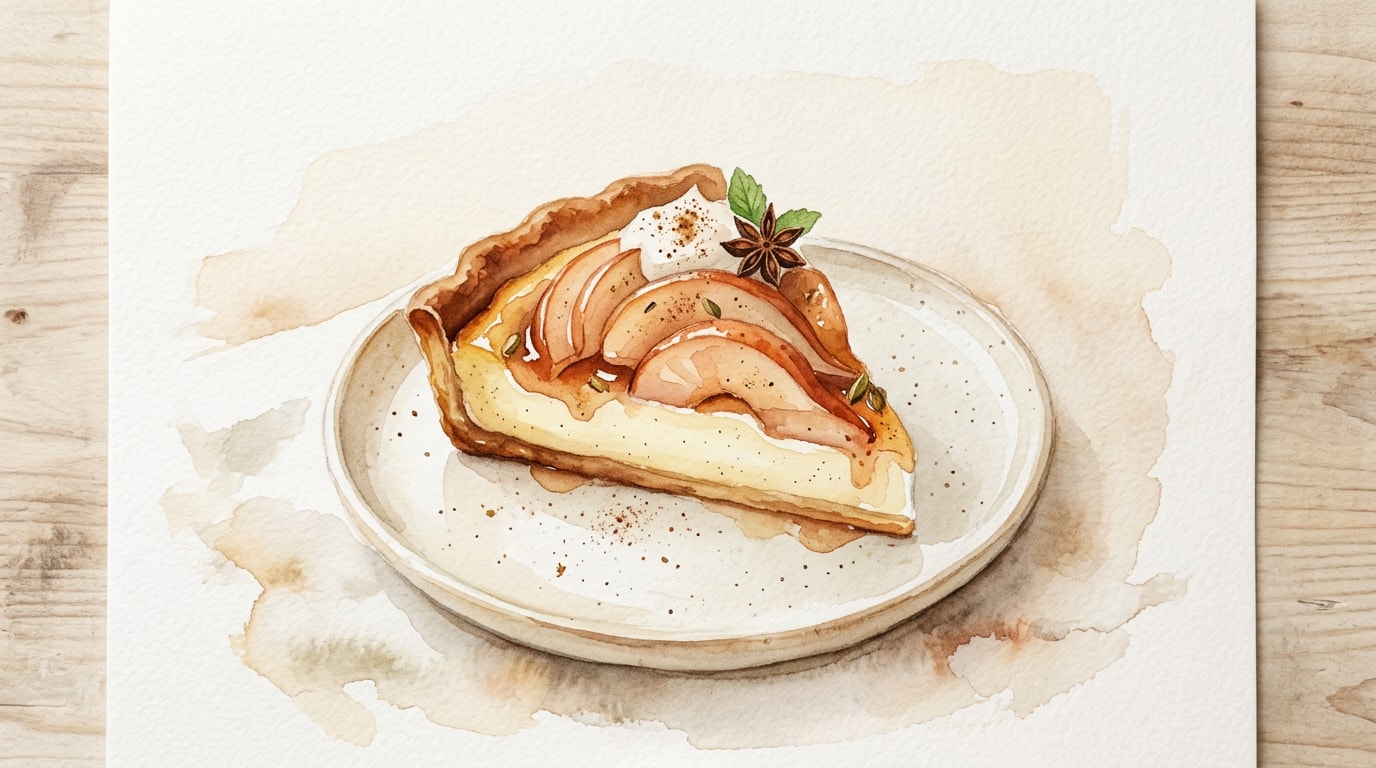
Remove the cooled pears from the syrup and slice them thinly across the width, keeping the pear shape intact. Gently press to fan the slices out slightly, and place one fanned pear half on top of the pastry cream on each tart. Garnish the edges with toasted flaked almonds and serve.
Chef's Notes
- For the cleanest cuts when portioning puff pastry, press a very sharp knife straight down into the dough without dragging the blade. Dragging will seal the delicate laminated layers together and inhibit an even rise.
- Bosc or Anjou pears are highly preferred for poaching as their firm texture holds up beautifully under heat. Avoid overly ripe Bartlett pears, which are prone to turning into mush when poached.
- To prevent an unappealing rubbery skin from forming on your pastry cream as it cools, ensure the plastic wrap makes direct physical contact with the entire surface area of the hot cream.
- Do not discard your spiced poaching liquid. It can be reduced on the stove into a potent, aromatic syrup excellent for sweetening autumn cocktails, drizzling over morning oatmeal, or brushing onto sponge cakes.
Storage
Refrigerator: 2 days — Pastry will lose its crispness after the first day.
Troubleshooting
Pastry cream is thin and runny after chilling
Cause: The cornstarch was not cooked to the boiling point, leaving the amylase enzyme active which broke down the starches.
Fix: Return the cold mixture to a saucepan and gently reheat while whisking until it reaches a boil. Cook for 1 minute, then chill again.
Prevention: Ensure the cream reaches a vigorous boil and cook for one full minute while whisking constantly before removing from heat.
Puff pastry did not rise or is greasy
Cause: The oven was not fully preheated, or the dough became too warm before baking, causing the butter layers to melt prematurely.
Fix: Cannot be fixed.
Prevention: Keep the puff pastry chilled until immediately before baking and ensure your oven has fully reached 200C/400F.
Cultural Context
The pairing of spiced fruit and rich vanilla custard draws heavily from classic French patisserie traditions. Poaching seasonal fruits like pears in sugar syrups infused with warm aromatics like star anise and cinnamon was historically developed across Europe as a luxurious method to preserve the autumn fruit harvest through long, harsh winters. When combined with the architectural, buttery crunch of mille-feuille style puff pastry, this dessert becomes a masterful study in contrasting textures and temperatures.


