Equipment
* optional
Ingredients
Aromatics
- 1 yellow onion, medium, peeled and diced
- 3 garlic, peeled and minced
- 30 ml olive oil, divided; plus extra for finishing
Beans and Liquid
- 425 g canned navy beans, drained and rinsed
- 180 ml low-sodium chicken stock, warm
Seasoning and Finish
- 3 g fine sea salt
- 1 g black pepper
- 5 ml lemon juice, freshly squeezed
- 1 g fresh thyme
Nutrition (per serving)
Nutrition is estimated per serving. Nutrients without complete source data are omitted.
Full nutrition
- Calories
- 169 kcal
- Protein
- 6 g
- Carbohydrates
- 18 g
- Fat
- 8 g
- Fiber
- 4 g
- Sugar
- 2 g
- Sodium
- 616 mg
- Saturated Fat
- 1 g
- Trans Fat
- 0 g
- Monounsaturated Fat
- 6 g
- Polyunsaturated Fat
- 1 g
- Cholesterol
- 1 mg
- Potassium
- 260 mg
- Calcium
- 44 mg
- Iron
- 1.5 mg
- Magnesium
- 36 mg
- Phosphorus
- 111 mg
- Zinc
- 0.6 mg
- Vitamin A
- 4 mcg
- Vitamin C
- 4 mg
- Vitamin D
- 0.0 mcg
- Vitamin E
- 1.6 mg
- Vitamin K
- 7 mcg
- Vitamin B6
- 0.1 mg
- Vitamin B12
- 0.0 mcg
- Thiamin
- 0.12 mg
- Riboflavin
- 0.09 mg
- Niacin
- 0.6 mg
- Folate
- 45 mcg
- Water
- 113 g
- Alcohol
- 0 g
- Caffeine
- 0 mg
Sources: Aggregated Public Data, USDA FoodData Central
Developer? Use this recipe and nutrition data via the Recipe API
Method
Peel the onion, halve it through the root, then cut into 1 cm dice on the cutting board using a chef's knife. Aim for uniform pieces so they cook evenly.
Peel and mince the garlic cloves finely on the cutting board. Reserve until ready to add to the pan.
Open the can of navy beans, pour into a colander, and rinse thoroughly under cool running water until the water runs clear. Shake off excess moisture.
Heat 20 ml of the olive oil in the medium saucepan over medium heat until it shimmers, about 2 minutes (around 160°C/320°F). Add the diced onion and a small pinch of salt. Cook, stirring with the wooden spoon, until the onion becomes soft, translucent, and lightly golden at the edges, 8 to 10 minutes.
Add the minced garlic to the saucepan and stir continuously for 45 to 60 seconds, until fragrant but not browned. Remove the pan from the heat briefly if the garlic threatens to color.
Add the drained navy beans and 180 ml of warm chicken stock to the saucepan. Stir to combine, raise the heat to medium-high, and bring to a gentle simmer (around 90°C/194°F). Once bubbling, reduce the heat to maintain a low simmer, partially cover with the lid, and cook for 20 minutes to let the flavors meld and the beans break down slightly.
Remove the saucepan from the heat and let the mixture cool for 3 minutes. Working in batches if necessary, transfer the warm bean mixture to a food processor or blender. Puree on high for 90 seconds to 2 minutes, scraping down the sides once, until completely smooth and creamy. If the puree seems too thick, add warm stock 15 ml at a time until it reaches a thick but spoonable consistency.
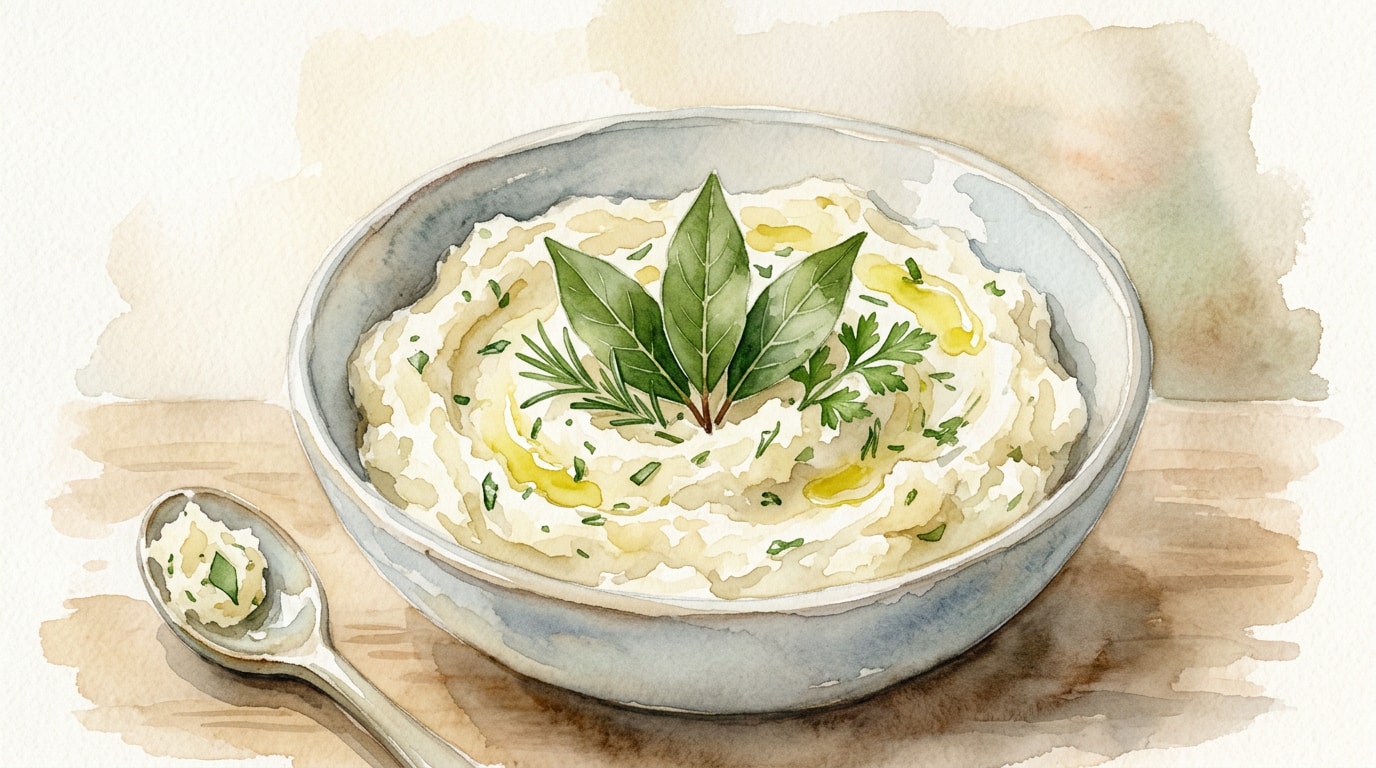
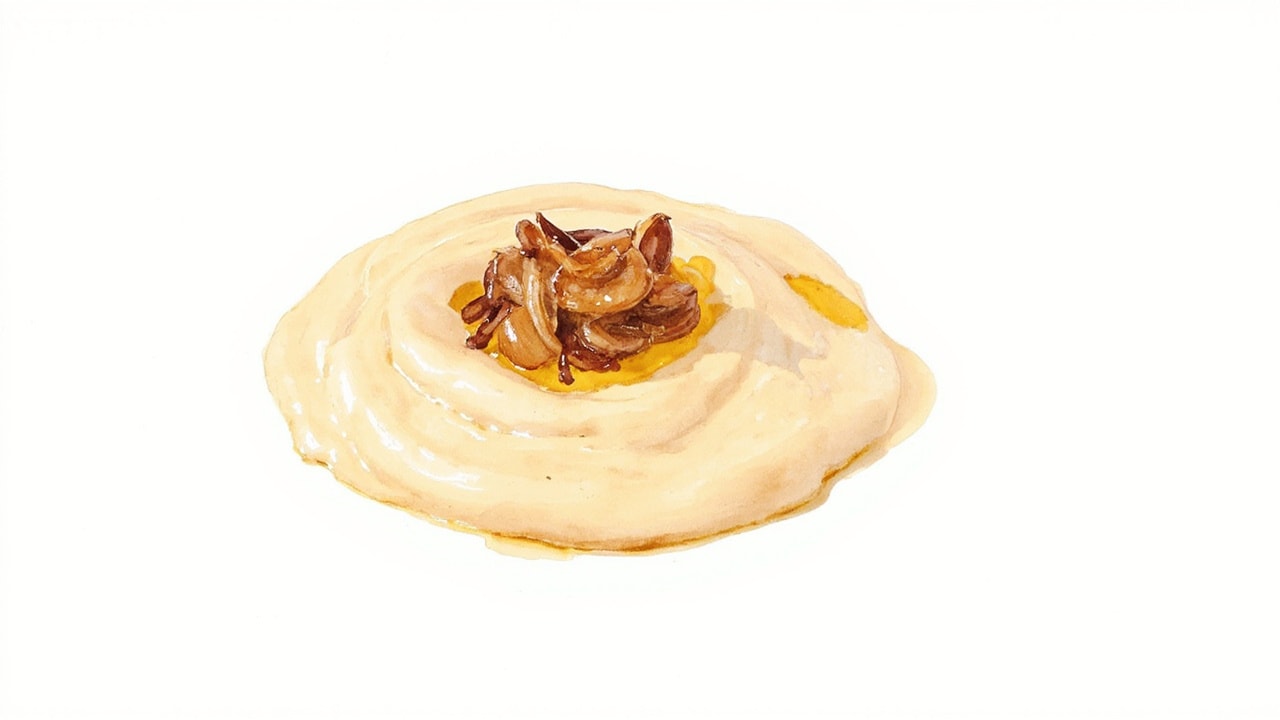
Return the puree to the saucepan or transfer to a serving bowl. Stir in the salt, black pepper, lemon juice if using, and fresh thyme leaves. Taste and adjust seasoning, adding more salt for depth or lemon for brightness. Transfer to a shallow bowl, make a swoosh with the back of a spoon, and drizzle the remaining 10 ml of olive oil over the top. Serve warm or at room temperature.
Chef's Notes
- For deeper savory character, drop a parmesan rind or a sprig of sage into the simmering beans and remove before pureeing
- A pinch of ground cumin or smoked paprika bloomed in the oil with the onions adds warm autumnal depth that pairs well with roasted squash or lamb
- Pass the puree through a fine-mesh sieve if serving as a refined sauce beneath seared fish or poultry; the texture becomes almost silken
- Reserve a ladle of the warm bean cooking liquid before pureeing to adjust consistency at the end; it carries more flavor than plain stock
- Drizzling the finishing olive oil at the very last moment preserves its fresh, peppery aroma rather than cooking it off
Storage
Refrigerator: 5 days — Store in airtight container; surface may darken slightly which is normal oxidation
Freezer: 3 months — Freeze in portions with parchment pressed against surface to prevent freezer burn
Reheating: Warm gently in saucepan over low heat with a splash of chicken stock, stirring until loosened; or microwave covered at 50 percent power in 30-second intervals
Troubleshooting
Puree tastes flat or one-dimensional
Cause: Insufficient salt or acid balance
Fix: Stir in additional salt 1g at a time and a few more drops of lemon juice until flavors open up
Prevention: Season in layers: salt the onions, salt the beans during simmer, and finish with lemon juice to brighten
Grainy or chalky texture
Cause: Under-processed puree or beans were not cooked long enough to break down
Fix: Return puree to processor with an extra 30 ml of warm stock and blend for another 60 seconds, then pass through a fine-mesh sieve
Prevention: Process for the full 90 seconds and let the simmer step soften the beans thoroughly
Puree is too thick to spread or spoon
Cause: Too much starch absorbed during simmer or insufficient stock
Fix: Stir in warm chicken stock 15 ml at a time until it loosens to the desired texture
Prevention: Measure the stock accurately and check consistency at the 10-minute simmering mark
Onion pieces remain crunchy or sharp in the puree
Cause: Onion was diced too large or sautéed over too high heat
Fix: Continue cooking the onion and bean mixture for an additional 10 minutes until the onion fully softens
Prevention: Dice to a uniform 1 cm and cook at medium heat for the full 10 minutes
Cultural Context
White bean purees form a humble cornerstone across Mediterranean cuisines, from French purée de haricots served alongside slow-braised meats to Tuscan crostoni topped with cannellini spread and the bean dips of the Levant. The technique of coaxing soft beans through patient simmering and emulsifying them with good fat reflects centuries of peasant cooking that elevated inexpensive pantry staples into elegant, nourishing accompaniments suited to nearly any season.