Equipment
* optional
Ingredients
Chili Oil Infusion
- 250 ml neutral vegetable oil, room temperature
- 8 g sichuan peppercorns, whole, divided
- 2 star anise, whole pods
- 3 g cassia cinnamon, broken into small pieces
- 2 bay leaves, dried
- 15 g dried red chilies, whole, broken into 2.5cm pieces
Spiced Pork Topping
- 300 g ground pork, cold from refrigerator, about 20 percent fat
- 30 g pixian doubanjiang, Sichuan fermented broad bean and chili paste
- 15 ml shaoxing wine
- 15 ml light soy sauce
- 8 g ginger, finely minced
- 6 g garlic, finely minced
- 3 g granulated sugar
- 5 ml toasted sesame oil
Noodle Bowl Sauce
- 30 g chinese sesame paste, stirred well if separated
- 20 ml chinkiang black vinegar
- 15 ml light soy sauce
- 5 ml dark soy sauce, for color and depth
- 60 ml infused chili oil from above
- 2 g ground sichuan peppercorns, freshly toasted and ground
Noodles and Assembly
- 600 g fresh wheat noodles, straight from refrigerator
- 400 ml chicken stock, hot, low sodium preferred
- 20 g scallions, thinly sliced on the bias, whites and greens separated
- 30 g preserved mustard greens, rinsed and finely chopped
- 20 g roasted peanuts, crushed
- fine sea salt
Nutrition (per serving)
Nutrition is estimated per serving. Nutrients without complete source data are omitted.
Full nutrition
Only basic nutrition values are available for this recipe. More detailed nutrient data is incomplete.
- Calories
- 1223 kcal
- Protein
- 28 g
- Carbohydrates
- 59 g
- Fat
- 98 g
Sources: Aggregated Public Data, USDA FoodData Central
Method
Place 8g sichuan peppercorns in a small dry skillet over medium-low heat. Toast for 2 to 3 minutes, shaking the pan frequently, until fragrant and just slightly darkened. Transfer to a spice grinder or mortar.
Grind the toasted peppercorns to a coarse powder. Reserve 2g for the bowl sauce and set the remainder aside for finishing.
In a small heavy-bottomed saucepan, combine the neutral vegetable oil, star anise, cassia cinnamon, bay leaves, and broken dried red chilies. Heat over medium-low until the oil reaches 150°C (300°F), about 8 minutes.
Reduce the heat to the lowest setting and add the toasted sichuan peppercorns. Maintain the oil at 130°C (265°F) for 5 minutes, watching carefully for any aggressive sizzling.
Remove the saucepan from heat. Allow the oil to cool to room temperature with the spices still steeping, about 30 minutes. Strain through a fine mesh strainer into a heatproof bowl, reserving the infused oil and discarding the solids.
While the oil infuses, prepare the pork topping aromatics. Finely mince the ginger and garlic. Slice the scallions thinly, keeping the white and green parts in separate piles.
In a small mixing bowl, whisk together the chinese sesame paste, chinkiang black vinegar, light soy sauce, dark soy sauce, 60ml of the strained infused chili oil, and 2g of the ground sichuan peppercorns until smooth. Set the bowl sauce aside.
If using preserved mustard greens, rinse them briefly under cold water to remove excess salt, pat dry with a clean towel, and chop finely.
Heat the wok over high heat until just smoking, about 2 minutes. Add the cold ground pork and break it apart with a spatula. Allow the pork to sear undisturbed for 90 seconds to develop a crust.
Continue breaking up the pork and stir-fry until no pink remains and the meat is crumbly with some crispy brown bits, about 4 minutes. The pork must reach an internal temperature of 71°C (160°F) for food safety.
Push the cooked pork to one side of the wok to clear a space in the center. Add the minced ginger, garlic, and scallion whites to the cleared space. Stir-fry the aromatics for 30 seconds until fragrant.
Add the pixian doubanjiang to the aromatics. Stir-fry for 1 minute until the oil in the wok turns a deep brick-red color and the paste releases its fragrance.
Mix the aromatics into the pork. Add the shaoxing wine, light soy sauce, sugar, and toasted sesame oil. Stir to combine evenly and cook for 1 minute. Remove the wok from heat.
Bring a large pot of water to a rolling boil over high heat, about 8 minutes. Add fine sea salt until the water tastes like sea water.
Add the fresh wheat noodles to the boiling salted water and cook according to package directions until al dente, about 3 to 4 minutes. Stir occasionally with chopsticks to prevent sticking.
Reserve 250ml of the starchy noodle cooking water in a separate bowl for potential sauce adjustment. Drain the noodles in a colander and rinse briefly under warm water to remove surface starch.
Divide the prepared bowl sauce evenly among 4 warmed serving bowls, placing about 2 tablespoons per bowl at the bottom.
Add 100ml of the hot chicken stock to each bowl and stir briskly to emulsify the sauce with the stock into a unified broth.
Divide the drained noodles among the 4 bowls, arranging them in loose nests above the emulsified sauce.
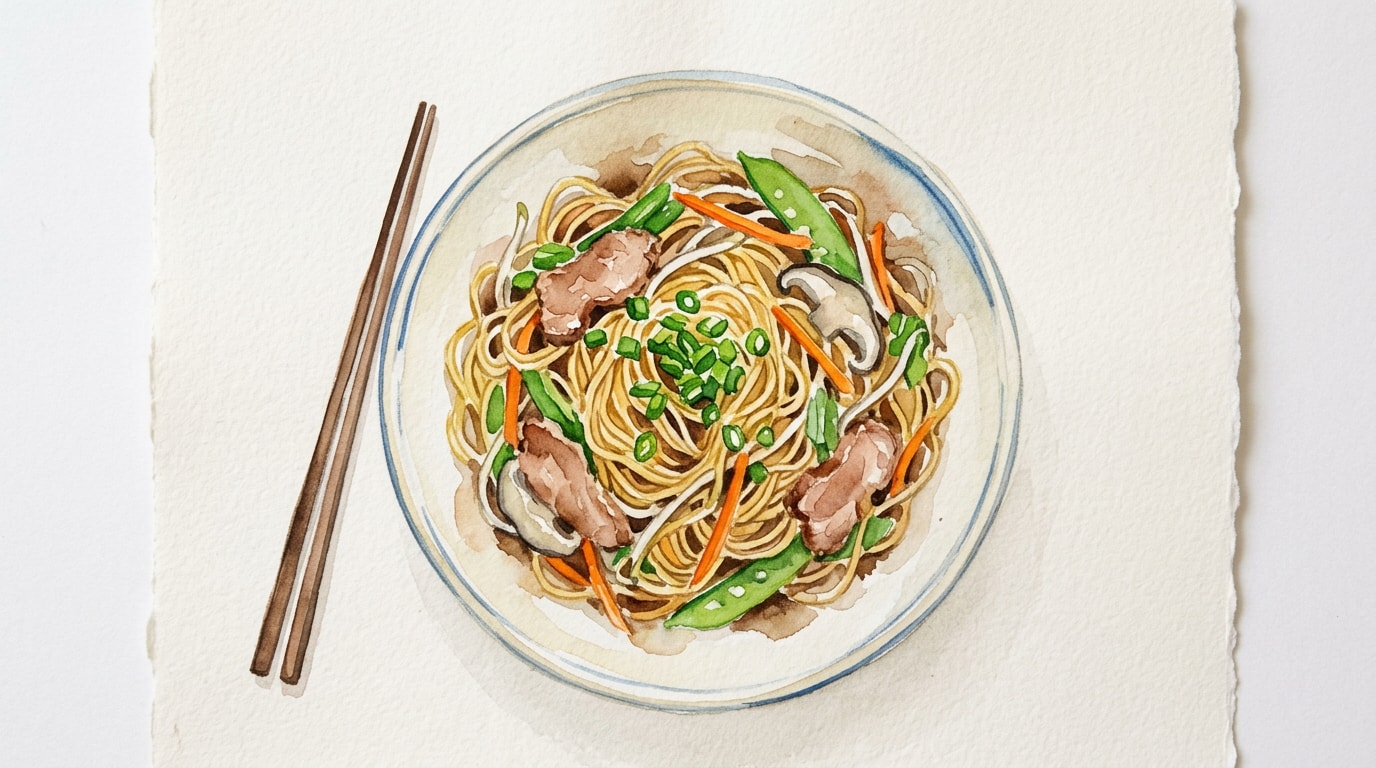
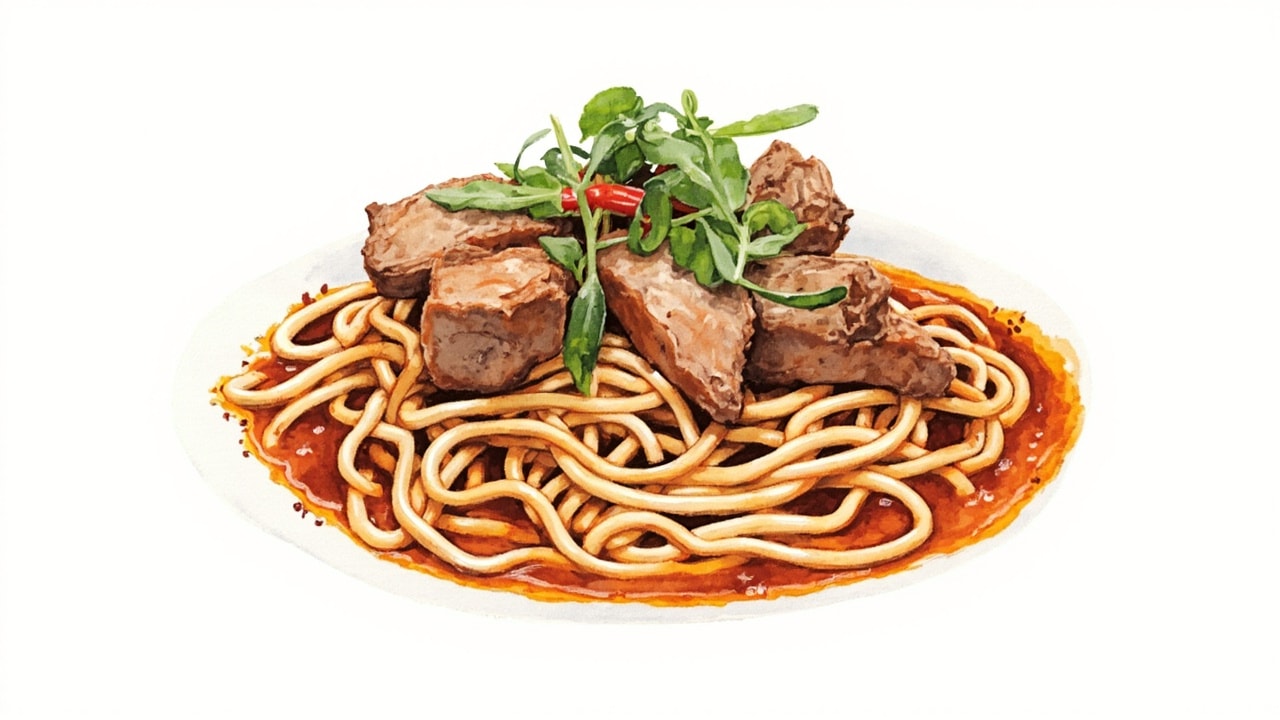
Top each bowl with one quarter of the spiced pork mixture, mounding it on top of the noodles. Sprinkle the chopped preserved mustard greens over the pork if using.
Garnish each bowl with the sliced scallion greens, crushed roasted peanuts if using, and a final drizzle of 1 tablespoon of the strained infused chili oil. Serve immediately while hot.
Chef's Notes
- Pixian doubanjiang aged three to five years is the soul of this dish; the deep red oil it releases signals proper fermentation and cannot be replicated by ordinary bean pastes or generic chili sauces.
- Toasting sichuan peppercorns in a dry pan just before grinding releases their volatile citrus and floral oils, transforming the málà character from one-dimensional to layered and complex.
- The starchy noodle cooking water is a natural emulsifier; if the bowl sauce breaks during assembly, a tablespoon of this cloudy water whisked in will bring the sauce back together.
- Resting the chili oil with spices for 30 minutes at room temperature rather than overnight yields a brighter, more aromatic oil than longer steeps that can turn muddy.
- Always toss the noodles vigorously with chopsticks just before the first bite - the magic of dan dan noodles happens only when every strand is thoroughly coated in the mahogany sauce.
Storage
Refrigerator: 3 days — Store pork mixture separately from noodles and sauce in airtight containers. Consume within 3 days.
Freezer: 3 months — Pork topping and infused chili oil freeze well. Noodles and sauce do not freeze successfully.
Reheating: Reheat pork in a wok over medium heat with 15ml water until steaming throughout to 74°C (165°F). Boil fresh noodles and assemble bowls when serving leftovers.
Troubleshooting
Sauce is too thin and runs off the noodles into the bottom of the bowl
Cause: Too much stock was added or the sesame paste used was overly runny
Fix: Add an additional 5g sesame paste per bowl and stir vigorously to thicken and re-emulsify
Prevention: Measure the stock carefully and use thick chinese-style sesame paste rather than runny tahini
Pork topping is dry and mealy in texture
Cause: Pork used was too lean or the pork was overcooked in the wok
Fix: Cannot be reversed in this batch. For future batches, use fattier pork or stir in 15ml chicken stock at the end to moisten
Prevention: Use pork with at least 20 percent fat content and remove from heat as soon as no pink remains
Not enough numbness or heat sensation in the finished dish
Cause: Sichuan peppercorns were old and lost potency, or chili oil was strained too aggressively removing all sediment
Fix: Sprinkle an additional 1g freshly ground sichuan peppercorn and 5ml chili oil over each bowl just before serving
Prevention: Buy peppercorns in small quantities from a high-turnover source and use within 6 months of purchase
Noodles are gummy, sticky, or stuck together
Cause: Noodles were overcooked or there was insufficient water volume for boiling
Fix: Cannot be fixed once overcooked. Toss with 5ml toasted sesame oil and serve as a cold noodle salad with the pork topping
Prevention: Use at least 3 liters of water for 600g of fresh noodles and test doneness 1 minute before package instructions suggest
Chili oil tastes bitter, harsh, or acrid
Cause: Oil was overheated during infusion, scorching the chilies and peppercorns
Fix: Cannot be reversed. Discard the oil and start over with fresh oil at a lower target temperature
Prevention: Monitor oil temperature carefully with a thermometer and never let the oil exceed 160°C (320°F) during infusion
Cultural Context
Dan Dan noodles (担担面) trace their origins to nineteenth-century Chengdu, where street vendors carried their portable cooking equipment and ingredients balanced on a wooden carrying pole called a dan dan. The dish embodies the Sichuan culinary philosophy of málà (麻辣) - the intoxicating sensation of numbing peppercorns layered with fiery chilies - balanced by the umami of fermented bean paste, the tang of aged vinegar, and the nutty depth of toasted sesame. Today it stands as one of China's most recognized noodle preparations, served from humble street stalls to refined restaurants throughout the country and beyond.