Equipment
* optional
Ingredients
Sichuan Beef Stew
- 1200 g beef chuck (boneless), cut into 4 cm cubes
- 60 ml vegetable oil
- 8 g sichuan peppercorns, whole, divided
- 15 g dried red chilies, whole, stemmed
- 4 star anise, whole pods
- 5 g cassia bark, broken into 2 pieces
- 30 g ginger, sliced 3 mm thick
- 8 garlic, smashed with the side of a knife
- 1 yellow onion, cut into 2 cm wedges
- 40 g doubanjiang (pixian fermented broad bean paste), well-stirred
- 60 ml shaoxing wine
- 30 ml light soy sauce
- 15 ml dark soy sauce, for color
- 20 g rock sugar, crushed or broken into small pieces
- 1200 ml beef stock, low-sodium preferred
- 2 bay leaves
- 5 g kosher salt, to taste
- 3 scallions, thinly sliced on the bias
- 5 ml toasted sesame oil
Steamed Buns
- 500 g all-purpose flour, plus extra for dusting
- 5 g active dry yeast, one standard packet
- 20 g granulated sugar, divided
- 260 ml warm water, 38°C (100°F)
- 20 g neutral oil or lard, softened lard preferred for the most tender crumb
- 3 g baking powder, added after first proof for whiter, fluffier buns
Quick Pickle
- 150 g daikon radish, peeled and julienned 3 mm thick and 5 cm long
- 100 g carrot, peeled and julienned to match daikon
- 5 g kosher salt, for the initial brine
- 100 ml rice vinegar
- 30 g granulated sugar, for the pickling liquid
- 50 ml water
Nutrition (per serving)
Nutrition is estimated per serving. Nutrients without complete source data are omitted.
Full nutrition
Only basic nutrition values are available for this recipe. More detailed nutrient data is incomplete.
- Calories
- 805 kcal
- Protein
- 59 g
- Carbohydrates
- 88 g
- Fat
- 25 g
- Fiber
- 6 g
- Sugar
- 16 g
Sources: Aggregated Public Data, USDA FoodData Central
Method
Toss the julienned daikon and carrot with 5g kosher salt in a small bowl. Let rest for 20 minutes to draw out excess moisture.
Meanwhile, combine 50ml water, 100ml rice vinegar, and 30g sugar in a small saucepan. Heat over medium until the sugar dissolves, about 90°C (195°F), then set aside to cool to room temperature.
Stir 10g sugar into 240ml of 38°C (100°F) warm water in a small bowl. Sprinkle 5g yeast over the surface and let sit for 8-10 minutes until foamy.
Place 500g flour in a large mixing bowl. Pour in the foamy yeast mixture, add 10g sugar and 20g oil or lard, and stir with a wooden spoon into a shaggy dough.
Turn the dough onto a lightly floured surface and knead for 8-10 minutes until smooth, soft, and slightly tacky. Shape into a ball.
Place the dough in a lightly oiled bowl, cover with a damp kitchen towel, and proof in a warm spot for 60 minutes until nearly doubled.
Cut the beef chuck into 4 cm cubes, pat dry thoroughly with paper towels, and set aside on a clean plate.
Smash the garlic cloves, slice the ginger 3 mm thick, cut the onion into 2 cm wedges, and stem the dried chilies.
Heat a dry skillet over medium-low, about 150°C (300°F). Add 5g Sichuan peppercorns, the stemmed chilies, star anise, and cassia bark. Toast for 60-90 seconds until fragrant, then transfer to a small bowl.
Heat 60ml vegetable oil in a Dutch oven over medium heat, about 170°C (340°F). Add ginger, garlic, and onion and sauté for 3 minutes until the onion edges turn translucent.
Push the aromatics to one side and add 40g doubanjiang to the cleared oil. Fry for 90 seconds, stirring, until the oil turns a deep brick-red and separates from the paste.
Add the beef cubes and sear for 4-5 minutes, turning occasionally, until each piece develops a light brown crust on multiple sides.
Pour in 60ml Shaoxing wine and scrape the bottom of the pot with a wooden spoon to release any fond. Let the wine reduce by half, about 2 minutes.
Add 30ml light soy sauce, 15ml dark soy sauce, and 20g rock sugar. Stir to coat the beef evenly and dissolve the sugar.
Pour in 1200ml beef stock, then add the toasted spice mix, the remaining 3g Sichuan peppercorns, and 2 bay leaves. Stir once and bring to a boil over high heat.
Skim any grey foam and surface fat with a ladle. Reduce the heat to maintain a gentle simmer, about 92°C (198°F), with small bubbles breaking the surface.
Cover the pot with a tight lid and braise for 110-120 minutes, stirring gently once at the halfway mark, until a chopstick slides into the beef with no resistance and the sauce coats the back of a spoon.
Punch down the proofed dough, sprinkle 3g baking powder over the surface if using, and knead for 2 minutes to incorporate evenly.
Divide the dough into 12 equal pieces, about 65g each. Shape each into a smooth ball, then flatten and roll into an oval about 8 cm long and 1.5 cm thick.
Place the shaped buns on parchment squares inside a steamer basket, leaving 3 cm between each. Cover and proof for 20 minutes until visibly puffy.
Bring 5 cm of water to a rolling boil in the steamer base. Place the steamer basket over the boiling water, cover, and steam the buns over medium-high heat for 14-16 minutes. Turn off the heat and rest the lid ajar for 1 minute before uncovering.
Drain the salted daikon and carrot in a fine-mesh sieve and rinse briefly under cool water. Press out excess water, then transfer to a clean bowl and pour the cooled vinegar-sugar liquid over the vegetables. Refrigerate until ready to serve.
When the beef is fork-tender, taste the braising liquid and adjust with salt. If the sauce is thin, simmer uncovered for 8-10 minutes to thicken into a glossy gravy that coats the meat.
Coarsely grind the reserved 3g Sichuan peppercorns. Heat 5ml toasted sesame oil in a small pan over medium heat, about 160°C (320°F), until shimmering, then stir in the ground peppercorns for 10 seconds. Drizzle the fragrant oil over the finished stew.
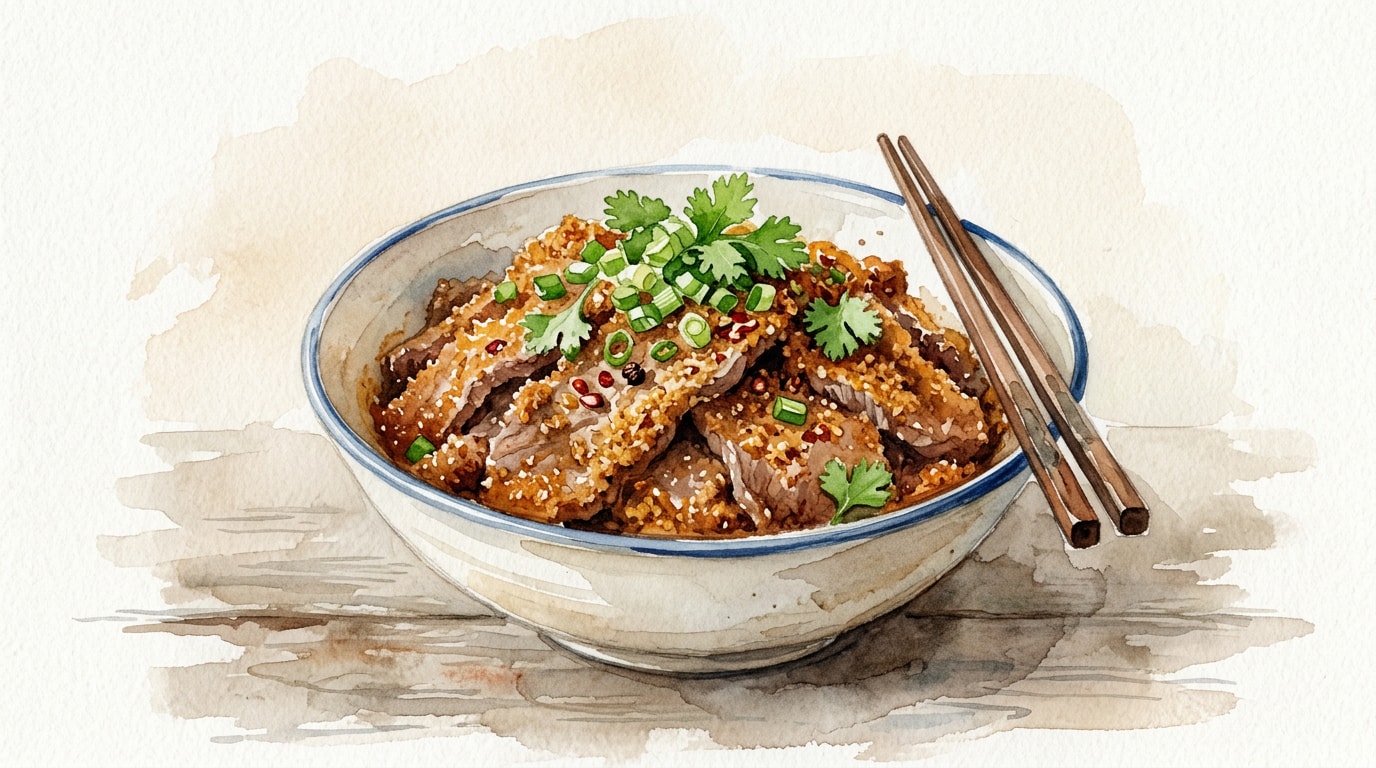
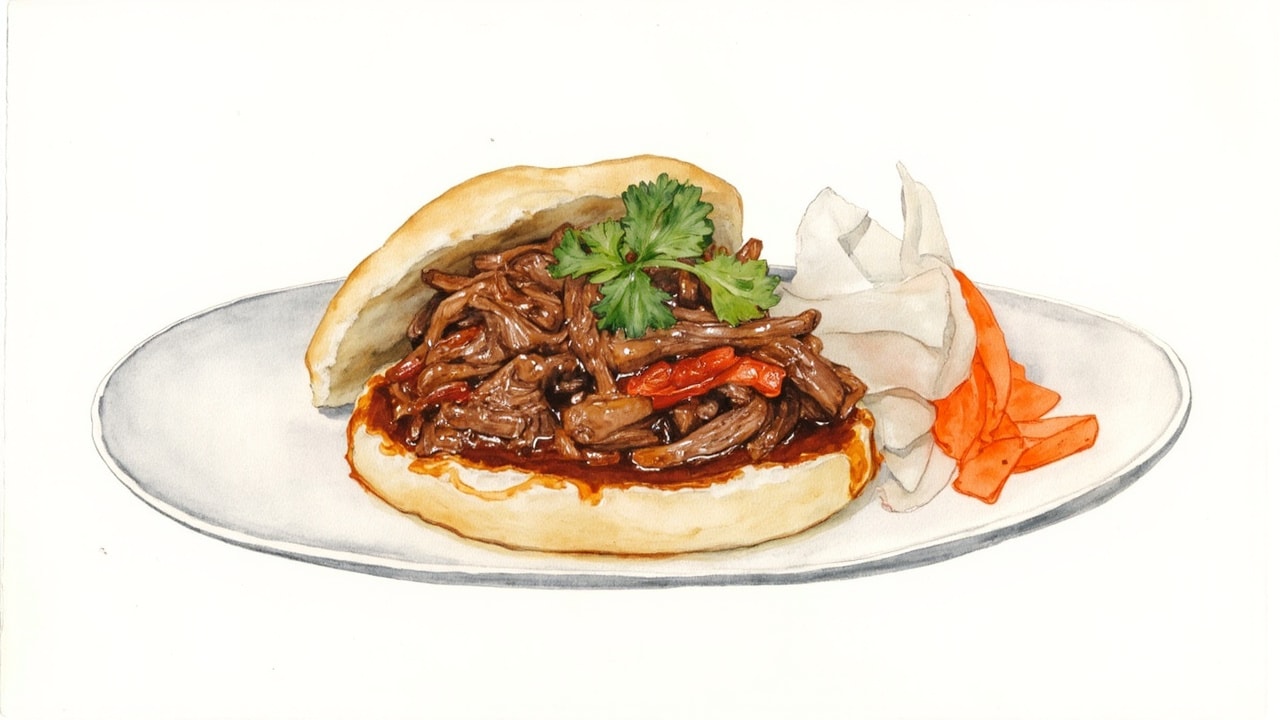
Ladle the beef and sauce into shallow bowls and scatter the sliced scallions over the top. Serve hot with 2 steamed buns and a small mound of pickled carrot and daikon on the side.
Chef's Notes
- Toast Sichuan peppercorns in a dry pan over medium-low heat for 60-90 seconds before using. The citrus-wood and pine notes only bloom with gentle heat; burning turns them acrid and muddy.
- Choose doubanjiang from Pixian, Sichuan, with chili listed before wheat flour on the label. Bright red oil and a salty-savory depth signal proper aging; pale, pasty substitutes taste of raw flour.
- Keep the braise at a bare simmer around 92°C (198°F). A vigorous boil tightens the muscle fibers and pushes fat out of the meat, leaving it stringy and the sauce greasy. Patience here is the difference between silky and tough.
- A 10-minute bench rest of the shaped buns before steaming relaxes the gluten, which prevents tearing when the buns expand under steam and gives a finer, whiter crumb.
- Finish the stew with a freshly bloomed peppercorn oil. The brief high-heat bloom releases volatile aromatics that long braising cannot preserve, putting the tingling top note back where the palate expects it.
Storage
Refrigerator: 4 days — Store the stew, buns, and pickle in separate airtight containers. Reheat stew to 74°C (165°F) before serving.
Freezer: 3 months — Stew freezes well for 3 months in a sealed container. Buns freeze for 1 month and reheat from frozen in the steamer. Pickle is best fresh.
Reheating: Rewarm stew gently in a covered pot over low heat with a splash of water; steam buns for 5-8 minutes from room temperature or 10-12 minutes from frozen.
Troubleshooting
Beef remains chewy after the full braise time.
Cause: The cut was too lean or lacked connective tissue, or the simmer temperature climbed too high and toughened the proteins.
Fix: Continue braising in 30-minute increments with a splash of hot stock until fork-tender. A pressure cooker can rescue the dish in about 40 minutes.
Prevention: Choose beef chuck or shank with visible marbling and connective tissue. Keep the simmer gentle, never a rolling boil.
Steamed buns turn out dense, heavy, or with a tight crumb.
Cause: The yeast was inactive, the dough was under-proofed, or salt came into direct contact with the yeast early on and inhibited it.
Fix: Cannot be fixed once steamed. Use the dense buns as flatbread: split and pan-fry in a little oil until golden.
Prevention: Verify the yeast foams within 10 minutes before mixing. Proof until the dough springs back slowly when poked. Keep salt away from the initial yeast bloom.
Stew tastes one-dimensionally spicy without the tingling numbness.
Cause: Sichuan peppercorns were not toasted, were too old, or were added late without blooming in oil.
Fix: Bloom 2g freshly ground Sichuan peppercorns in 10ml hot neutral oil and stir into individual bowls before serving.
Prevention: Buy peppercorns from a high-turnover source. Toast them briefly to awaken the volatile oils, and finish the stew with a fresh peppercorn oil as described.
Pickle is watery or dilutes the surrounding sauce when plated together.
Cause: The salt-brined vegetables were not drained and pressed before adding the pickling liquid.
Fix: Drain the pickle in a sieve for 10 minutes and refresh with a slightly stronger vinegar-sugar mix.
Prevention: After the 20-minute salt rest, drain thoroughly and press out the released liquid before combining with the vinegar mixture.
Sauce breaks or turns visibly greasy.
Cause: The skim step was skipped, or the heat was too high while frying the doubanjiang, breaking the emulsion.
Fix: Skim excess fat with a ladle, then bring the sauce back to a gentle simmer to allow the emulsion to re-form.
Prevention: Skim foam and fat during the first 10 minutes of simmering. Fry the bean paste gently until the oil separates naturally, then proceed.
Cultural Context
Sichuan beef stew in the style of hong shao niu rou (红烧牛肉) reflects the mala flavor principle at the heart of Sichuan cooking: a layered heat from dried chilies paired with the mouth-tingling citrus-wood sensation of Sichuan peppercorns. Braised beef with this profile is a fixture of Chengdu home kitchens and teahouse menus, where it is eaten over rice, noodles, or plain wheat buns. Steamed mantou accompany braises across much of northern and western China, providing a mild, slightly sweet counterpoint that catches the sauce. Quick-pickled vegetables in the pao cai (泡菜) tradition are served alongside rich mains as a daily palate cleanser, balancing oil and spice with crisp acidity.