
Equipment
Ingredients
Salad Base
- 400 g butternut squash, peeled, seeded, solid neck portion only
- 80 g medjool dates, pitted and thinly sliced
- 50 g pumpkin seeds, raw, hulled pepitas
- 10 g fresh mint, roughly chopped
Tangy Buttermilk Dressing
- 60 ml cultured buttermilk, well shaken
- 45 ml extra virgin olive oil
- 15 ml apple cider vinegar
- 15 g shallot, finely minced
- 3 g kosher salt
- 1 g black pepper, freshly cracked
Nutrition (per serving)
Nutrition is estimated per serving. Nutrients without complete source data are omitted.
Full nutrition
- Calories
- 281 kcal
- Protein
- 6 g
- Carbohydrates
- 30 g
- Fat
- 18 g
- Fiber
- 4 g
- Sugar
- 17 g
- Sodium
- 320 mg
- Saturated Fat
- 3 g
- Trans Fat
- 0 g
- Monounsaturated Fat
- 10 g
- Polyunsaturated Fat
- 4 g
- Cholesterol
- 1 mg
- Potassium
- 645 mg
- Calcium
- 92 mg
- Iron
- 2.4 mg
- Magnesium
- 123 mg
- Phosphorus
- 217 mg
- Zinc
- 1.3 mg
- Vitamin A
- 541 mcg
- Vitamin C
- 22 mg
- Vitamin E
- 3.4 mg
- Vitamin K
- 10 mcg
- Vitamin B6
- 0.2 mg
- Vitamin B12
- 0.0 mcg
- Thiamin
- 0.16 mg
- Riboflavin
- 0.08 mg
- Niacin
- 2.2 mg
- Folate
- 42 mcg
- Water
- 114 g
Sources: USDA FoodData Central
Method
Place the pumpkin seeds in a small dry skillet over medium heat. Toast them, stirring frequently, until they begin to pop and become fragrant, about 3 to 5 minutes. Transfer to a cool plate immediately to stop the cooking process.
In a small mixing bowl, combine the cultured buttermilk, extra virgin olive oil, apple cider vinegar, minced shallot, kosher salt, and black pepper. Whisk vigorously until the dressing is thoroughly emulsified and smooth.
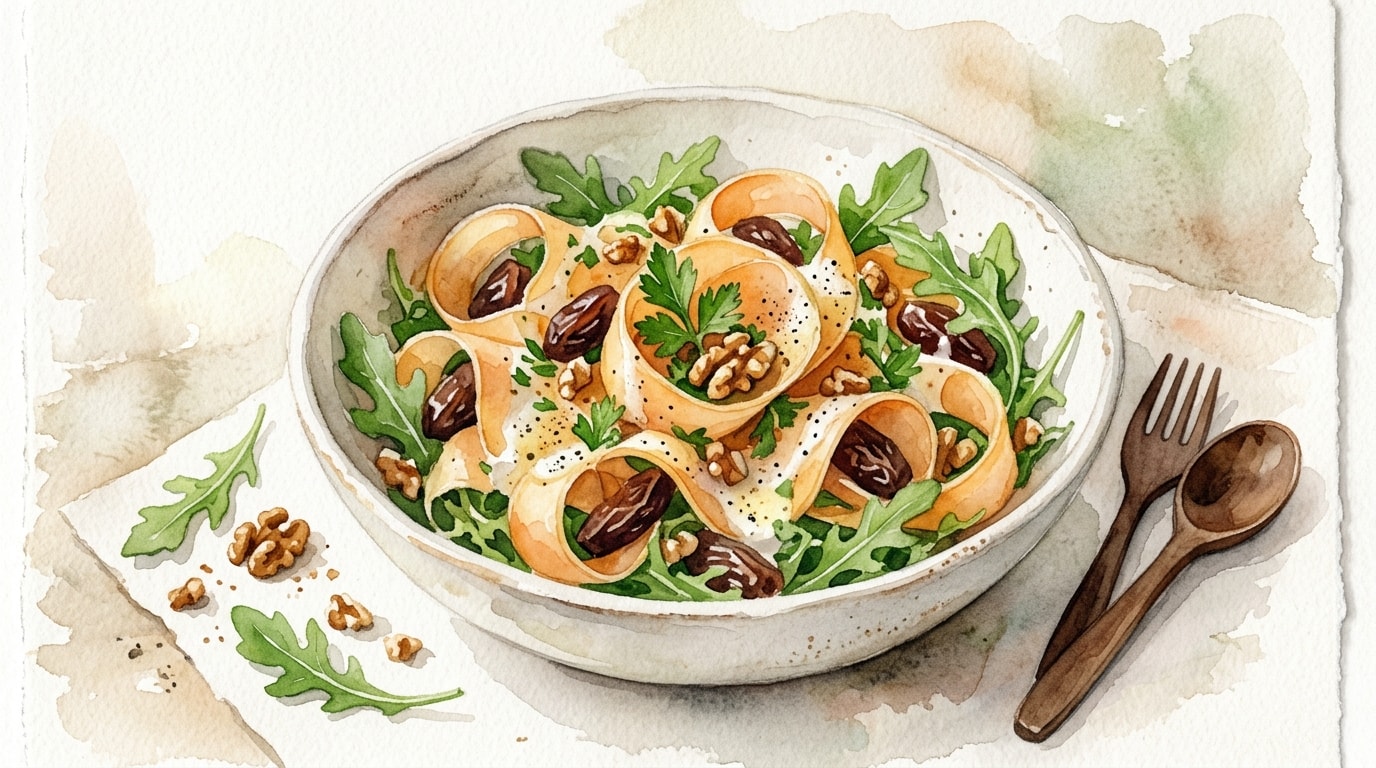
Using a mandoline slicer set to 1.5 millimeters, or a sharp vegetable peeler, carefully shave the solid neck portion of the butternut squash into long, thin, translucent ribbons.
Place the shaved butternut squash ribbons into a large mixing bowl. Pour half of the prepared buttermilk dressing over the squash. Using clean hands, gently massage the dressing into the squash for 1 to 2 minutes, then let it rest to soften slightly.
Add the sliced dates, toasted pumpkin seeds, and chopped fresh mint to the softened squash. Toss gently to combine, adding the remaining dressing according to your preference. Transfer to a serving platter and serve immediately.
Chef's Notes
- Raw butternut squash has a remarkably different flavor profile than cooked squash; it is floral, slightly sweet, and melon-like. Salting and acidulating it is crucial to drawing out these delicate notes.
- For the best yield and safety, only use the solid, cylindrical neck of the butternut squash for shaving. The hollow base is difficult to grip safely on a mandoline.
- Massaging the squash with the acidic buttermilk dressing mimics the effects of cooking. The acid breaks down the cell walls just enough to make it tender to the bite while retaining a fresh, raw crunch.
Storage
Refrigerator: 2 days — Store the dressing and shaved squash separately for up to 3 days. Once dressed, the salad should be consumed within 24 hours as the squash will lose its crisp texture.
Troubleshooting
The raw butternut squash is too tough and crunchy to eat comfortably
Cause: The squash was sliced too thickly or was not allowed enough time to marinate in the acidic dressing
Fix: Massage the squash vigorously with the dressing for an additional 2 minutes and let it sit at room temperature for another 15 minutes to allow the acid to break down the tough cellular structure
Prevention: Ensure your mandoline is set to no thicker than 1.5 millimeters, or use a wide Y-peeler for guaranteed thin ribbons
The dressing is too thin and watery
Cause: Using low-fat buttermilk or failing to emulsify the oil properly
Fix: Whisk in a half teaspoon of Dijon mustard to act as a binding emulsifier and thicken the dressing
Prevention: Use whole-fat cultured buttermilk and stream the olive oil in slowly while whisking constantly
Cultural Context
Traditionally, butternut squash is heavily roasted or pureed into soups during the American autumn and winter months. Preparing it raw is a modern culinary technique that honors the produce's natural sweetness and provides a bright, refreshing counterpoint to the typically heavy, rich dishes found on a Thanksgiving table.


