Equipment
* optional
Ingredients
Chicken
- 1½ kg whole chicken
- 60 g fresh ginger, sliced into thick coins
- 4 scallions, whole stalks, lightly crushed
- 20 g fresh cilantro, whole stems with leaves
- 2 star anise
- 30 ml shaoxing wine
- 20 ml toasted sesame oil
- 3 g ground white pepper
Salt Crust
- 2 kg kosher salt
- 4 egg whites, room temperature
Ginger-Scallion Dipping Sauce
- 40 g fresh ginger, finely minced
- 3 scallions, finely minced, whites and greens
- 60 ml neutral oil, heated to 200°C (400°F) for blooming
- 30 ml light soy sauce
- 5 ml toasted sesame oil
- 2 g granulated sugar
Nutrition (per serving)
Nutrition is estimated per serving. Nutrients without complete source data are omitted.
Full nutrition
- Calories
- 634 kcal
- Protein
- 67 g
- Carbohydrates
- 9 g
- Fat
- 37 g
- Fiber
- 2 g
- Sodium
- 194305 mg
- Saturated Fat
- 3 g
- Potassium
- 324 mg
- Calcium
- 154 mg
- Iron
- 2.8 mg
- Magnesium
- 33 mg
- Phosphorus
- 41 mg
- Zinc
- 0.8 mg
- Vitamin A
- 28 mcg
- Vitamin C
- 7 mg
- Water
- 78 g
Sources: Aggregated Public Data, USDA FoodData Central
Method
Position an oven rack in the center and preheat the oven to 200°C (400°F).
Remove the chicken from any packaging. Pat it thoroughly dry inside and out with paper towels; a dry surface allows the sesame oil to adhere and prevents steam pockets under the crust.
Brush the 20ml of toasted sesame oil all over the chicken, then sprinkle the 3g of ground white pepper evenly across the skin and into the cavity.
Stuff the cavity with the 60g of sliced ginger, 4 whole scallions, 20g of cilantro, and 2 star anise pods. Pour the 30ml of Shaoxing wine over the outside of the bird.
Tuck the wing tips behind the shoulders and tie the drumsticks together securely with kitchen twine to create a compact shape.
In a large mixing bowl, combine the 2kg of kosher salt with the 4 egg whites. Mix with your hands or a wooden spoon until the salt resembles damp sand and holds its shape when squeezed in a fist.
Spread about one-third of the salt mixture across the bottom of the large roasting pan to form a bed roughly 2cm thick. Place the chicken breast-side up on the salt bed.
Pack the remaining salt mixture over and around the chicken until it is completely encased. Aim for an even crust 1.5 to 2cm thick with no skin or cavity opening exposed. Press firmly to compact.
Transfer the pan to the center rack and bake at 200°C (400°F) for 1 hour 20 minutes. Insert an instant-read thermometer through the crust into the thickest part of the thigh, avoiding the bone; the chicken is safe when the reading reaches 74°C (165°F).
Remove the pan from the oven and let the chicken rest inside the closed crust for 15 minutes. Residual heat will continue to gently cook the meat and allow the juices to settle.
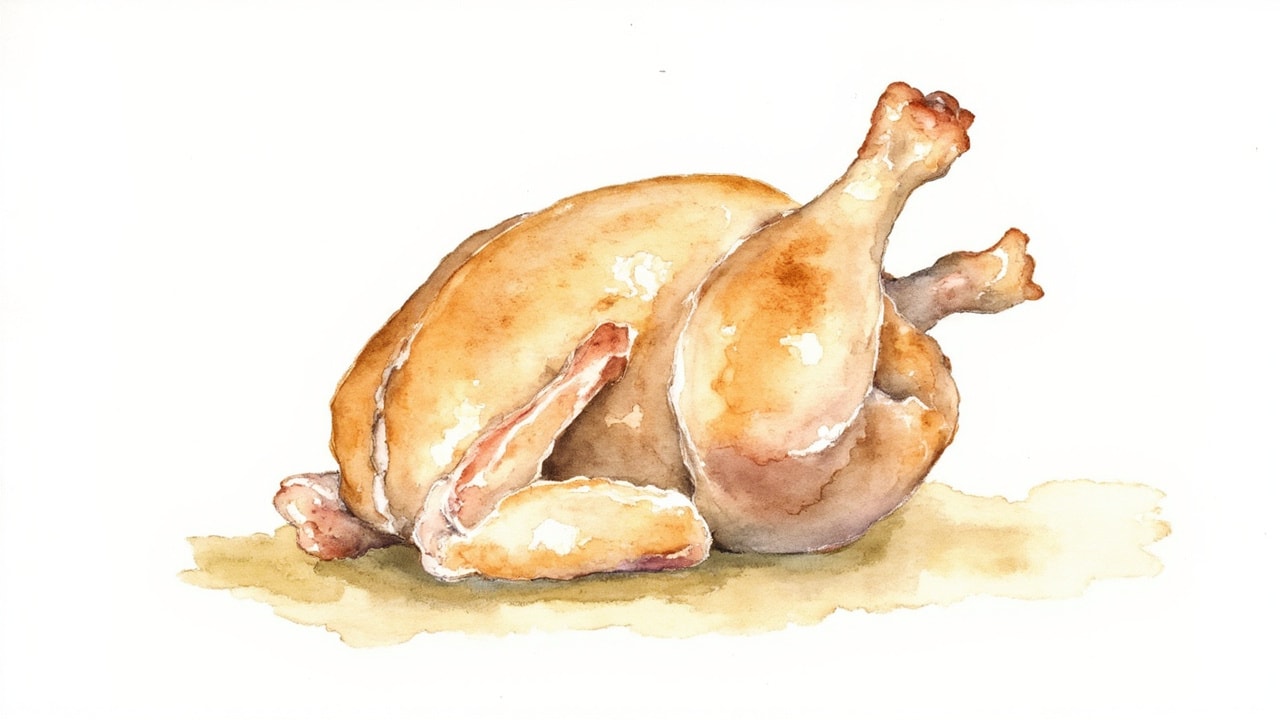
Strike the salt crust along the breastbone with a mallet or the back of a heavy knife to crack it into large panels. Lift the panels away and discard. Brush off any remaining salt crystals from the chicken skin; the skin will be pale and unrendered, which is expected.
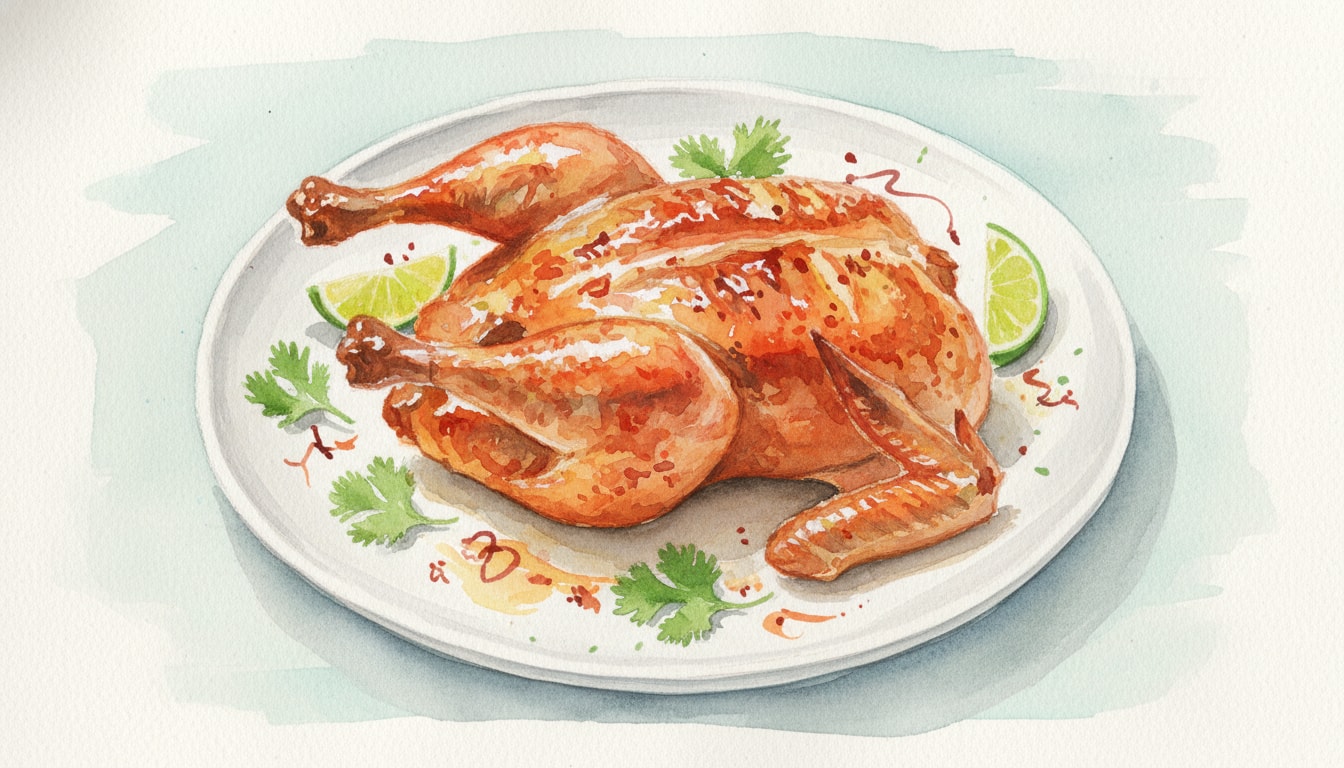
Carve the chicken by separating the legs into thighs and drumsticks, then slicing the breast meat against the grain. Arrange on a warmed platter and serve immediately with the dipping sauce.
While the chicken rests, prepare the dipping sauce: combine the 40g of minced ginger and 3 minced scallions in a heatproof bowl. Heat the 60ml of neutral oil to 200°C (400°F) and carefully pour it over the ginger and scallions; the mixture will sizzle and release fragrant steam.
Stir the 30ml of light soy sauce, 5ml of toasted sesame oil, and 2g of sugar into the bloomed ginger-scallion mixture. Taste and adjust seasoning. Spoon into small individual bowls for serving.
Chef's Notes
- The salt crust functions as a natural pressure vessel: it traps steam and juices while distributing heat evenly around the bird, creating a wide margin of safety against overcooking.
- Coarse kosher salt is non-negotiable; its large crystals create a stable, porous shell that releases cleanly, whereas fine or iodized salt fuses into a dense, hard-to-remove layer that can over-season the meat.
- Egg whites are the traditional binder for salt crust; they coagulate during baking to form a sealed, rock-hard shell that cracks off in clean panels when struck.
- Resting the encased chicken for a full 15 minutes uses residual heat to complete cooking and redistributes juices throughout the meat for clean slicing and a moist bite.
- Strain and save the used salt for future salt-crust baking, or use it to season pasta water, roast potatoes, or as a base for rimming cocktail glasses; its flavor is enriched by the aromatics.
Storage
Refrigerator: 3 days — Discard the salt crust; store only the carved meat in an airtight container.
Freezer: 2 months — Wrap carved meat tightly in plastic wrap, then a layer of foil, to prevent freezer burn.
Reheating: Cover carved meat with foil and reheat in a 160°C (325°F) oven until the internal temperature reaches 74°C (165°F), about 12 to 15 minutes.
Troubleshooting
Salt crust cracks open during baking
Cause: Crust was applied too thin or not packed firmly enough
Fix: Patch cracks during baking with a small handful of additional salt paste mixed with a teaspoon of water
Prevention: Apply at least 1.5cm of salt everywhere and press firmly so the egg whites bind the salt into a continuous shell
Chicken is undercooked at the thigh despite the recommended time
Cause: Chicken was larger than 1.5kg, was colder than room temperature, or the oven ran cooler than set
Fix: Return the chicken to the oven uncovered at 180°C (350°F) until the thermometer at the thickest part of the thigh reads 74°C (165°F)
Prevention: Allow the chicken to sit at room temperature for 30 minutes before encasing and confirm oven temperature with an independent thermometer
Meat tastes overly salty
Cause: Fine table salt was used instead of coarse kosher salt, or the salt paste made direct contact with the meat through a tear in the skin
Fix: Serve with unsalted accompaniments such as plain steamed rice or lightly dressed greens to balance the seasoning
Prevention: Use only coarse kosher salt and ensure the chicken skin is intact and coated in sesame oil before encasing
Salt crust crumbles into loose crystals when being removed
Cause: Not enough egg whites were used to bind the salt mixture
Fix: Cannot be fixed for this batch; brush residual salt carefully off the chicken and adjust the binder ratio next time
Prevention: Add egg whites gradually and squeeze a handful; the mixture should clump firmly when compressed
Chicken skin tears when cracking off the salt crust
Cause: Crust was struck too aggressively or the chicken was not rested long enough to firm up
Fix: Discard the torn skin; the underlying breast and thigh meat remain unaffected
Prevention: Rest the full 15 minutes before cracking and strike the crust along natural seams
Cultural Context
Salt-crust cooking has ancient roots in both Mediterranean and East Asian cuisines, where salt served simultaneously as preservative and cooking medium for centuries. This preparation adapts the French technique of salt-crusted fish, most famously applied to whole sea bass, to a whole chicken scented with the Chinese aromatic canon of ginger, scallion, and Shaoxing wine. The result marries the European reverence for salt as a moisture-sealing medium with the Chinese principle of steaming proteins gently with whole aromatics, producing a centerpiece that bridges two culinary philosophies of patient, aromatic cooking.