Equipment
Ingredients
Rabbit and Marinade
- 1 whole rabbit, cut into 8 pieces
- g kosher salt
- g black pepper, freshly ground
The Braise
- 15 ml olive oil
- 30 g unsalted butter
- 100 g pancetta, diced
- 1 yellow onion, finely diced
- 1 carrot, finely diced
- 1 celery stalk, finely diced
- 3 garlic, minced
- 200 g cremini mushrooms, quartered
- 30 g tomato paste
- 250 ml dry white wine
- 500 ml chicken stock, warm
- 4 fresh thyme, whole sprigs
- 2 bay leaf, whole dried
Pasta and Finishing
- 400 g pappardelle pasta, dried or fresh egg pasta
- 10 g fresh parsley, finely chopped
- 50 g parmigiano-reggiano, freshly grated
Nutrition (per serving)
Nutrition is estimated per serving. Nutrients without complete source data are omitted.
Full nutrition
- Calories
- 907 kcal
- Protein
- 84 g
- Carbohydrates
- 39 g
- Fat
- 40 g
- Fiber
- 3 g
- Sugar
- 6 g
- Sodium
- 2505 mg
- Saturated Fat
- 12 g
- Monounsaturated Fat
- 11 g
- Polyunsaturated Fat
- 5 g
- Cholesterol
- 238 mg
- Potassium
- 1937 mg
- Calcium
- 268 mg
- Iron
- 8.0 mg
- Magnesium
- 110 mg
- Phosphorus
- 1011 mg
- Zinc
- 7.0 mg
- Vitamin A
- 326 mcg
- Vitamin C
- 13 mg
- Vitamin D
- 0.1 mcg
- Vitamin E
- 1.0 mg
- Vitamin K
- 54 mcg
- Vitamin B6
- 1.8 mg
- Vitamin B12
- 22.0 mcg
- Thiamin
- 0.60 mg
- Riboflavin
- 1.03 mg
- Niacin
- 28.3 mg
- Folate
- 110 mcg
- Water
- 593 g
- Alcohol
- 6 g
Sources: Aggregated Public Data, USDA FoodData Central
Method
Pat the rabbit pieces completely dry with paper towels. Season generously on all sides with salt and black pepper. Thoroughly wash your hands, the cutting board, and any utensils used with hot soapy water to prevent cross-contamination from raw meat.
Preheat your oven to 160°C (320°F). Heat the olive oil in the Dutch oven over medium-high heat. Working in batches to avoid crowding, sear the rabbit pieces until deeply browned on all sides, about 4 to 5 minutes per side. Transfer the browned rabbit to a plate.
Reduce the heat to medium. Add the pancetta to the rendered fat in the pot and cook until crisp. Stir in the butter, onion, carrot, and celery. Cook until the vegetables soften and begin to caramelize. Add the mushrooms and garlic, cooking until the mushrooms release their moisture and begin to brown.
Stir in the tomato paste and cook for 2 minutes to cook out its raw flavor. Pour in the white wine, scraping up any browned bits stuck to the bottom of the pot. Let the wine reduce by half.
Return the rabbit and its resting juices to the pot. Pour in the chicken stock, add the thyme sprigs and bay leaves. Bring to a gentle simmer, cover with the lid, and transfer to the preheated oven. Braise until the meat is completely tender. Note that for safety, all game meats must reach an internal temperature of at least 74°C (165°F), though this prolonged braise will easily exceed that for tenderness.
Carefully remove the Dutch oven from the oven. Transfer the rabbit pieces to a clean cutting board and let them rest until cool enough to handle. Using two forks, pull the meat from the bones. Shred the meat into bite-sized pieces and discard all bones, cartilage, and herb stems.
While you shred the rabbit, place the Dutch oven back on the stove over medium-high heat. Skim any excess fat from the surface of the braising liquid. Simmer rapidly to reduce and thicken the sauce until it coats the back of a spoon. Return the shredded rabbit to the thickened sauce and keep warm.
Bring the large pot of heavily salted water to a rolling boil. Add the pappardelle and cook according to the package directions until al dente. Reserve a mug of starchy pasta cooking water before draining.
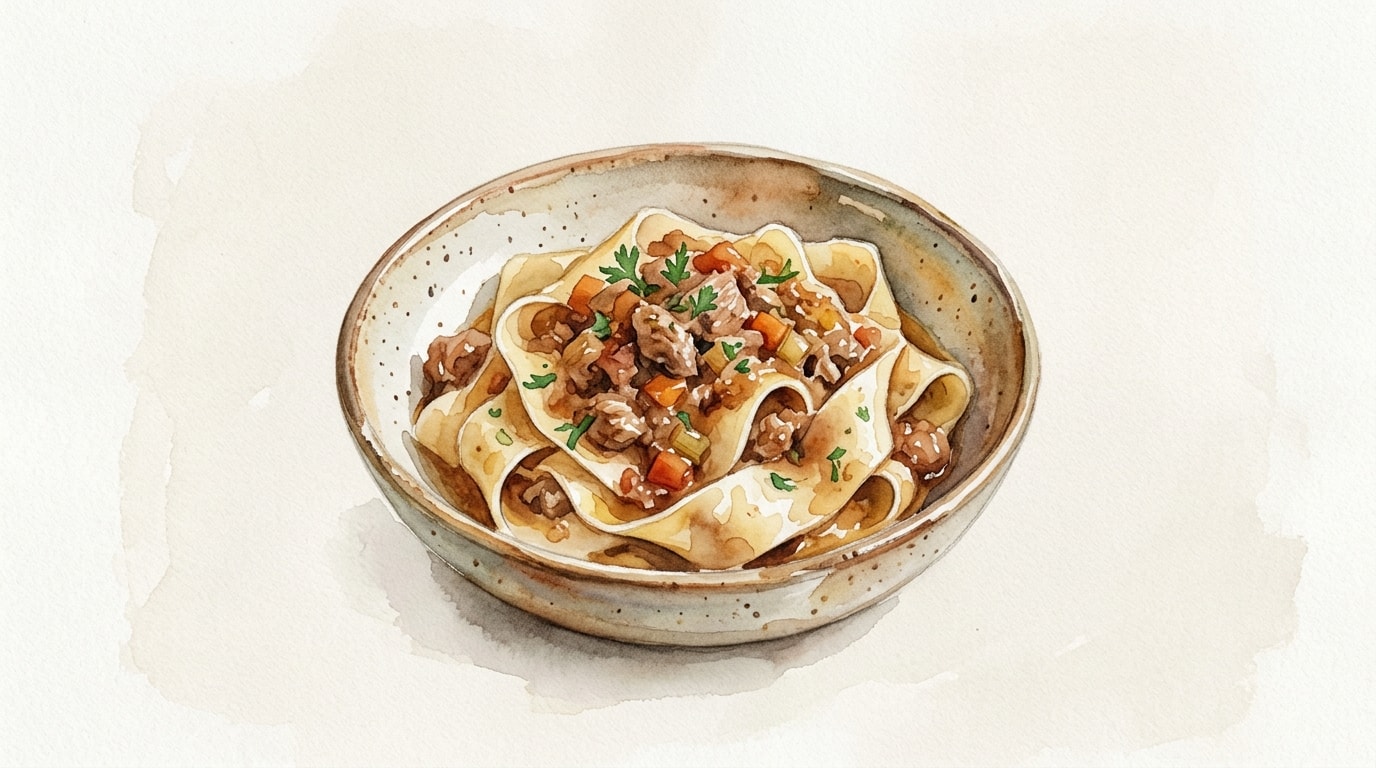
Transfer the drained pappardelle directly into the pot with the rabbit ragù. Toss gently to combine over low heat for 1 minute, adding splashes of reserved pasta water as needed to create a glossy emulsion that coats the noodles perfectly. Garnish with chopped parsley and grated Parmigiano-Reggiano.
Chef's Notes
- Using a dry white wine instead of red keeps the flavor profile of the rabbit delicate and sweet, allowing the earthiness of the mushrooms to shine.
- Do not rush the braise. The connective tissue and collagen in the rabbit need sustained, gentle heat to break down into the rich gelatin that gives this sauce its luscious mouthfeel.
- Finishing the pasta directly in the reduced ragù with a splash of starchy pasta water is non-negotiable. This step emulsifies the fat and liquid, ensuring the sauce clings tightly to the pasta rather than slipping off.
- If you are breaking down the whole rabbit yourself, save the kidneys and liver. Finely mincing them into the mirepoix step adds an incredible, traditional depth of flavor to the final ragù.
Storage
Refrigerator: 3 days — Store pasta and ragù separately if possible to prevent the pasta from absorbing all the sauce and becoming mushy.
Freezer: 3 months — Freeze the rabbit ragù only. Do not freeze the cooked pasta.
Reheating: Gently warm the ragù in a saucepan over medium-low heat, adding a splash of stock or water if too thick. Toss with freshly boiled pasta.
Troubleshooting
Rabbit meat is tough or dry
Cause: The braising time was too short, preventing the collagen from breaking down into tender gelatin.
Fix: Return the rabbit to the pot with the liquid, cover, and continue braising for another 30 to 45 minutes, adding a little water if the liquid has reduced too much.
Prevention: Ensure the braising liquid maintains a gentle simmer in the oven, and always test for tenderness before removing the rabbit from the braise.
Sauce is too thin and watery
Cause: Lid was too tight during the braise preventing evaporation, or the sauce was not reduced enough after removing the meat.
Fix: Remove the meat, turn up the heat to high, and boil the liquid rapidly until thickened. Alternatively, stir in a small slurry of cornstarch and cold water.
Prevention: Always take the time to reduce the braising liquid on the stovetop before returning the shredded meat to the pot.
Pasta clumping or breaking when mixed
Cause: Pasta was overcooked in the water, or handled too roughly during the final tossing phase.
Fix: Cannot be fixed once broken, but adding a splash of olive oil or pasta water can loosen clumps.
Prevention: Cook pasta strictly to al dente and use tongs to gently lift and fold the noodles into the sauce.
Cultural Context
While pappardelle is distinctly Italian in origin, pairing wide egg noodles with game meats like rabbit is deeply rooted in the rustic hunting traditions of provincial France. This is especially true in regions bordering Italy, such as Provence and the Rhône-Alpes, where culinary boundaries blur. This dish represents a harmonious marriage of French slow-braising techniques with Italian pasta sensibility.