Equipment
Ingredients
For the Sugar Cane Skewers
- 400 g sugar cane, outer bark peeled, cut into 15 cm lengths
For the Shrimp
- 12 head-on shell-on large shrimp, deveined with shells and heads intact
- 3 g fine sea salt
- 1 g freshly ground black pepper
- 15 ml olive oil
For the Rum-Mustard Glaze
- 60 ml dark rum
- 30 g whole grain mustard
- 40 g dark brown sugar, firmly packed
- 1 g ground cinnamon, toasted in a dry pan for 20 seconds to bloom the aromatics
- 15 ml fresh lime juice
- 15 g unsalted butter, cold, cubed
- 1 garlic, finely grated on a microplane
For Finishing
- 1 lime, cut into 6 small wedges
- 5 g fresh cilantro, leaves picked, stems discarded
Nutrition (per serving)
Nutrition is estimated per serving. Nutrients without complete source data are omitted.
Full nutrition
Only basic nutrition values are available for this recipe. More detailed nutrient data is incomplete.
- Calories
- 154 kcal
- Protein
- 14 g
- Carbohydrates
- 8 g
- Fat
- 5 g
- Sodium
- 365 mg
Sources: Aggregated Public Data, USDA FoodData Central
Method
Place the trimmed sugar cane lengths in a bowl, cover with cold water, and weigh them down with a small plate. Soak for at least 30 minutes so they steam rather than ignite on the grill.
Rinse the shrimp under cold running water and pat them dry with paper towels. Using kitchen shears, make a shallow cut down the back of each shell and lift out the dark vein, leaving the head and shell fully attached for presentation and moisture.
Toss the prepared shrimp in a mixing bowl with the olive oil, salt, and pepper. Set aside at room temperature for 10 minutes while you build the glaze.
Pour the dark rum into a small saucepan over medium heat and bring it to a gentle simmer. Let it reduce by half, about 2 minutes.
Whisk the dark brown sugar, whole grain mustard, toasted ground cinnamon, and grated garlic into the reduced rum. Simmer for 1 minute, whisking constantly, until the sugar dissolves and the glaze thickens to coat the back of a spoon.
Pull the saucepan off the heat and whisk in the cold butter and fresh lime juice. The butter should melt into the glaze to a glossy, pourable syrup. Loosen with a teaspoon of water if it tightens up.
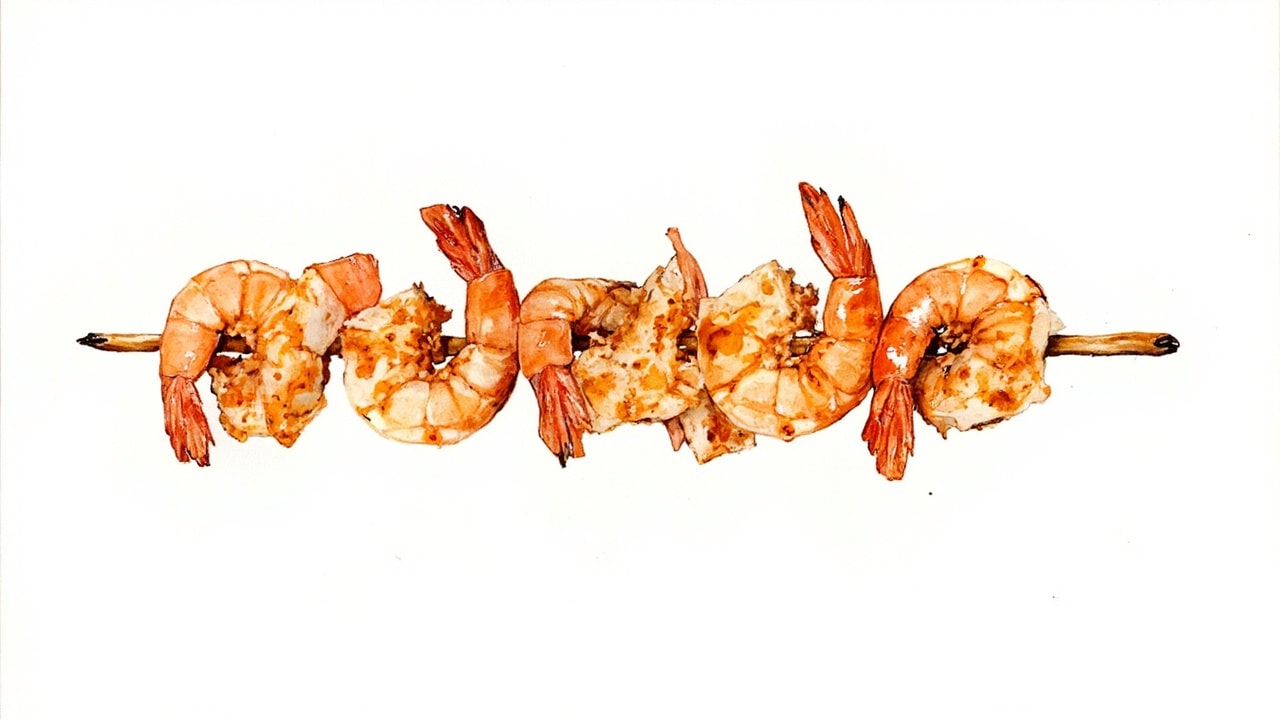
Drain the sugar cane skewers and pat them dry. Thread two shrimp onto each cane, passing the skewer through the head end first and out through the tail end so the two shrimp sit snugly side by side.
Preheat the grill to medium-high, about 200 degrees C / 400 degrees F, and brush the grates with oil. Lay the shrimp directly over the heat and sear for 90 seconds per side, turning with tongs, until the shells begin to blush pink.
Brush the glaze generously over the shrimp, then continue to grill for 1 to 1.5 minutes per side, turning once and basting again, until the shells turn bright pink-orange, the flesh is opaque, and an instant-read thermometer inserted into the thickest part reads 63 degrees C / 145 degrees F.
Transfer the skewers to a warm platter and let them rest for 2 minutes so the juices settle. Scatter cilantro leaves over the top and serve immediately with lime wedges for squeezing.
Chef's Notes
- Buy head-on shell-on shrimp labeled 16/20 count; the larger size holds up to high heat without overcooking the interior.
- Toasting the ground cinnamon in a dry pan for 20 seconds before adding it to the glaze unlocks its aromatic oils and rounds out the sweetness of the brown sugar.
- Save the reserved shrimp heads and shells to make a quick stock: simmer with onion, celery, and a splash of the same rum for 20 minutes, then strain.
- Leftover sugar cane skewers are excellent stirrers for tropical cocktails; the residual glaze caramelizes nicely into a cold drink.
- If sugar cane is unavailable, thick lemongrass stalks or pre-soaked bamboo skewers work, though the signature sweet cane juice aroma will be absent.
Storage
Refrigerator: 1 day — Best eaten the day they are cooked; chilled sugar cane becomes fibrous.
Reheating: Warm briefly over a hot grill or under a broiler for 1 to 2 minutes per side. Avoid microwaving, which toughens the cane and overcooks the shrimp.
Troubleshooting
Sugar cane ignites or chars black
Cause: Skewers were not soaked long enough or the grill ran hotter than expected
Fix: Move skewers to the cooler side of the grill and finish there; a deep char is expected but open flames will ruin the cane
Prevention: Soak the cane for at least 30 minutes and grill over medium-high heat rather than screaming hot
Glaze burns to a bitter black crust
Cause: Sugar caramelized past the syrup stage or glaze was applied too early over direct heat
Fix: Cannot be fixed once burnt; discard the blackened glaze and brush on a fresh warm batch off heat
Prevention: Brush glaze on only during the final 2 minutes of cooking and keep the heat at medium-high
Shrimp are rubbery and shrunken
Cause: Cooked past 63 degrees C / 145 degrees F or held on the grill during flare-ups
Fix: Cannot be reversed; serve with extra lime and a creamy dip to add back some moisture
Prevention: Pull the shrimp when they are just opaque and still feel slightly soft; carryover heat will finish them as they rest
Shrimp spin on the skewer and do not brown evenly
Cause: The cane only passed through soft tail meat and is not anchored through firmer shell
Fix: Press the shrimp flat against the hot grate with tongs for 20 seconds to sear the contact side, then finish turning by hand
Prevention: Thread the cane through both the head and tail cavities of each shrimp so it locks into the shell twice
Cultural Context
Sugar cane skewers are a fixture of Caribbean and Southeast Asian grilling, where the cane juices caramelize against the protein and perfume the smoke with a grassy sweetness. Pairing the cane with a mustard-based glaze borrows from French Creole cooking of Martinique and Guadeloupe, where rum and mustard meet in classic pan sauces. This appetizer is a backyard cookout nod to that cross-cultural pantry, where tropical produce, French technique, and open-fire cooking collide.