Equipment
* optional
Ingredients
Monkfish
- 4 monkfish fillets, skinless, boneless, patted dry
- 6 g kosher salt, to taste
- 2 g black pepper, freshly cracked
- 30 ml olive oil
- 40 g unsalted butter
- 4 garlic cloves, thinly sliced
- 8 fresh thyme sprigs, whole
Creamy Garlic Thyme Mash
- 800 g yukon gold potatoes, peeled and cut into 3cm chunks
- 15 g kosher salt, for boiling water, plus to taste
- 150 ml whole milk
- 60 g unsalted butter, cold, cubed
- 6 garlic cloves, smashed
- 6 fresh thyme sprigs, whole
- 1 g black pepper, freshly cracked
Garnish
- 2 g fresh thyme leaves, picked from stems
- flaky sea salt
Nutrition (per serving)
Nutrition is estimated per serving. Nutrients without complete source data are omitted.
Full nutrition
- Calories
- 539 kcal
- Protein
- 30 g
- Carbohydrates
- 34 g
- Fat
- 31 g
- Zinc
- 1.7 mg
- Water
- 328 g
Sources: Aggregated Public Data, USDA FoodData Central
Method
Peel the Yukon Gold potatoes and cut them into evenly sized 3cm chunks. Uneven pieces will cook at different rates and produce a lumpy mash.
Place the potatoes in a medium saucepan, cover with cold water by 2cm, and add 10g of kosher salt. Bring to a boil over high heat (about 218°C/425°F burner output), then reduce to a steady simmer.
While the potatoes simmer, combine the smashed garlic, thyme sprigs, and milk in a small saucepan. Heat gently over low heat (around 90°C/195°F) for 5 minutes until fragrant, then remove from heat and strain out the solids.
Test the potatoes by piercing with a knife; they should slide off easily with no resistance. Drain thoroughly in a colander and return to the hot saucepan off the heat for 30 seconds to evaporate excess moisture.
Mash the potatoes in the saucepan using a potato masher until smooth. Add the cold cubed butter and stir until melted, then slowly pour in the warm garlic-thyme milk while folding gently with a spoon. Season with remaining salt and black pepper to taste. Cover and keep warm.
Pat the monkfish fillets completely dry with paper towels on all surfaces. Season generously on both sides with kosher salt and freshly cracked black pepper. Allow the seasoned fillets to sit at room temperature for 5 minutes.
Heat the olive oil in a large heavy-bottomed skillet over medium-high heat until shimmering (about 190°C/375°F surface temperature). Carefully lay the monkfish fillets away from you into the oil, leaving space between each piece.
After 4 minutes, flip each fillet using a fish spatula. The underside should be deep golden. Add the butter, sliced garlic, and thyme sprigs to the pan, tilting slightly and spooning the foaming butter over the fish continuously for 90 seconds.
Check the internal temperature of the thickest fillet with an instant-read thermometer; it should read 63°C/145°F and the flesh should be opaque and just separating. Transfer the fish to a warm plate and loosely tent with foil to rest for 3 minutes.
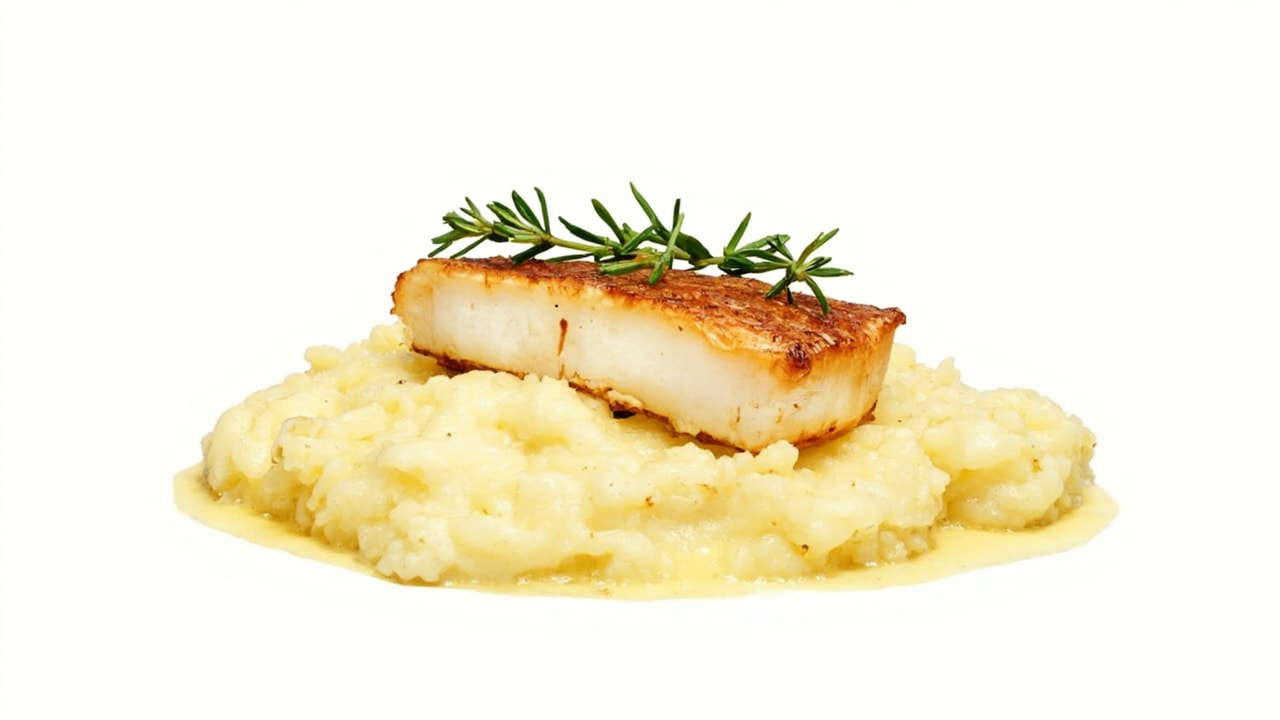
Spoon a generous bed of mashed potatoes onto each of four warm plates. Place a monkfish fillet on top, spoon the thyme-garlic pan sauce over and around the fish, and finish with picked fresh thyme leaves and a pinch of flaky sea salt.
Chef's Notes
- Monkfish has a tight, lean flesh with very little connective tissue, meaning it cooks faster than most white fish; treat it more like sea scallops than cod.
- For an even deeper crust, score the presentation side of each fillet lightly with a sharp knife in a crosshatch before seasoning; this increases surface area for browning.
- Always warm the dairy before adding it to potatoes; cold liquid cools the starch and creates lumps while making the mash pasty.
- Reserve a few raw potato chunks to drop back into the pan after boiling; they will absorb excess water and help achieve a fluffy texture.
- Save the monkfish liver if available; it can be pan-seared separately as a luxurious cook's reward.
Storage
Refrigerator: 2 days — Store fish and potatoes separately in airtight containers. Consume within 2 days for best texture.
Freezer: 1 month — Potatoes freeze better than monkfish. Freeze mashed potatoes in a sealed container; thaw and rewhip with a splash of warm milk.
Reheating: Reheat monkfish gently in a 150°C/300°F oven for 8-10 minutes to avoid overcooking. Warm potatoes on the stovetop with a splash of milk.
Troubleshooting
Monkfish sticks to the pan and tears when flipped
Cause: The pan was not hot enough, or the fillets were not patted dry before searing
Fix: If the crust has torn, gently loosen remaining pieces and reassemble the fillet on the plate; sauce will hide minor imperfections
Prevention: Heat the pan until the oil shimmers, and dry the fish thoroughly on all sides with paper towels
Monkfish is dry and tough
Cause: Overcooking past 63°C/145°F internal temperature
Fix: Cannot be fixed once overcooked; serve with extra pan sauce to add moisture
Prevention: Use an instant-read thermometer and remove the fish the moment it reaches 63°C/145°F; carryover heat will finish the cooking during rest
Mashed potatoes are gummy or gluey
Cause: Overworking the starch by beating or over-mashing
Fix: Cannot be fully reversed, but stirring in an extra 30ml of warm milk can loosen the texture slightly
Prevention: Fold the warmed milk in gently with a spoon rather than vigorous stirring, and mash just until smooth
Pan sauce tastes burnt or bitter
Cause: Butter and garlic were added to a pan that was too hot, scorching the milk solids
Fix: Strain out the burnt garlic and start a fresh small pan of butter sauce to pour over the fish
Prevention: Reduce heat slightly when adding butter and garlic; swirl the pan to cool the butter and avoid blackening
Cultural Context
Monkfish, sometimes called 'poor man's lobster' for its sweet, firm, almost crustacean-like flesh, has long been prized in French and Mediterranean coastal cooking where it is treated simply to let its natural flavor shine. The combination of a delicate fish with butter, thyme, and garlic reflects the classic French bistro philosophy of letting a few quality ingredients speak for each other, while the creamy potato accompaniment is a comforting staple of northern European tables.