
Equipment
Ingredients
Salad Base
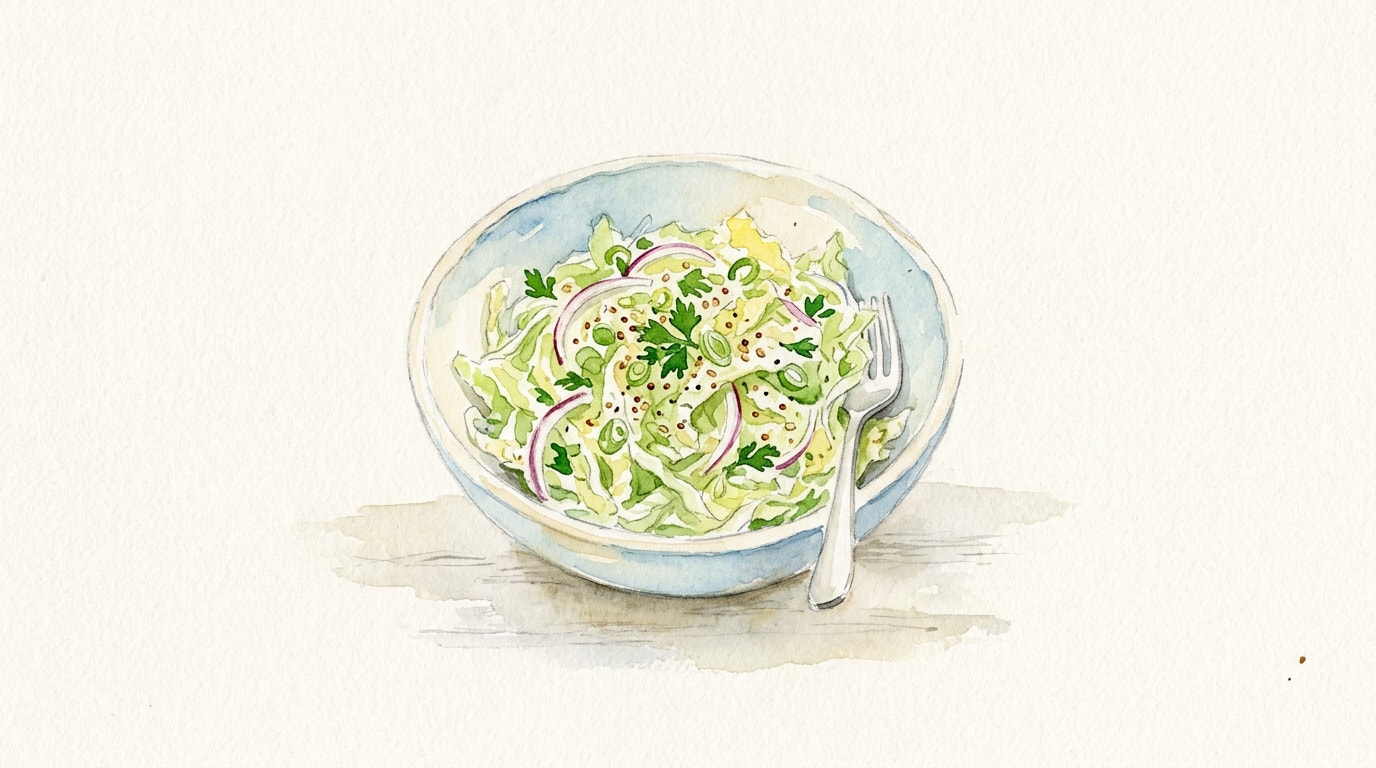
- 400 g napa cabbage, finely shredded
- 2 scallions, thinly sliced
Garlic Mustard Vinaigrette
- 45 ml extra virgin olive oil
- 15 ml white wine vinegar
- 10 g dijon mustard
- 1 garlic, grated or finely minced
- 2 g kosher salt
- 1 g black pepper, freshly cracked
Nutrition (per serving)
Nutrition is estimated per serving. Nutrients without complete source data are omitted.
Full nutrition
- Calories
- 119 kcal
- Protein
- 1 g
- Carbohydrates
- 3 g
- Fat
- 11 g
- Fiber
- 1 g
- Sugar
- 1 g
- Sodium
- 257 mg
- Saturated Fat
- 2 g
- Monounsaturated Fat
- 8 g
- Polyunsaturated Fat
- 1 g
- Potassium
- 198 mg
- Calcium
- 67 mg
- Iron
- 1.7 mg
- Magnesium
- 18 mg
- Phosphorus
- 41 mg
- Zinc
- 0.3 mg
- Vitamin A
- 42 mcg
- Vitamin C
- 12 mg
- Vitamin E
- 1.6 mg
- Vitamin K
- 18 mcg
- Vitamin B6
- 0.0 mg
- Thiamin
- 0.01 mg
- Riboflavin
- 0.01 mg
- Niacin
- 0.0 mg
- Folate
- 3 mcg
- Water
- 5 g
Sources: Aggregated Public Data, USDA FoodData Central
Method
Slice the Napa cabbage crosswise into thin ribbons and thinly slice the scallions. Place them together into a large mixing bowl.
In a small bowl, combine the white wine vinegar, Dijon mustard, minced garlic, kosher salt, and black pepper. Whisk until the mustard dissolves into the vinegar.
While whisking continuously, slowly stream the extra virgin olive oil into the vinegar mixture until it becomes completely emulsified and slightly thickened.
Pour the vinaigrette over the shredded cabbage and scallions. Toss thoroughly to ensure every leaf is evenly coated with the dressing.
Let the salad rest at room temperature for 5 minutes before serving. This brief resting period allows the cabbage to soften slightly and absorb the flavors of the vinaigrette.
Chef's Notes
- For the best texture, use the leafy, crinkled top half of the Napa cabbage for this salad, reserving the thicker, white stalks at the base for a stir-fry or soup.
- Grating the garlic using a microplane rather than mincing it with a knife prevents harsh bites of raw garlic and allows its flavor to distribute evenly throughout the vinaigrette.
- Dijon mustard acts as an emulsifier in the vinaigrette, stabilizing the mixture of oil and vinegar so it clings beautifully to the cabbage leaves instead of pooling at the bottom of the bowl.
Storage
Refrigerator: 1 day — Cabbage will continue to soften and release water; best eaten fresh but leftovers are acceptable the next day.
Troubleshooting
Vinaigrette breaks or separates
Cause: Oil was added too quickly or not whisked vigorously enough
Fix: Add a few drops of warm water or an extra pinch of mustard to the separated dressing and whisk vigorously to re-emulsify before pouring over the salad
Prevention: Add the oil in a very slow, thin stream while whisking constantly
Salad is too watery
Cause: Cabbage was washed but not dried thoroughly, or the salad sat dressed for too long
Fix: Drain excess liquid from the bottom of the bowl and toss with a tiny drizzle of fresh olive oil
Prevention: Spin the cabbage completely dry before dressing and serve shortly after tossing
Cultural Context
Napa cabbage, traditionally a staple of East Asian cuisines, is highly prized for its delicate, sweet flavor and tender crunch. By pairing it with a classic French-style Dijon mustard vinaigrette, this dish represents a simple yet elegant fusion of ingredients, elevating a humble vegetable into a vibrant, modern side dish.


