Equipment
Ingredients
Lemons
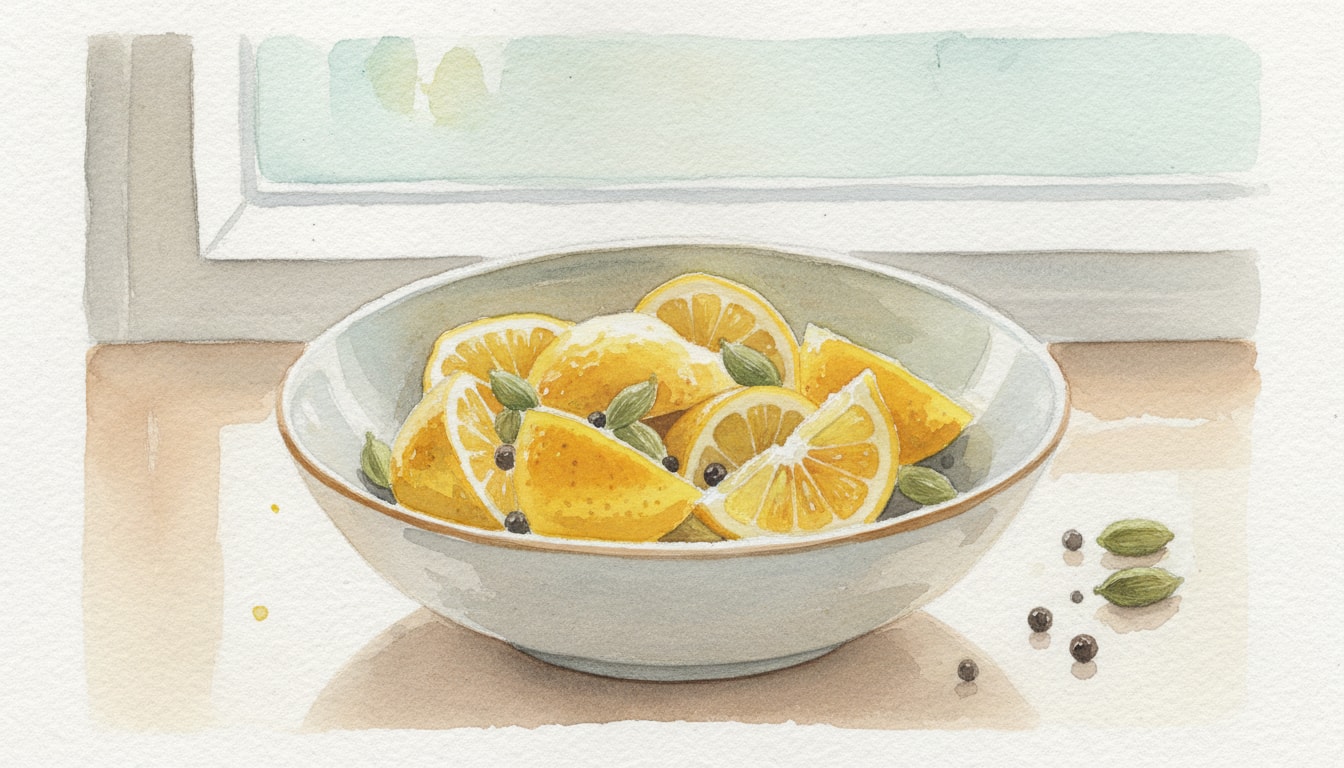
- 600 g organic lemons, whole
- 150 ml fresh lemon juice
Curing Agent
- 100 g kosher salt
Aromatics
- 3 g green cardamom pods, lightly crushed
- 5 g black peppercorns, whole
- 1 bay leaf
Nutrition (per serving)
Nutrition is estimated per serving. Nutrients without complete source data are omitted.
Full nutrition
- Calories
- 8 kcal
- Protein
- 0 g
- Carbohydrates
- 2 g
- Fat
- 0 g
- Fiber
- 1 g
- Sugar
- 1 g
- Sodium
- 1294 mg
- Saturated Fat
- 0 g
- Monounsaturated Fat
- 0 g
- Polyunsaturated Fat
- 0 g
- Potassium
- 36 mg
- Calcium
- 8 mg
- Iron
- 0.2 mg
- Magnesium
- 2 mg
- Phosphorus
- 4 mg
- Zinc
- 0.0 mg
- Vitamin A
- 0 mcg
- Vitamin C
- 13 mg
- Vitamin E
- 0.0 mg
- Vitamin K
- 0 mcg
- Vitamin B6
- 0.0 mg
- Thiamin
- 0.01 mg
- Riboflavin
- 0.01 mg
- Niacin
- 0.0 mg
- Folate
- 3 mcg
- Water
- 22 g
Sources: Aggregated Public Data, USDA FoodData Central
Method
Sterilize your glass jar and lid by boiling them in water or running them through a high-heat dishwasher cycle. Ensure they are completely dry before use.
Thoroughly scrub the lemons with a vegetable brush under warm water to remove any wax or residue. Pat dry completely.
Trim the very tips (nubs) off the ends of the lemons. Slice each lemon lengthwise into quarters, but do not cut all the way through the base; keep the four wedges attached at the bottom so the lemon opens like a flower.
Generously pack the inside of each scored lemon with kosher salt. Reshape the lemon to close it up.
Sprinkle a layer of salt, a few peppercorns, and a couple of crushed cardamom pods at the bottom of the jar. Press a salt-stuffed lemon firmly into the bottom of the jar to release its juices.
Repeat the process, layering salt-stuffed lemons, spices, and salt, pressing down hard with a wooden spoon or muddler each time to eliminate air pockets and extract juice.
Pour the additional fresh lemon juice over the packed lemons until they are completely submerged. Leave about 1-2 cm of headspace at the top of the jar. Seal tightly.
Store in a cool, dark place for at least 3 weeks (21 days). Shake the jar gently once a day for the first week to distribute the salt. The rinds will become translucent and soft when ready.
Chef's Notes
- Before using preserved lemons in a recipe, rinse them thoroughly to remove excess salt. For most dishes, discard the fleshy pulp and use only the finely diced rind.
- The curing liquid (brine) is liquid gold. Use a teaspoon of it in salad dressings, bloody marys, or hummus for a salty citrus kick.
- Cracking the cardamom pods is essential to allow the brine to penetrate the pod and extract the seeds' flavor into the lemons.
- If you don't have enough juice to cover the lemons after pressing them down, you must add more fresh lemon juice. Never add water.
Storage
Refrigerator: 6 months — Once opened, keep refrigerated. Ensure lemons remain submerged in brine.
Troubleshooting
White film developing on top of liquid
Cause: Harmless kahm yeast forming due to air exposure
Fix: Skim it off carefully; if the lemons underneath smell fresh and citrusy, they are safe. If moldy (fuzzy/colorful), discard.
Prevention: Ensure lemons are fully submerged under the brine at all times
Lemons are turning brown or mushy
Cause: Oxidation or contamination
Fix: Discard. Do not consume.
Prevention: Keep jar sealed tight and ensure all equipment was sterilized
Cultural Context
L'hamd marakad (preserved lemons) are a cornerstone of Moroccan gastronomy, providing the distinct savory acidity found in tagines and salads. Historically developed as a method to preserve the abundance of the citrus harvest without refrigeration, the fermentation process transforms the bitter pith into a floral, mellow delicacy.