
Equipment
Ingredients
Labneh Base
- 1000 g whole milk greek yogurt, plain, unsweetened
- 10 g kosher salt
Herb and Spice Coating
- 8 g fennel seeds, whole
- 10 g fresh mint, finely chopped
- 10 g fresh dill, finely chopped
- 5 g black peppercorns, whole
Marinade
- 400 ml extra virgin olive oil
Nutrition (per serving)
Nutrition is estimated per serving. Nutrients without complete source data are omitted.
Full nutrition
- Calories
- 228 kcal
- Protein
- 5 g
- Carbohydrates
- 2 g
- Fat
- 23 g
- Fiber
- 0 g
- Sugar
- 2 g
- Sodium
- 213 mg
- Saturated Fat
- 4 g
- Monounsaturated Fat
- 16 g
- Polyunsaturated Fat
- 2 g
- Cholesterol
- 7 mg
- Potassium
- 87 mg
- Calcium
- 58 mg
- Iron
- 0.3 mg
- Magnesium
- 8 mg
- Phosphorus
- 70 mg
- Zinc
- 0.3 mg
- Vitamin A
- 4 mcg
- Vitamin C
- 1 mg
- Vitamin E
- 2.9 mg
- Vitamin K
- 12 mcg
- Vitamin B6
- 0.0 mg
- Vitamin B12
- 0.4 mcg
- Thiamin
- 0.01 mg
- Riboflavin
- 0.14 mg
- Niacin
- 0.1 mg
- Folate
- 4 mcg
- Water
- 42 g
Sources: USDA FoodData Central
Method
In a large mixing bowl, thoroughly combine the whole milk Greek yogurt and kosher salt.
Line a fine mesh strainer with a double layer of cheesecloth and set it over a deep bowl. Transfer the yogurt mixture into the cheesecloth, gather the corners, and tie tightly. Refrigerate at 4°C/40°F for 24 hours to allow the whey to drain completely.
Place the fennel seeds in a dry skillet over medium heat. Toast for 2 to 3 minutes until deeply fragrant. Transfer to a cutting board, lightly crush with the back of a knife or a mortar, and combine with the chopped fresh mint and dill in a shallow dish.
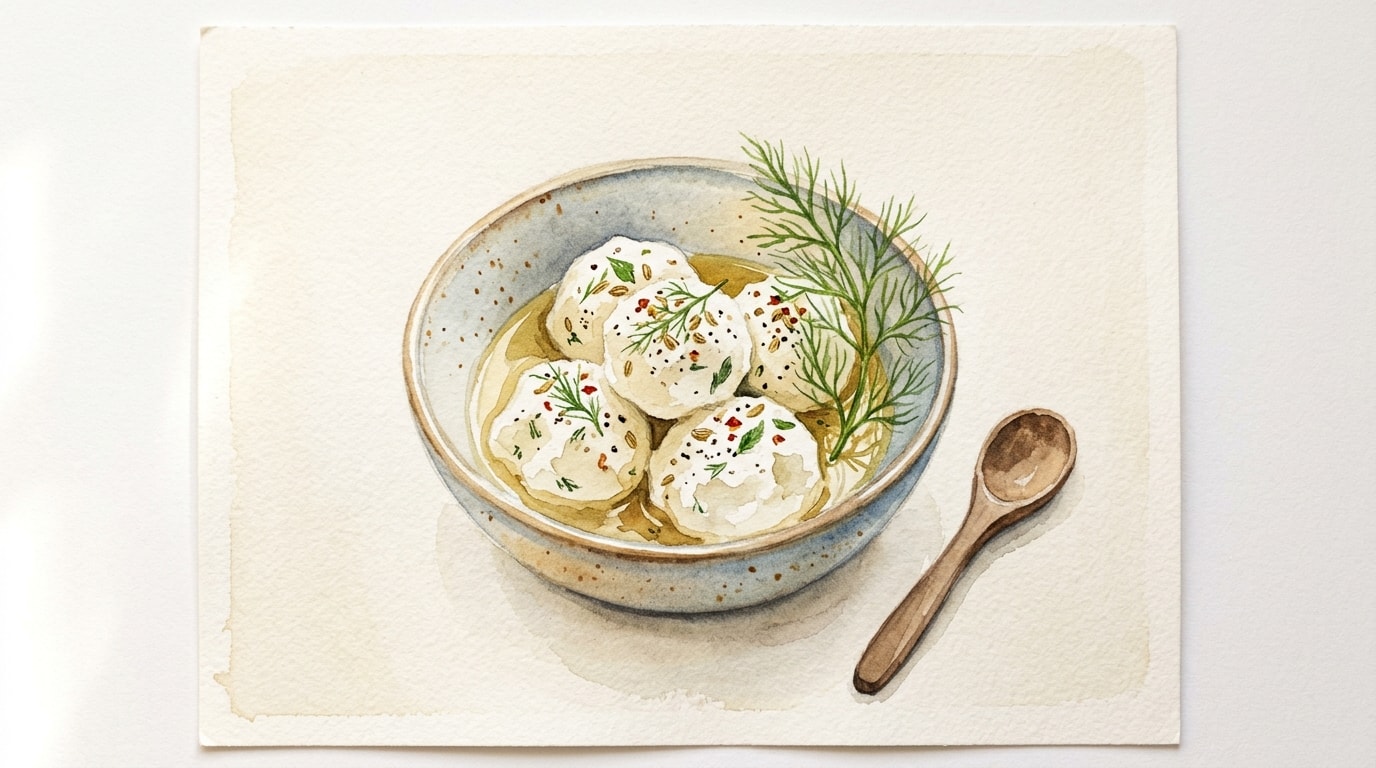
Lightly coat your hands with a few drops of olive oil. Scoop 15g to 20g portions of the strained labneh and gently roll them between your palms into smooth balls.
Roll each labneh ball in the fennel and herb mixture until completely coated on all sides.
Carefully transfer the coated labneh balls into a sterilized glass jar, dropping in the whole black peppercorns between the layers. Do not pack them too tightly to ensure the oil can surround each ball.
Pour the extra virgin olive oil into the jar until the labneh balls are submerged by at least 1 centimeter of oil. Seal the jar and refrigerate at 4°C/40°F for at least 24 hours before serving to allow the flavors to meld.
Chef's Notes
- For the purest flavor and smoothest texture, ensure your starting yogurt contains no stabilizers, thickeners, or added gums. The ingredient list should only say milk and live active cultures.
- The leftover liquid drained from the yogurt is whey, which is highly nutritious. Save it in a jar to use as a substitute for water or milk in bread baking, or blend it into smoothies.
- The marinating oil will absorb immense flavor from the fennel, herbs, and labneh. When you have eaten all the balls, use the leftover infused oil for salad dressings or dipping crusty bread.
- Sterilizing your storage jar is non-negotiable for preservation. Simply wash the jar in hot soapy water, rinse, and place in a 110°C/230°F oven for 15 minutes until completely dry.
Storage
Refrigerator: 1 month — Keep completely submerged in olive oil to prevent spoilage.
Troubleshooting
Yogurt balls are too sticky and lose their shape when rolling
Cause: The yogurt was not strained long enough or ambient temperature is too high
Fix: Return the labneh mass to the cheesecloth, place a weight on top, and drain for another 12 hours. Alternatively, place the mass in the freezer for 15 minutes before rolling.
Prevention: Ensure you strain for a full 24 to 48 hours until very firm, and handle in a cool environment.
Mold forms on the top layer in the jar
Cause: The labneh balls were exposed to air and not fully submerged in the olive oil
Fix: Cannot be fixed. Discard the jar to ensure food safety.
Prevention: Always ensure there is a thick layer of oil above the top-most balls, topping up after each serving.
Cultural Context
Labneh is a deeply rooted cornerstone of Levantine and broader Middle Eastern mezze cultures. Preserving these intensely tangy, strained yogurt balls in olive oil is a technique traditionally known as Labneh Makbouseh. It originated as an ingenious method by nomadic tribes and villagers to extend the shelf-life of dairy in hot climates long before the invention of refrigeration. The addition of fennel and fresh herbs pays homage to the vibrant, aromatic flora of the Mediterranean basin.


