
Equipment
Ingredients
Aromatics and Base
- 30 g unsalted butter, room temperature
- 1 leek, white and light green parts only, sliced
- 500 g waxy potatoes, peeled and cut into 2cm cubes
- 150 g carrots, peeled and sliced into half-moons
Broth and Seasonings
- 800 ml fish stock
- 6 whole allspice berries
- 1 bay leaf, dried
- 5 g salt
Proteins and Finishing
- 400 g salmon fillet, skinless, pin bones removed, cut into 3cm cubes
- 200 ml heavy cream
- 20 g fresh dill, finely chopped
Nutrition (per serving)
Nutrition is estimated per serving. Nutrients without complete source data are omitted.
Full nutrition
- Calories
- 653 kcal
- Protein
- 38 g
- Carbohydrates
- 30 g
- Fat
- 53 g
- Fiber
- 5 g
- Sugar
- 5 g
- Sodium
- 2760 mg
- Saturated Fat
- 16 g
- Trans Fat
- 1 g
- Monounsaturated Fat
- 6 g
- Polyunsaturated Fat
- 1 g
- Cholesterol
- 73 mg
- Potassium
- 1269 mg
- Calcium
- 392 mg
- Iron
- 17.2 mg
- Magnesium
- 350 mg
- Phosphorus
- 407 mg
- Zinc
- 1.6 mg
- Vitamin A
- 907 mcg
- Vitamin C
- 25 mg
- Vitamin D
- 0.8 mcg
- Vitamin E
- 0.9 mg
- Vitamin K
- 7 mcg
- Vitamin B6
- 0.4 mg
- Vitamin B12
- 0.1 mcg
- Thiamin
- 0.07 mg
- Riboflavin
- 0.19 mg
- Niacin
- 1.8 mg
- Folate
- 38 mcg
- Water
- 172 g
Sources: Aggregated Public Data, USDA FoodData Central
Method
Melt the unsalted butter in a Dutch oven or heavy-bottomed pot over medium heat. Add the sliced leeks and gently sauté until they are softened and translucent, ensuring they do not take on any brown color.
Pour in the fish stock. Add the cubed potatoes, sliced carrots, whole allspice berries, bay leaf, and salt. Increase the heat to bring the liquid to a rolling boil.
Reduce the heat to low, cover the pot, and let the soup simmer until the potatoes and carrots are tender enough to be pierced easily with a fork.
Stir in the heavy cream and allow the soup to return to a very gentle simmer. Do not let it boil vigorously, as high heat can cause the cream to separate.
Gently fold the salmon cubes into the simmering broth. Cook for a few minutes until the fish turns opaque and flakes easily. Ensure the internal temperature of the salmon reaches 63C or 145F for food safety, being careful not to over-stir and break the fish apart.
Remove the pot from the heat immediately. Stir in the freshly chopped dill, taste the broth, and adjust the salt if necessary. Let the soup rest briefly before serving.
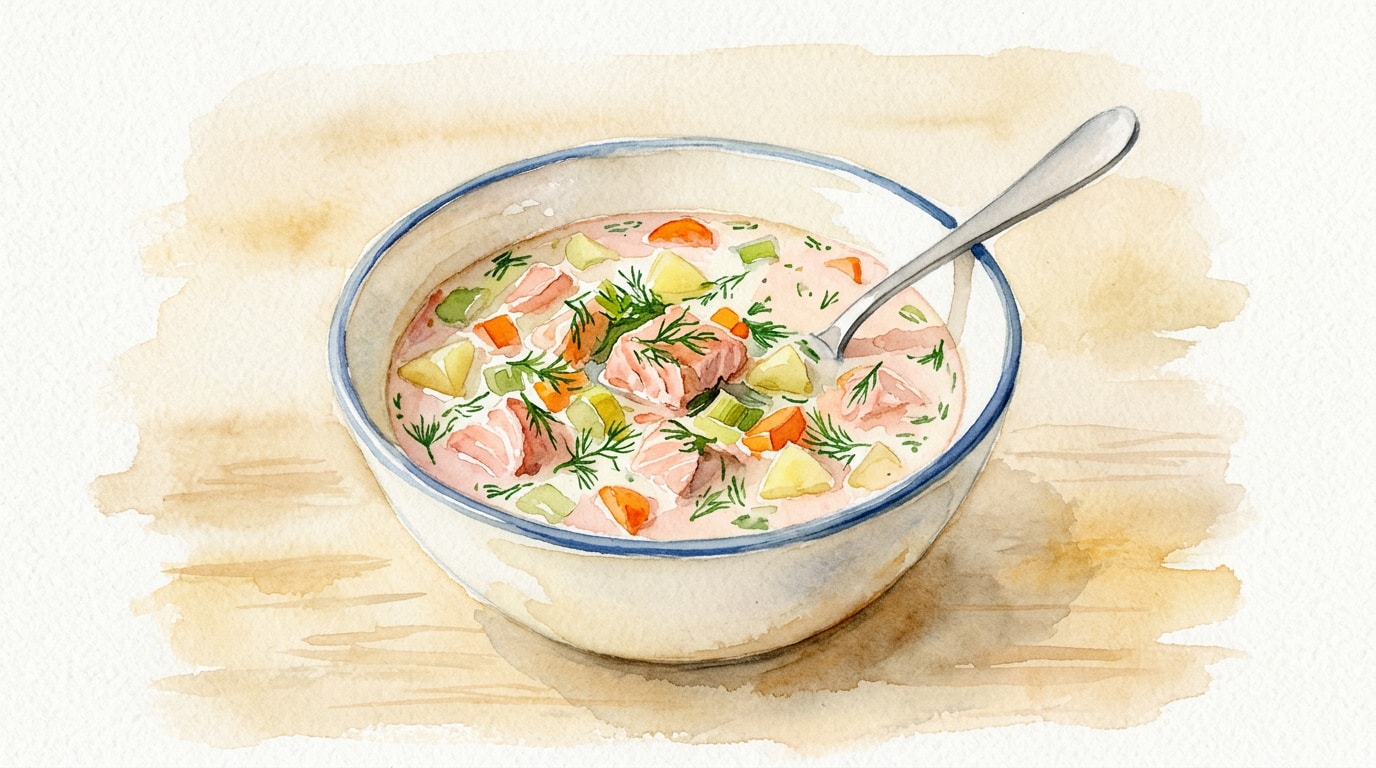
Ladle the warm soup into bowls, ensuring an even distribution of broth, root vegetables, and salmon chunks. Garnish with additional fresh dill sprigs.
Chef's Notes
- For the most authentic flavor, consider making a quick fish stock using the leftover salmon frame, skin, and head instead of relying on store-bought varieties.
- Do not discard the dill stems during preparation. Tie them in a bundle and let them simmer with the potatoes to infuse the broth deeply, then remove them before adding the cream.
- Removing the pot from the direct heat slightly before the salmon is fully cooked allows the residual heat of the rich broth to perfectly finish poaching the fish, resulting in a silken texture.
- Washing the potato cubes in cold water before adding them to the pot removes excess surface starch, helping to keep the broth clean and preventing the soup from becoming overly thick.
Storage
Refrigerator: 3 days — Reheat very gently over low heat to prevent the cream from splitting and the salmon from overcooking.
Troubleshooting
Broth appears curdled or grainy
Cause: The soup was allowed to boil vigorously after the heavy cream was added
Fix: Cannot be fully fixed, but whisking in a small slurry of cornstarch and water may slightly improve the texture
Prevention: Keep the soup at a gentle simmer once dairy is introduced and avoid rolling boils
Salmon cubes are dry and chalky
Cause: The salmon was boiled over high heat or left in the cooking liquid for too long
Fix: Cannot be fixed
Prevention: Poach the salmon gently over low heat and remove the pot from the stove as soon as the fish turns opaque
Potatoes have dissolved into the soup
Cause: Using starchy potatoes like Russets instead of waxy ones, or simmering for too long
Fix: Enjoy the thicker, starchier broth, though the appearance will be altered
Prevention: Always use waxy potatoes like Yukon Gold or red potatoes, and check for doneness frequently
Cultural Context
Lohikeitto is a quintessential Finnish winter dish, historically enjoyed to provide warmth and rich sustenance during the long, dark, and frigid Nordic winters. The traditional preparation reflects the landscape, relying on a few high-quality, locally sourced ingredients: fresh Baltic salmon, cold-hardy root vegetables, and abundant high-fat dairy. It remains a deeply beloved comfort food, served at both casual family dinners and festive gatherings throughout Scandinavia.


