
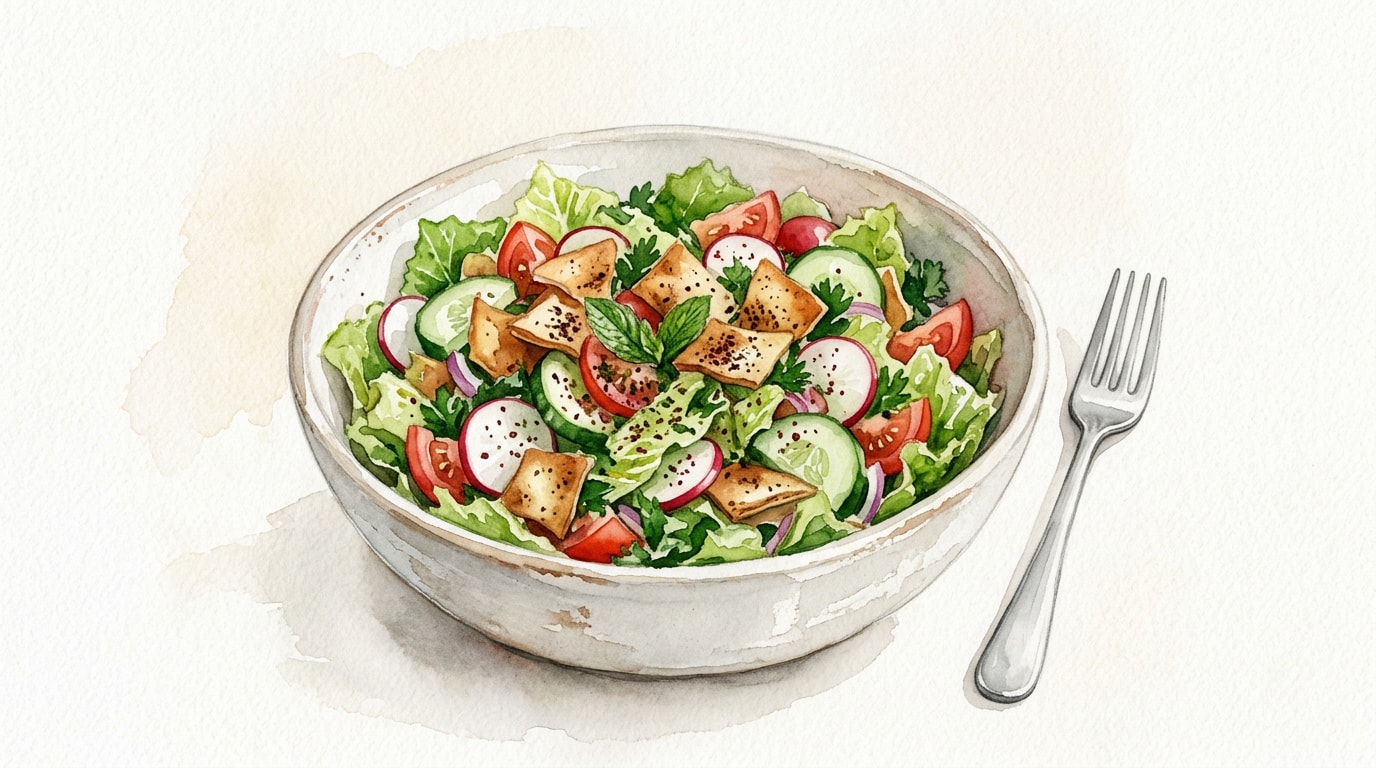
Equipment
Ingredients
Crispy Pita
- 100 g pita bread, cut into bite-sized squares
- 15 ml extra virgin olive oil
- 1 g kosher salt
Salad Base
- 400 g ripe tomatoes, chopped
- 300 g lebanese cucumbers, chopped
- 100 g radishes, thinly sliced
- 50 g red onion, thinly sliced
- 30 g fresh flat-leaf parsley, roughly chopped
- 15 g fresh mint, roughly chopped
- 150 g romaine lettuce, roughly chopped
Sumac Dressing
- 60 ml extra virgin olive oil
- 45 ml fresh lemon juice
- 15 ml pomegranate molasses
- 10 g ground sumac
- 1 garlic, minced to a paste
- 4 g kosher salt
- 1 g black pepper, freshly ground
Nutrition (per serving)
Nutrition is estimated per serving. Nutrients without complete source data are omitted.
Full nutrition
- Calories
- 305 kcal
- Protein
- 6 g
- Carbohydrates
- 31 g
- Fat
- 20 g
- Fiber
- 7 g
- Sugar
- 8 g
- Sodium
- 699 mg
- Saturated Fat
- 3 g
- Monounsaturated Fat
- 13 g
- Polyunsaturated Fat
- 2 g
- Potassium
- 675 mg
- Calcium
- 204 mg
- Iron
- 8.0 mg
- Magnesium
- 62 mg
- Phosphorus
- 96 mg
- Zinc
- 0.9 mg
- Vitamin A
- 54 mcg
- Vitamin C
- 24 mg
- Vitamin E
- 2.6 mg
- Vitamin K
- 139 mcg
- Vitamin B6
- 0.2 mg
- Thiamin
- 0.05 mg
- Riboflavin
- 0.10 mg
- Niacin
- 0.5 mg
- Folate
- 50 mcg
- Water
- 114 g
Sources: Aggregated Public Data, USDA FoodData Central
Method
Preheat your oven to 200C or 400F. Line a baking sheet with parchment paper.
Toss the cut pita bread with olive oil and salt on the baking sheet. Spread in an even layer and bake for 8 to 10 minutes, tossing halfway, until golden brown and crispy. Remove from the oven and let cool completely.
While the pita cools, whisk the olive oil, lemon juice, pomegranate molasses, ground sumac, minced garlic, salt, and black pepper together in a small bowl until temporarily emulsified.
In a large mixing bowl, combine the chopped tomatoes, cucumbers, radishes, red onion, parsley, mint, and romaine lettuce if using. Pour the dressing over the vegetables and toss gently to coat.
Add the cooled, crispy pita chips to the salad just before serving. Toss once more, garnish with an extra pinch of sumac, and serve immediately to maintain the crunch of the bread.
Chef's Notes
- Authentic Lebanese fattoush relies heavily on the quality of sumac and pomegranate molasses. Seek out a dark, thick pomegranate molasses with no added refined sugars for the best flavor depth.
- Macerating the thinly sliced red onions in the lemon juice and sumac for 10 minutes before adding the oil helps mellow their harsh bite and infuses the dressing with flavor.
- Do not seed the tomatoes or cucumbers. The mingling of their natural juices with the olive oil and sumac is what creates the iconic, drinkable dressing at the bottom of the salad bowl.
Storage
Refrigerator: 1 day — Once dressed, the salad will become soggy. For meal prep, store undressed vegetables, dressing, and pita in separate containers for up to 3 days.
Troubleshooting
Pita chips became soggy and unpleasant
Cause: The salad was dressed and mixed too far in advance of serving
Fix: Cannot be fixed once the bread has absorbed the liquid
Prevention: Keep the toasted pita separate from the dressed vegetables until the exact moment of serving
Dressing is excessively tart or sour
Cause: Tomatoes lacked natural sweetness or lemon was highly acidic
Fix: Whisk in a tiny drop of maple syrup or extra olive oil to balance the acidity
Prevention: Taste your tomatoes and lemon juice before mixing the dressing
Cultural Context
Fattoush belongs to the family of Levantine dishes known as fattat, which utilize stale flatbread as a foundational ingredient. Originating in Northern Lebanon, it was an ingenious way for farmers to use up leftover pita by toasting or frying it and tossing it with whatever seasonal garden vegetables and herbs were abundant. Today, it is an iconic dish of the Levantine mezze table and is especially cherished during Ramadan as a refreshing way to break the fast.


