Equipment
* optional
Ingredients
Rabbit
- 1500 g rabbit, bone-in, cut into 8 serving pieces
- 40 g Dijon mustard, smooth
- 8 g sea salt, fine
- 3 g black pepper, freshly cracked
Aromatics and Vegetables
- 120 g shallots, peeled and thinly sliced, about 4 medium
- 2 garlic, minced
- 200 g cremini mushrooms, quartered if large, halved if medium
- 4 fresh thyme, sprigs
- 1 bay leaf, dried
- 15 g flat-leaf parsley, roughly chopped
Cooking Liquids and Fats
- 30 ml olive oil
- 30 g unsalted butter, divided: 20g for browning, 10g for finishing the sauce
- 250 ml dry white wine, such as Chablis or a dry white Burgundy
- 400 ml chicken stock, low-sodium preferred
- 200 ml heavy cream, cold
Nutrition (per serving)
Nutrition is estimated per serving. Nutrients without complete source data are omitted.
Full nutrition
- Calories
- 765 kcal
- Protein
- 56 g
- Carbohydrates
- 15 g
- Fat
- 47 g
- Fiber
- 2 g
- Sodium
- 1421 mg
- Potassium
- 1308 mg
- Calcium
- 106 mg
- Iron
- 5.2 mg
- Magnesium
- 68 mg
- Phosphorus
- 586 mg
- Zinc
- 4.1 mg
Sources: Aggregated Public Data, USDA FoodData Central
Method
Pat rabbit pieces thoroughly dry with paper towels. Season generously with salt and pepper on all sides. In a mixing bowl, toss rabbit with 25g Dijon mustard until each piece is thinly and evenly coated. Set aside at room temperature for 15 minutes to marinate.
While the rabbit marinates, thinly slice the shallots, mince the garlic, halve or quarter the mushrooms, and chop the parsley. Measure out the stock and cream and keep them near the stove.
Heat olive oil and 20g butter in a Dutch oven over medium-high heat until the butter foams and subsides, about 190°C/375°F surface temperature. Working in two batches to avoid crowding, place marinated rabbit in the pan and sear until deep golden brown on all sides, about 3 minutes per side. Transfer browned pieces to a clean plate.
Reduce heat to medium. Add shallots and cook, stirring frequently, until softened and translucent, about 4 minutes.
Add minced garlic and mushrooms. Cook, stirring occasionally, until mushrooms release their moisture and it nearly evaporates, about 6 minutes.
Pour in white wine and increase heat to medium-high. Scrape the bottom of the pot with a wooden spoon to release all browned bits. Simmer until wine reduces by roughly half, about 5 minutes.
Add chicken stock, thyme sprigs, and bay leaf. Stir to combine and bring to a gentle simmer.
Nestle browned rabbit pieces and any accumulated juices back into the pot. The liquid should reach about halfway up the sides of the rabbit. Cover with the lid slightly ajar to allow evaporation. Braise at a bare simmer, turning pieces every 25 minutes, for 1 hour and 15 minutes total. Rabbit is safe and done when a meat thermometer inserted into the thickest part (avoiding bone) reads 74°C/165°F, and the thigh meat pulls cleanly from the bone with a fork.
Carefully transfer rabbit pieces to a clean plate and tent loosely with foil. Remove and discard thyme stems and bay leaf from the sauce.
Place the Dutch oven over medium heat. If the sauce looks thin, simmer uncovered for a few minutes until it lightly coats the back of a spoon. Off heat, whisk in the cold cream, the reserved 15g Dijon mustard, and 10g cold butter. Return to low heat and warm gently for 2 minutes until the sauce is silky and just thickened. Taste and adjust salt.
Return the rabbit pieces to the sauce and warm through for 2 minutes, spooning sauce over the meat to glaze.
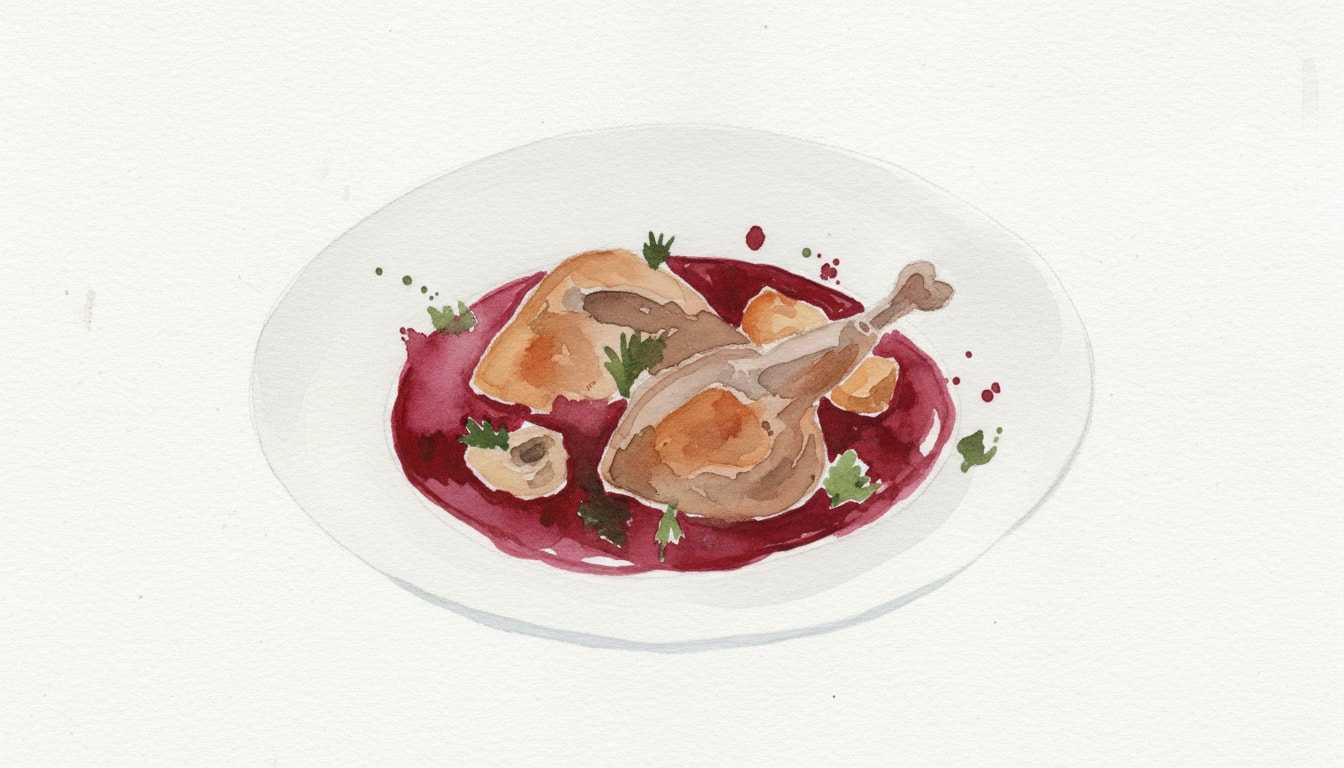
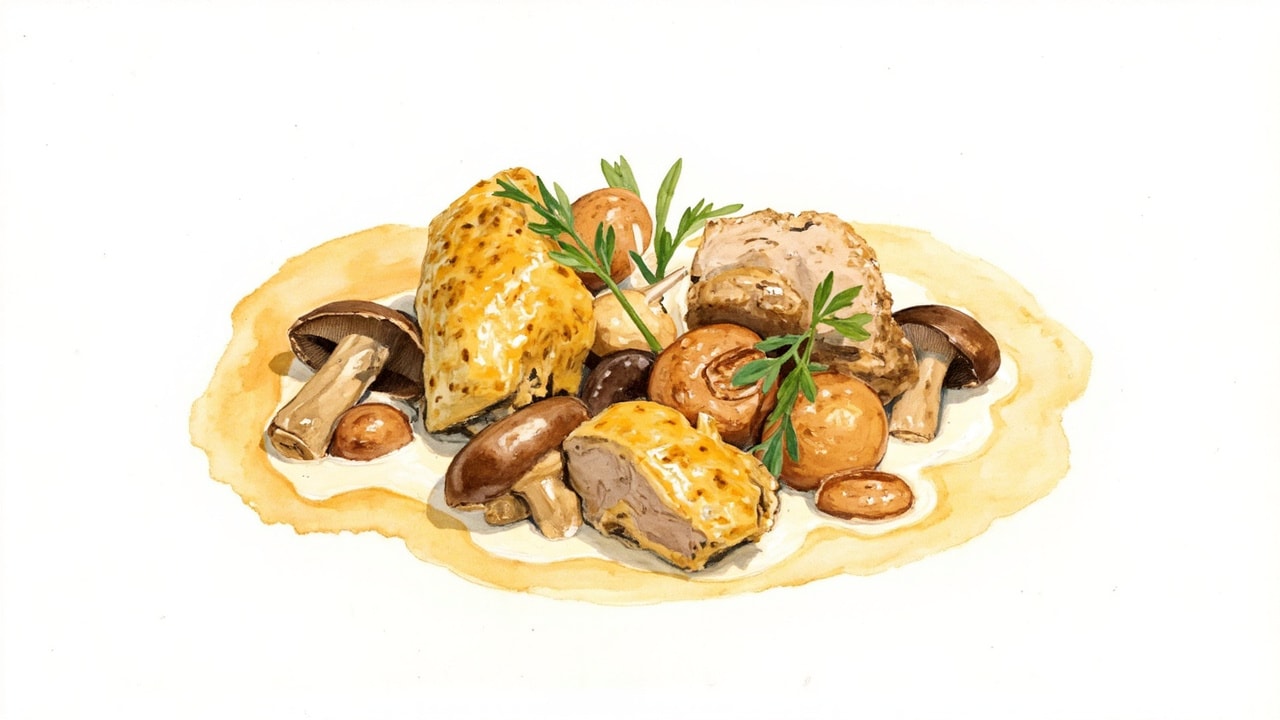
Scatter additional chopped parsley over the top and serve immediately in shallow bowls with crusty bread, boiled potatoes, or buttered egg noodles to soak up the sauce.
Chef's Notes
- Mustard's sharpness mellows significantly during the long braise; taste the sauce before adding the final tablespoon, since the cooking process concentrates flavor without preserving true harshness.
- Browning the rabbit thoroughly before braising is essential: the Maillard reaction creates deep savory complexity that defines the dish and cannot be replicated by simply simmering.
- A crisp, dry white wine is traditional; avoid anything oak-influenced or sweet, as these clash with mustard's tang. If avoiding alcohol entirely, replace the wine with an equal volume of stock plus 30ml of white wine vinegar.
- The rabbit bones release collagen during braising, naturally enriching the sauce; no flour or cornstarch is needed provided the liquid is properly reduced.
- For a brighter mustard finish, whisk in an extra teaspoon of mustard off heat just before serving to preserve its volatile aromatics.
Storage
Refrigerator: 3 days — Cool to room temperature within 2 hours of cooking, then refrigerate in shallow airtight containers
Freezer: 2 months — Freeze sauce and rabbit together without fresh herb garnish; thaw overnight in refrigerator before reheating
Reheating: Gently warm in a covered saucepan over low heat at 70°C/160°F, stirring occasionally; add a splash of cream if sauce has thickened
Troubleshooting
Rabbit meat is tough and chewy
Cause: Braised at too vigorous a simmer, or insufficient cooking time
Fix: Return rabbit to sauce and continue braising for another 20-30 minutes, checking tenderness periodically
Prevention: Maintain a bare, gentle simmer throughout braising and verify internal temperature reaches 74°C/165°F before removing
Sauce is too sharp or acidic
Cause: Mustard flavor over-concentrated, or insufficient cream to balance
Fix: Whisk in an extra 50ml of cream and a small pat of cold butter; serve with starchy accompaniments to mellow each bite
Prevention: Taste sauce before final seasoning; balance acidity with additional cream rather than sugar
Sauce is thin and watery
Cause: Insufficient reduction of braising liquid, or wine not reduced before adding stock
Fix: Simmer sauce uncovered for an additional 5-10 minutes until thickened, then whisk in cream
Prevention: Reduce wine by at least half before adding stock; reduce final sauce until it coats a spoon before adding cream
Cream sauce split or curdled
Cause: Sauce boiled after cream was added, or cream added to very hot liquid
Fix: Whisk vigorously off heat; if still split, drop an ice cube into the sauce while whisking to re-emulsify
Prevention: Add cold cream off heat or to sauce below 85°C/185°F; never let the finished sauce boil
Rabbit exterior burned while interior remains undercooked
Cause: Pan was too hot during initial sear, or pieces were not patted dry
Fix: Cannot be fully fixed; trim any heavily burnt exterior before serving, then continue braising until internal temperature reaches 74°C/165°F
Prevention: Pat rabbit thoroughly dry and sear at 190°C/375°F without crowding; flip only after crust forms
Cultural Context
Lapin à la Moutarde is a hallmark of Burgundian home cooking (Bourgogne, eastern France), a region synonymous with both fine white wines and the world-renowned mustard mills of Dijon. The dish reflects Burgundy's rustic-prestige tradition: ingredients drawn from the surrounding countryside, including farm-raised rabbit, regional wines, and foraged mushrooms, are elevated through patient technique rather than expensive components. While every French household claims its own variation, the defining balance of tangy mustard, rich cream, and earthy mushrooms traces back to mid-twentieth-century Burgundian cuisine and remains a staple of bistro menus across France.