Equipment
Ingredients
Cheese Base
- 400 g sharp cheddar cheese, freshly shredded
- 150 ml evaporated milk, liquid
- 12 g sodium citrate, powder
- 6 g unflavored gelatin powder, powder
- 30 ml water, cold
Nutrition (per serving)
Nutrition is estimated per serving. Nutrients without complete source data are omitted.
Full nutrition
- Calories
- 137 kcal
- Protein
- 8 g
- Carbohydrates
- 3 g
- Fat
- 11 g
- Fiber
- 0 g
- Sodium
- 201 mg
- Saturated Fat
- 6 g
- Cholesterol
- 32 mg
- Potassium
- 57 mg
- Calcium
- 233 mg
- Iron
- 0.1 mg
- Magnesium
- 11 mg
- Phosphorus
- 156 mg
- Zinc
- 1.2 mg
- Vitamin A
- 83 mcg
- Vitamin C
- 1 mg
- Vitamin B6
- 0.0 mg
- Vitamin B12
- 0.3 mcg
- Thiamin
- 0.01 mg
- Riboflavin
- 0.16 mg
- Niacin
- 0.0 mg
- Folate
- 9 mcg
- Water
- 21 g
- Caffeine
- 0 mg
Sources: USDA FoodData Central
Method
Line a Loaf pan (21x11 cm) with two long sheets of overlapping Plastic wrap, pressing firmly into the corners and leaving 5 cm of overhang on all sides.
In a Small prep bowl, sprinkle the unflavored gelatin powder over 30 ml of cold water and allow it to sit undisturbed for 5 minutes to hydrate.
In a Medium saucepan, combine the evaporated milk and sodium citrate, placing the pan over medium-low heat.
Use a Wire whisk to stir the warm milk constantly until the sodium citrate dissolves and the mixture reaches 75°C (167°F) on an Instant-read thermometer.
Add the hydrated gelatin to the hot liquid and stir with the Wire whisk until the gelatin dissolves completely.
Lower the heat to low to maintain approximately 70°C to 75°C (158°F to 167°F) and add the freshly shredded sharp cheddar cheese in small handfuls, stirring continuously with a Silicone spatula until completely melted.
Submerge an Immersion blender into the melted cheese mixture and blend on high speed for 1 minute until the mixture is glossy, perfectly smooth, and emulsified.
Pour the warm liquid cheese immediately into the lined Loaf pan (21x11 cm) and smooth the top with the Silicone spatula, then fold the overhang of Plastic wrap directly against the cheese surface.
Transfer the pan to the refrigerator and allow the block to chill undisturbed for 3 hours until completely firm and cold throughout.
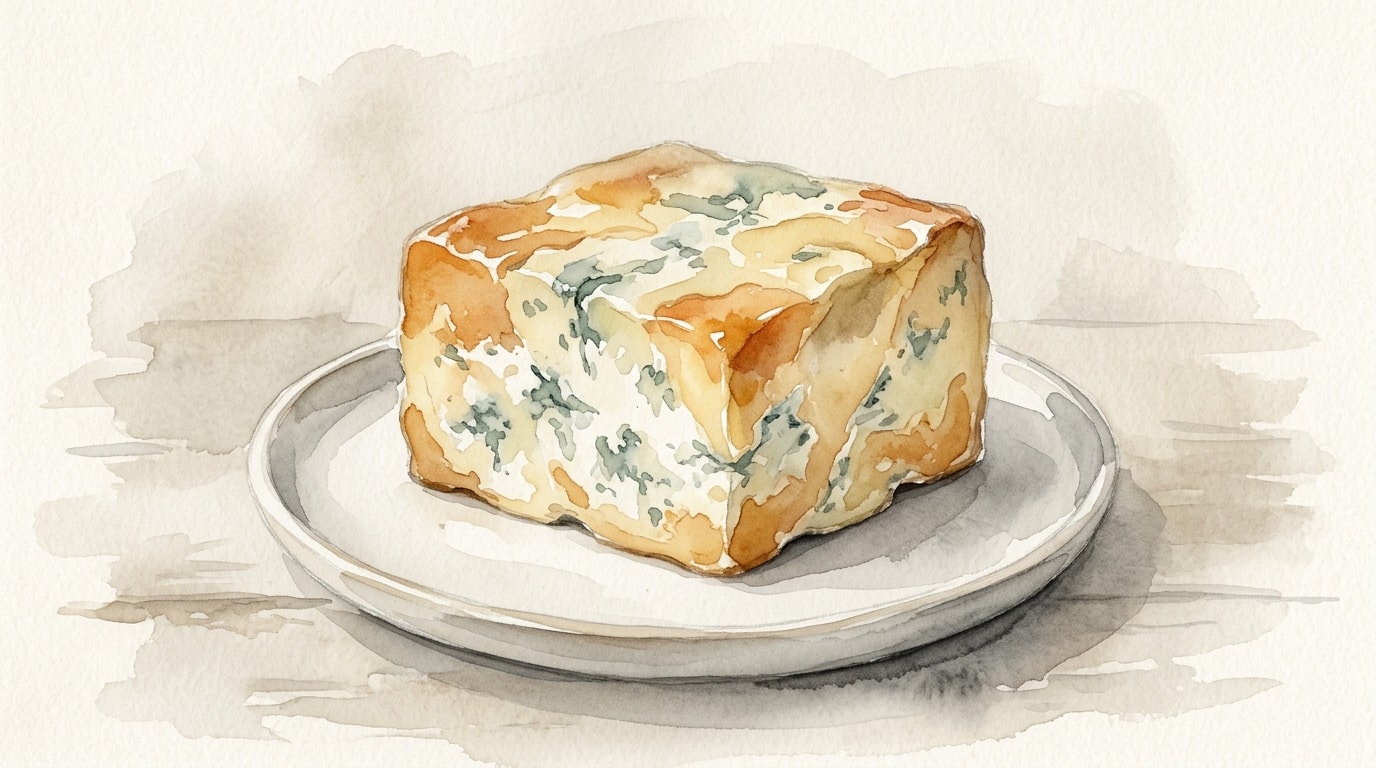
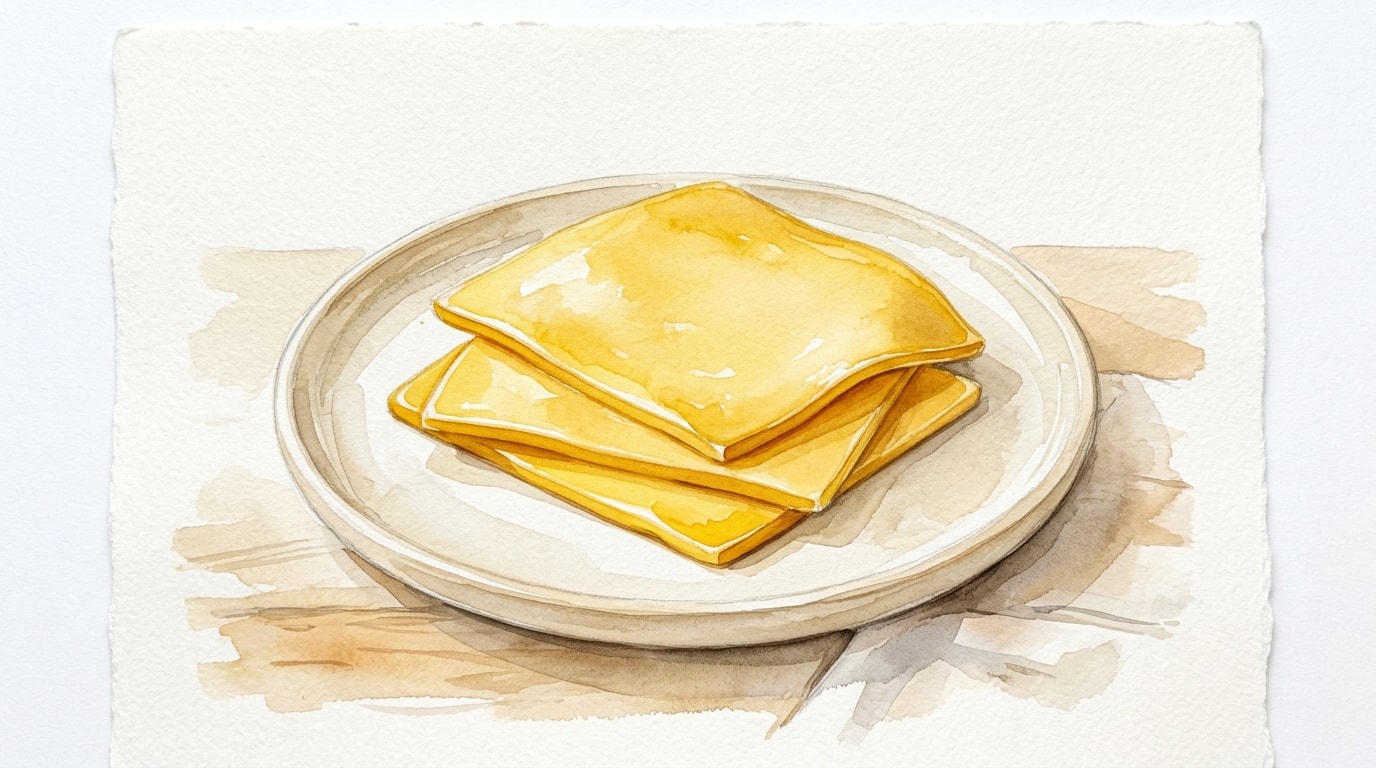
Lift the cheese block out of the pan using the plastic overhang, peel off the wrap, and slice into 14 deli-style slices using a Chef knife.
Chef's Notes
- Sodium citrate is an emulsifying salt that acts as a calcium sequestering agent. It replaces the calcium bridges that bind cheese proteins together, allowing the proteins to unravel and hydrate evenly in water, which locks in butterfat and prevents greasy oil separation during heating.
- Never substitute pre-shredded bagged cheese in this formula. Commercial shreds are coated with starches like potato starch and powdered cellulose to inhibit clumping, which interferes with protein emulsification and produces a gritty texture.
- For deli-thin precision, chill the block thoroughly to refrigerator temperature (4°C / 40°F) before slicing. A thin cheese wire slicer or a sharp chef knife warmed in hot water and wiped dry produces restaurant-grade cuts without tearing.
- To customize the flavor, you can swap up to 200 grams of the sharp cheddar with other melting cheeses such as smoked gouda, gruyere, pepper jack, or mild colby, maintaining the total cheese mass at 400 grams.
Storage
Refrigerator: 3 weeks — Store the block or stacked slices tightly wrapped in parchment paper and plastic wrap in an airtight container.
Freezer: 3 months — Separate slices with small squares of parchment paper, wrap tightly, and store in a freezer-safe bag; thaw in refrigerator before melting.
Reheating: Melt directly on hot burger patties or inside grilled cheese sandwiches at 65°C to 74°C (150°F to 165°F) until glossy and flowing.
Troubleshooting
Cheese sauce appears curdled, gritty, or oily during melting
Cause: The cheese was heated above 80°C (176°F) or the sodium citrate was under-measured
Fix: Dissolve 2g additional sodium citrate into 15ml warm evaporated milk, stir it in, and blend aggressively with an immersion blender
Prevention: Keep the temperature below 75°C (167°F) and weigh the sodium citrate precisely using a digital scale
Cheese block crumbles or cracks instead of slicing cleanly
Cause: The gelatin was omitted or measured incorrectly, or the block was sliced while still lukewarm
Fix: Reheat the cheese gently with 2g bloomed gelatin and 15ml warm milk, re-blend with an immersion blender, recast into the mold, and chill
Prevention: Bloom and incorporate the full 6g of gelatin and chill the block until fully cold to 4°C (40°F)
Tough leathery skin forms on top of the block
Cause: Plastic wrap was not pressed directly flush against the molten cheese surface before chilling
Fix: Trim away the thin dried top layer with a chef knife before portioning the rest of the block
Prevention: Ensure direct contact wrap application immediately after pouring while the cheese is still steaming
Cultural Context
American cheese was conceived in 1911 by Swiss scientists Walter Gerber and Fritz Stettler, who discovered that sodium citrate could melt Emmentaler cheese without separation. James L. Kraft subsequently patented an industrial processing method in the United States in 1916, creating an iconic staple prized for its uniform texture and unmatched melting ability on cheeseburgers. This craft recipe restores culinary integrity to processed cheese by using genuine aged cheese and dairy rather than leftover whey and oil fillers.