Equipment
Ingredients
Cheese Trio
- 180 g raclette cheese, rind removed, shredded
- 140 g red leicester cheese, freshly shredded
- 80 g gorgonzola cheese, crumbled, chilled
Emulsion and Binding Base
- 150 ml evaporated milk, liquid
- 12 g sodium citrate, powder
- 7 g unflavored gelatin powder, powder
- 35 ml water, cold
Nutrition (per serving)
Nutrition is estimated per serving. Nutrients without complete source data are omitted.
Full nutrition
- Calories
- 128 kcal
- Protein
- 8 g
- Carbohydrates
- 2 g
- Fat
- 10 g
- Fiber
- 0 g
- Sodium
- 269 mg
- Saturated Fat
- 5 g
- Potassium
- 45 mg
- Calcium
- 220 mg
- Iron
- 0.0 mg
- Magnesium
- 6 mg
- Phosphorus
- 140 mg
- Zinc
- 0.5 mg
- Vitamin A
- 59 mcg
- Vitamin C
- 1 mg
Sources: Aggregated Public Data, USDA FoodData Central
Method
Line a 21x11 cm loaf pan with two overlapping sheets of plastic wrap, smoothing tightly against the bottom and sides while leaving a 5 cm overhang along the edges.
In a small prep bowl, sprinkle 7g of unflavored gelatin powder across 35 ml of cold water and leave undisturbed for 5 minutes to hydrate thoroughly.
Pour 150 ml of evaporated milk and 12g of sodium citrate into a medium saucepan placed over medium-low heat.
Whisk the milk mixture continuously with a wire whisk until the sodium citrate salts fully dissolve and the liquid registers 75°C (167°F) on an instant-read thermometer.
Add the bloomed gelatin to the hot milk and whisk briskly until dissolved with no residual granules visible.
Reduce heat to low to maintain 70°C to 75°C (158°F to 167°F), then stir in the shredded raclette and shredded red leicester in three batches using a silicone spatula until melted.
Fold the 80g of crumbled gorgonzola into the warm cheese mixture and stir gently for 1 minute until completely melted and incorporated.
Submerge the immersion blender entirely below the liquid line and blend on high speed for 1 minute until the emulsion turns glossy, unified, and perfectly smooth.
Pour the molten cheese immediately into the lined loaf pan, level the surface using a silicone spatula, and fold the overhanging plastic wrap flat against the cheese.
Transfer the loaf pan to the refrigerator and chill for 3 hours until the block is fully set, cold, and resilient throughout.
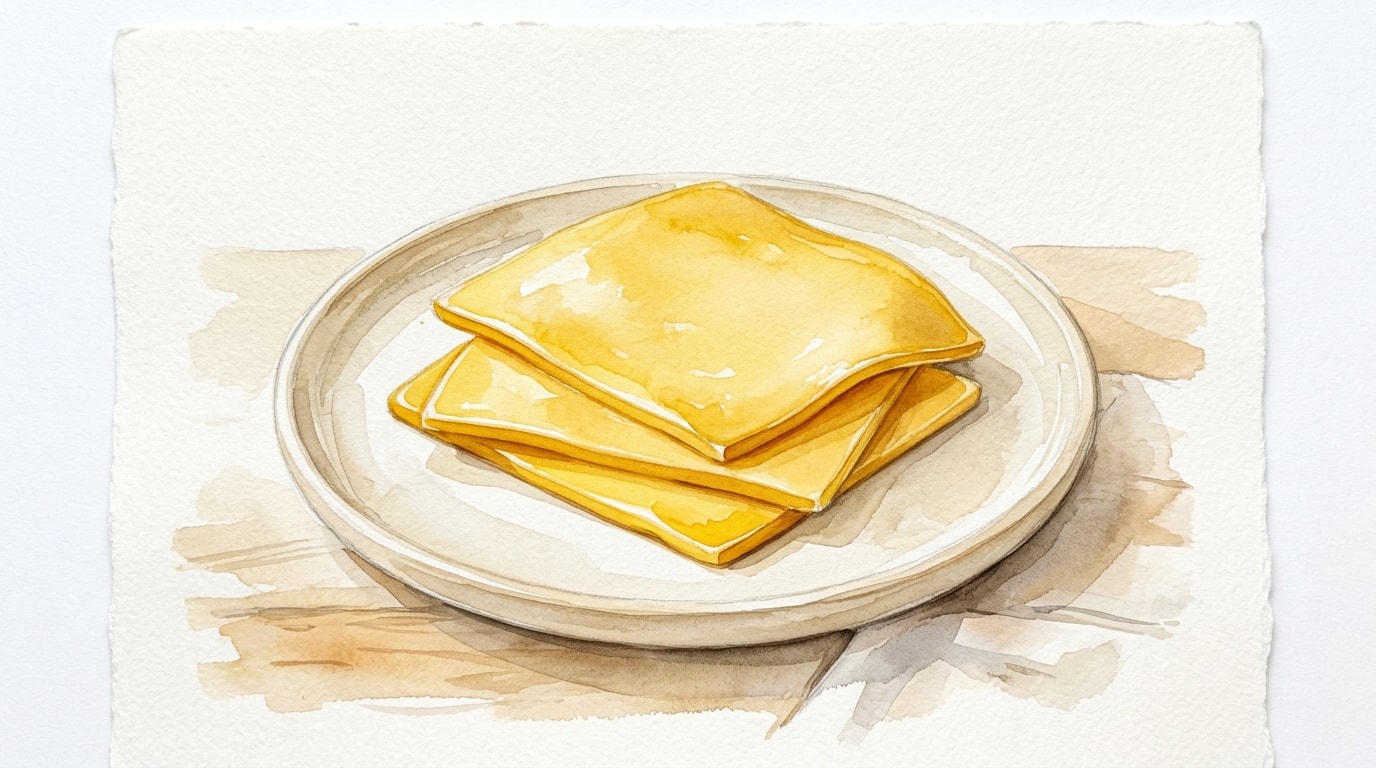
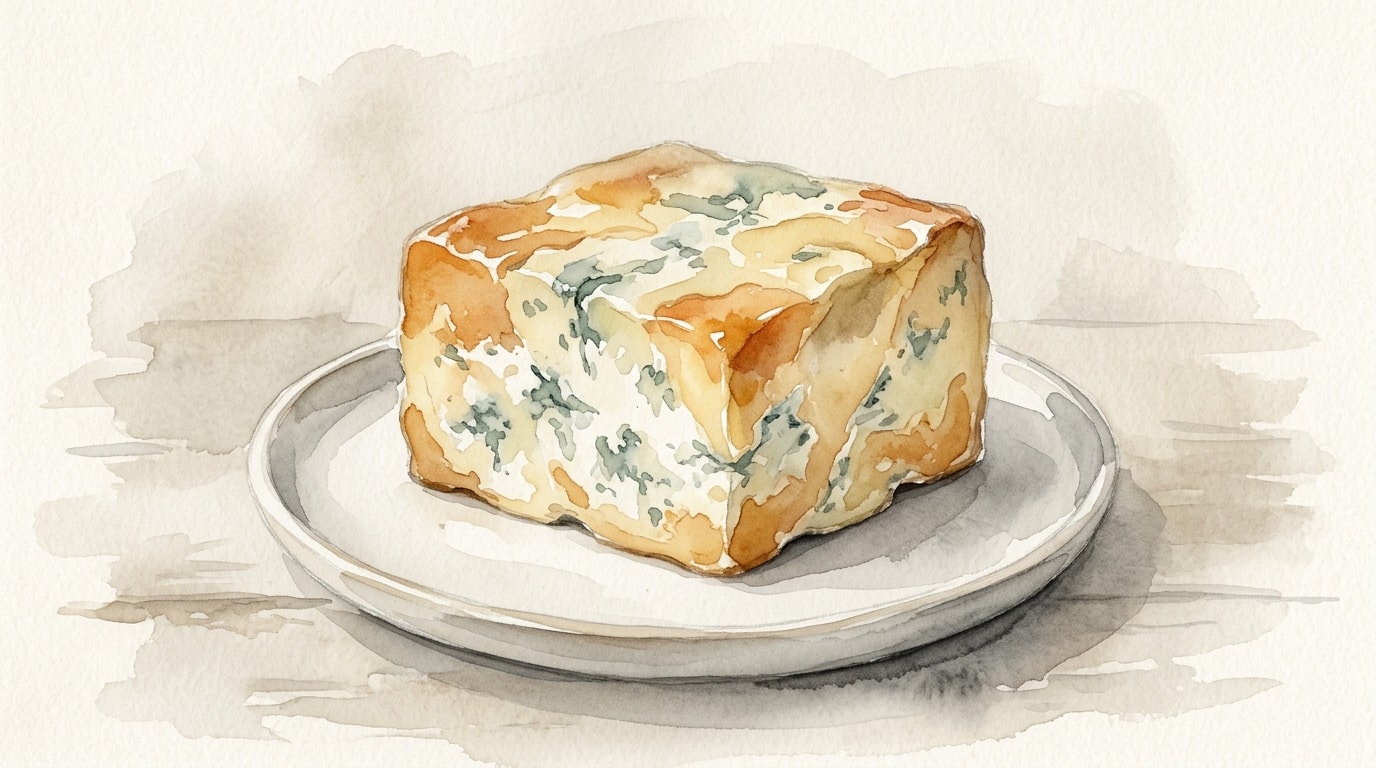
Turn the chilled block out using the plastic wrap wings, discard the wrap, and slice into 14 slices using a sharp chef knife.
Chef's Notes
- Raclette contributes immense stretch and melting ease thanks to its high moisture content, while red leicester provides robust lactic acid balance and natural annatto beta-carotene for a rich amber color.
- Gorgonzola contains enzymes from Penicillium roqueforti that break down milk fats into flavorful free fatty acids; keeping its proportion around 20 percent of the total cheese prevents its intense moisture and acidity from compromising the gelatin network.
- Sodium citrate works by sequestering ionic calcium from the casein micelle network. The resulting sodium caseinate acts as a powerful native emulsifier that holds the distinct butterfats of three disparate European cheeses in suspension.
- For the cleanest deli presentation, cut parchment paper into 10x10 cm squares and place one between each slice before stacking in an airtight container to prevent adhesion.
Storage
Refrigerator: 3 weeks — Store the block or stacked slices tightly wrapped in parchment paper and plastic wrap in an airtight container.
Freezer: 3 months — Separate slices with small parchment squares, wrap tightly, and store in a freezer-safe bag; thaw in the refrigerator before melting.
Reheating: Melt directly onto smash burgers, ribeye steaks, or sourdough toast at 65°C to 74°C (150°F to 165°F) until glossy and flowing.
Troubleshooting
The melted mixture splits and leaks liquid butterfat during blending
Cause: The temperature climbed above 80°C (176°F) or the high fat ratio in gorgonzola broke the initial emulsion
Fix: Dissolve 2g additional sodium citrate in 15 ml warm evaporated milk, stir in, and emulsify on high with the immersion blender
Prevention: Keep burner heat low and melt cheeses gradually below 75°C (167°F)
The chilled block feels gummy or fails to slice cleanly, sticking to the knife
Cause: The cheese block was cut while still partially warm in the core
Fix: Chill the block in the freezer for 15 minutes before attempting to slice again
Prevention: Allow the full 3 hours of refrigeration until the internal temperature reaches 4°C (40°F)
The slices tear or crumble along fracture lines when bent
Cause: Gelatin was inadequately bloomed or insufficient for the soft gorgonzola fat matrix
Fix: Melt the block down over low heat with 15 ml evaporated milk and 2g extra bloomed gelatin, re-blend, and re-cast
Prevention: Ensure the gelatin hydrates fully in cold water before heating and measure by weight on a gram scale
Cultural Context
This formulation merges modern molecular food science with classic European cheesemaking traditions. American processed cheese was originally invented in Switzerland in 1911 using Emmentaler, and this recipe honors that lineage by binding Swiss Raclette, British Red Leicester, and Northern Italian Gorgonzola. The result delivers the nostalgic, silky melt of standard deli singles combined with the pungent, complex terroir of artisanal heritage cheeses.