
Equipment
Ingredients
Orzo Base
- 250 g orzo pasta
- water
- kosher salt
Grapefruit Dressing
- 45 ml fresh grapefruit juice
- 3 g grapefruit zest, finely grated
- 60 ml extra virgin olive oil
- 5 g dijon mustard
- 10 ml agave syrup
- 3 g kosher salt
- 1 g black pepper, freshly cracked
Salad Additions
- 100 g grapefruit segments, membranes removed (suprêmed)
- 150 g english cucumber, diced
- 30 g shallot, finely diced
- 10 g fresh mint, roughly chopped
- 15 g fresh flat-leaf parsley, roughly chopped
Nutrition (per serving)
Nutrition is estimated per serving. Nutrients without complete source data are omitted.
Full nutrition
- Calories
- 402 kcal
- Protein
- 9 g
- Carbohydrates
- 56 g
- Fat
- 16 g
- Fiber
- 3 g
- Sugar
- 7 g
- Sodium
- 357 mg
- Saturated Fat
- 2 g
- Monounsaturated Fat
- 11 g
- Polyunsaturated Fat
- 2 g
- Potassium
- 310 mg
- Calcium
- 41 mg
- Iron
- 1.7 mg
- Magnesium
- 48 mg
- Phosphorus
- 143 mg
- Zinc
- 1.1 mg
- Vitamin A
- 38 mcg
- Vitamin C
- 20 mg
- Vitamin E
- 2.4 mg
- Vitamin K
- 78 mcg
- Vitamin B6
- 0.2 mg
- Thiamin
- 0.10 mg
- Riboflavin
- 0.08 mg
- Niacin
- 1.3 mg
- Folate
- 30 mcg
- Water
- 87 g
Sources: Aggregated Public Data, USDA FoodData Central
Method
Bring a medium saucepan of salted water to a rolling boil. Add the orzo and cook according to package directions until al dente, usually about 9 minutes. The water should taste pleasantly salty.
Drain the cooked orzo through a strainer. Rinse very briefly under cool water to stop the cooking process, then spread the pasta out on a baking sheet to cool completely. This prevents clumping.
In a large mixing bowl, whisk together the fresh grapefruit juice, grapefruit zest, extra virgin olive oil, Dijon mustard, agave syrup, salt, and black pepper. Continue whisking until the dressing is fully emulsified and smooth.
Prepare the additions on a cutting board using a chef's knife. Dice the cucumber and shallot. Roughly chop the fresh mint and parsley. Carefully cut the remaining grapefruit into segments, leaving the bitter white pith and membranes behind.
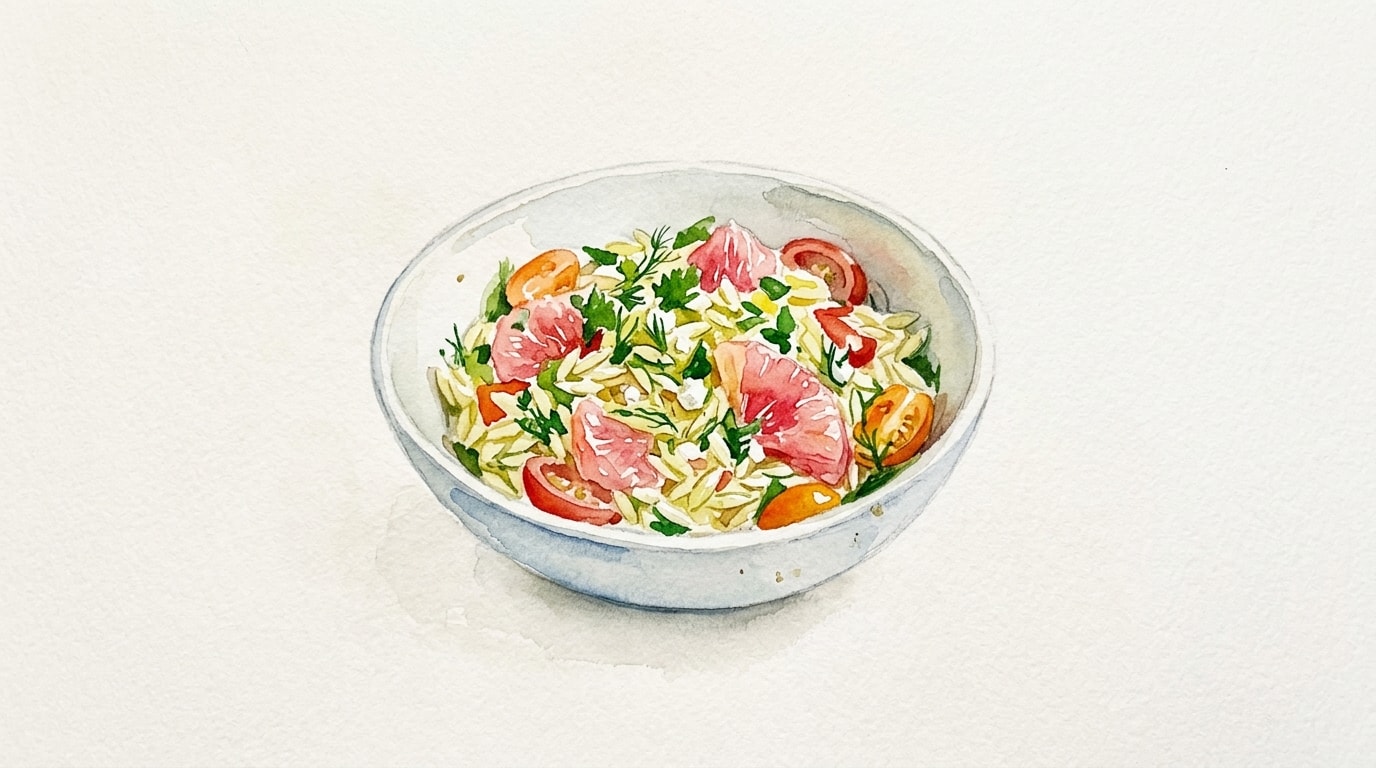
Add the cooled orzo, diced cucumber, minced shallot, prepared herbs, and grapefruit segments into the large mixing bowl containing the dressing. Toss gently to combine, ensuring every grain of pasta is coated.
Allow the salad to rest at room temperature for 15 minutes before serving. This resting period allows the pasta to absorb the citrus flavors and mellows the raw bite of the shallot.
Chef's Notes
- Suprêming the grapefruit is highly recommended. It removes the bitter pith and chewy membrane, providing beautiful, jewel-like bursts of pure citrus flavor in the final dish.
- Do not dress the salad while the orzo is piping hot. Heat will immediately wilt the delicate fresh mint and parsley, turning them dark and bruised.
- To turn this light side dish into a substantial main course, fold in a drained can of chickpeas or white beans to provide a plant-based protein boost that pairs wonderfully with the citrus.
Storage
Refrigerator: 3 days — Store in an airtight container. The pasta will absorb the dressing over time, so you may need to refresh it with a splash of olive oil or extra grapefruit juice before serving.
Troubleshooting
Orzo is gummy and clumping together in a solid mass
Cause: The pasta was overcooked or cooled in a deep pile without rinsing
Fix: Place the clumped orzo in a strainer and run under cool water while gently separating the grains with your fingers, then drain thoroughly
Prevention: Cook exactly to al dente and spread out in a single layer on a baking sheet to cool rapidly
Dressing is overly tart or bitter
Cause: Grapefruit pith was included in the zest, or the grapefruit variety is particularly sour
Fix: Whisk in an additional 5ml of agave syrup and a pinch of salt to balance the acidity
Prevention: Zest only the very outer brightly colored skin of the grapefruit, avoiding the white pith
Cultural Context
While orzo is deeply rooted in Italian and broader Mediterranean cuisines, pairing it with vibrant citrus like grapefruit brings a modern, Californian-inspired twist to traditional pasta salads. The combination relies on the Mediterranean principle of balancing rich olive oil with sharp, bright acidity.


