
Equipment
Ingredients
Produce
- 1 yellow onion, diced
- 3 garlic, minced
- 15 g fresh ginger, peeled and grated
- 2 sweet potato, peeled and cubed
- 100 g kale or collard greens, stemmed and roughly chopped
Pantry & Liquids
- 15 ml peanut oil
- 400 g crushed tomatoes, canned, with juices
- 900 ml vegetable broth, low-sodium
- 120 g unsweetened creamy peanut butter, 100 percent peanuts
Spices & Seasoning
- 3 g ground cumin
- 2 g ground coriander
- 1 g cayenne pepper
- kosher salt
Garnish
- 30 g roasted peanuts, roughly chopped
- 10 g fresh cilantro, roughly chopped
Nutrition (per serving)
Nutrition is estimated per serving. Nutrients without complete source data are omitted.
Full nutrition
- Calories
- 430 kcal
- Protein
- 14 g
- Carbohydrates
- 46 g
- Fat
- 24 g
- Fiber
- 10 g
- Sugar
- 16 g
- Sodium
- 1451 mg
- Saturated Fat
- 4 g
- Trans Fat
- 0 g
- Monounsaturated Fat
- 12 g
- Polyunsaturated Fat
- 6 g
- Potassium
- 1130 mg
- Calcium
- 182 mg
- Iron
- 4.0 mg
- Magnesium
- 130 mg
- Phosphorus
- 251 mg
- Zinc
- 1.9 mg
- Vitamin A
- 879 mcg
- Vitamin C
- 41 mg
- Vitamin E
- 4.2 mg
- Vitamin K
- 100 mcg
- Vitamin B6
- 0.5 mg
- Thiamin
- 0.24 mg
- Riboflavin
- 0.27 mg
- Niacin
- 6.3 mg
- Folate
- 68 mcg
- Water
- 359 g
Sources: Aggregated Public Data, USDA FoodData Central
Method
Heat the peanut oil in a heavy-bottomed pot over medium heat. Add the diced onion and saute until softened and translucent, about 5 minutes.
Stir in the minced garlic, grated ginger, cumin, coriander, and cayenne pepper. Cook, stirring continuously, until highly fragrant, about 1 minute.
Add the cubed sweet potatoes, crushed tomatoes with their juices, and vegetable broth. Stir to combine, scraping up any browned bits from the bottom of the pot. Bring the mixture to a boil at 100°C or 212°F.
Reduce the heat to low to maintain a gentle simmer at around 95°C or 203°F. Cover the pot and cook until the sweet potatoes are fork-tender, about 15 to 20 minutes.
Carefully scoop out about 200ml of the hot cooking liquid into a heatproof bowl. Add the peanut butter to the bowl and whisk until completely smooth and emulsified. Pour the tempered peanut butter mixture back into the pot and stir well to combine.
If using greens, stir in the chopped kale or collards. Simmer uncovered for 5 minutes until the greens are wilted and tender. Taste the soup and adjust the seasoning with kosher salt as needed.
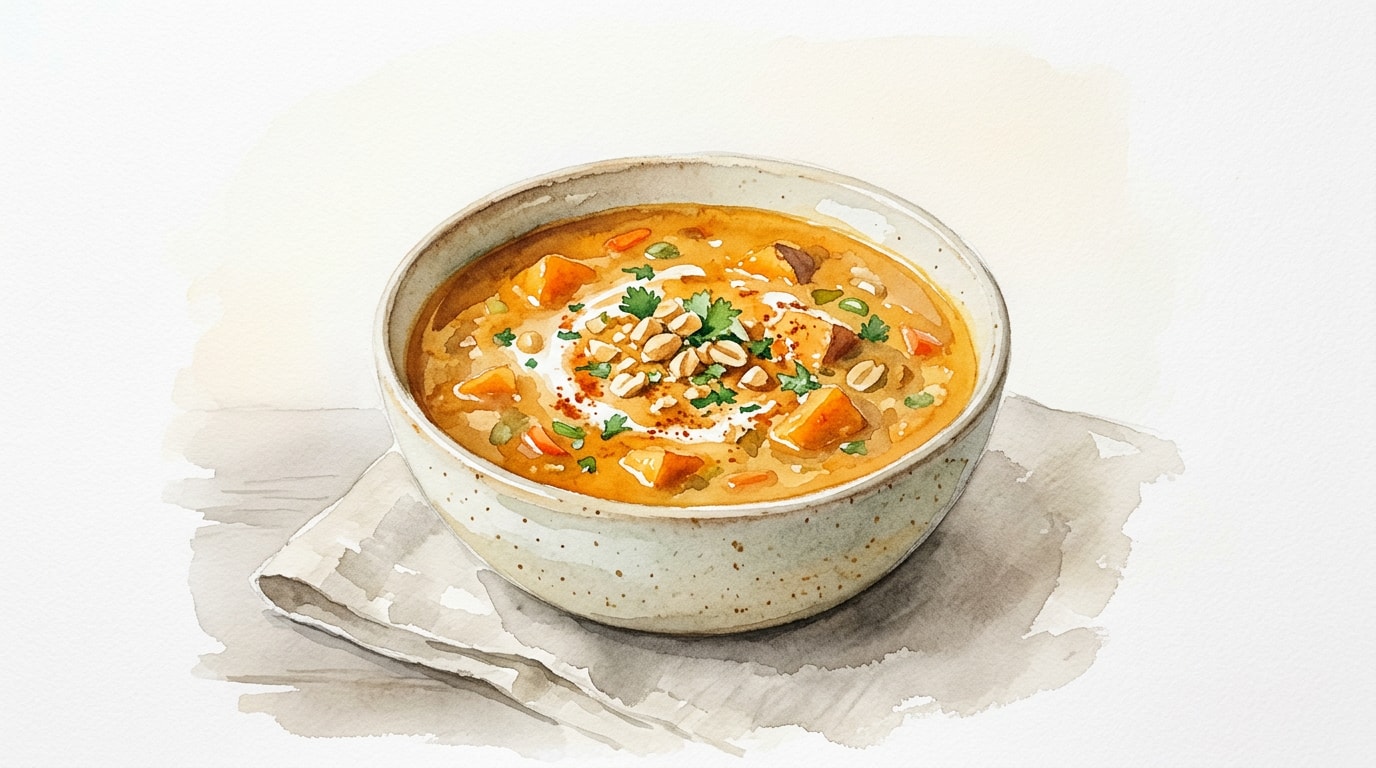
Ladle the hot soup into bowls. Garnish generously with chopped roasted peanuts and fresh cilantro before serving.
Chef's Notes
- For the best texture and flavor, use natural peanut butter containing only peanuts and salt. Commercial brands with added oils and sugar can make the soup overly sweet and affect the emulsion.
- A squeeze of fresh lime juice stirred in right before serving cuts through the richness of the peanuts and brightens the entire flavor profile.
- If you want to add more depth, consider roasting the sweet potato cubes at 200°C for 25 minutes before adding them to the soup instead of boiling them raw.
Storage
Refrigerator: 5 days — Flavors deepen and improve overnight, making this an excellent make-ahead dish.
Freezer: 3 months — Thaw overnight in the refrigerator. The sweet potato may soften further upon reheating.
Reheating: Warm gently on the stovetop over medium-low heat, stirring frequently to prevent the peanut butter from catching on the bottom.
Troubleshooting
Peanut butter separated or formed clumps in the soup.
Cause: Cold or thick peanut butter was added directly to the large volume of boiling acidic liquid.
Fix: Use an immersion blender to briefly blend a portion of the soup, which will re-emulsify the fats into the liquid.
Prevention: Always temper the peanut butter with a small amount of hot broth before mixing it into the main pot.
Soup is too thick and resembles a heavy stew.
Cause: Sweet potatoes absorbed excessive liquid or too much evaporation occurred during the simmer.
Fix: Stir in hot water or additional vegetable broth in 50ml increments until the desired consistency is reached.
Prevention: Keep the pot covered while the sweet potatoes cook and maintain a gentle simmer rather than a rapid boil.
Cultural Context
This restorative dish traces its lineage back to traditional West African groundnut stews, such as Maafe. Brought to the American South by enslaved peoples, the recipe evolved by marrying the protein-rich peanut with indigenous crops like tomatoes and sweet potatoes, eventually becoming a staple comfort food in regions like Virginia and the Carolinas.


