
Equipment
Ingredients
Vegetables and Aromatics
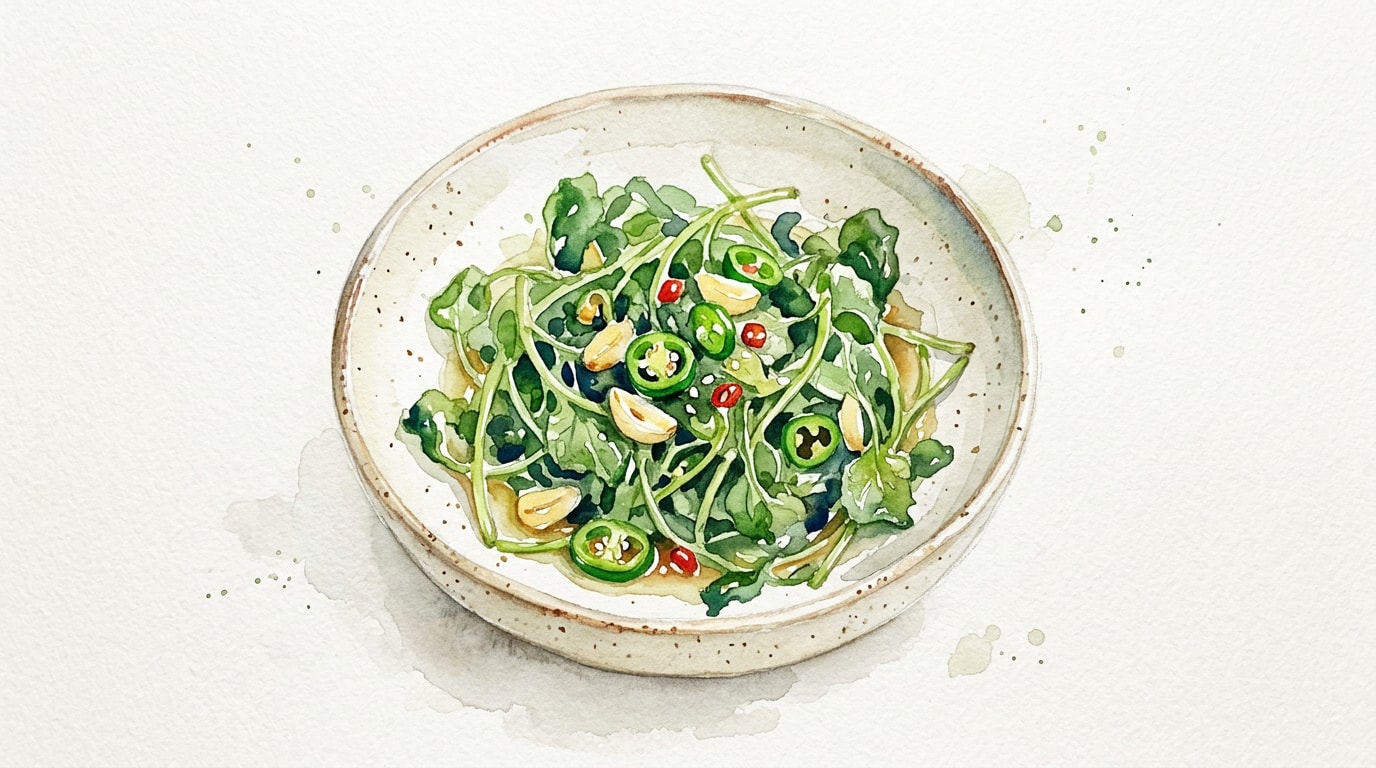
- 300 g watercress, washed, tough stems trimmed
- 3 garlic, minced
- 1 jalapeno, thinly sliced
Liquids and Seasonings
- 15 ml neutral oil
- 5 ml toasted sesame oil
- 3 g kosher salt
- 2 g granulated sugar
Nutrition (per serving)
Nutrition is estimated per serving. Nutrients without complete source data are omitted.
Full nutrition
- Calories
- 122 kcal
- Protein
- 4 g
- Carbohydrates
- 6 g
- Fat
- 10 g
- Fiber
- 1 g
- Sugar
- 2 g
- Sodium
- 645 mg
- Saturated Fat
- 1 g
- Monounsaturated Fat
- 1 g
- Polyunsaturated Fat
- 1 g
- Potassium
- 544 mg
- Calcium
- 195 mg
- Iron
- 0.5 mg
- Magnesium
- 35 mg
- Phosphorus
- 103 mg
- Zinc
- 0.3 mg
- Vitamin A
- 244 mcg
- Vitamin C
- 76 mg
- Vitamin E
- 1.8 mg
- Vitamin K
- 377 mcg
- Vitamin B6
- 0.3 mg
- Thiamin
- 0.16 mg
- Riboflavin
- 0.20 mg
- Niacin
- 0.5 mg
- Folate
- 16 mcg
- Water
- 154 g
Sources: Aggregated Public Data, USDA FoodData Central
Method
Bring a large pot of heavily salted water to a rolling boil at 100°C/212°F. Prepare an ice water bath in a large mixing bowl.
Submerge the watercress in the boiling water for exactly 15 seconds until it turns bright emerald green.
Immediately transfer the watercress to the ice bath using a spider strainer. Let it cool for 1 minute, then drain and gently squeeze out the excess water to prevent splattering during the stir-fry.
Heat the wok or large skillet over medium-high heat. Add the neutral oil, minced garlic, and sliced jalapenos. Toss constantly for 30 seconds until highly fragrant but not browned.
Add the blanched watercress, salt, and sugar to the wok. Toss rapidly to distribute the aromatics and heat the greens through.
Remove the wok from the heat. Drizzle the toasted sesame oil over the greens, toss one final time, and transfer immediately to a serving dish.
Chef's Notes
- Quick blanching (fei shui) before stir-frying achieves two things: it removes the excessive astringent bitterness native to mature watercress and significantly cuts down wok time, preserving the bright color.
- Using a small pinch of sugar is a classic restaurant technique to balance the peppery bite of mustard-family greens without making the dish taste distinctly sweet.
- For the best texture, ensure your water is at a violent, rolling boil before dropping the greens in. If the boil is weak, the water temperature will drop too far, resulting in boiling rather than flash-blanching.
- If your watercress has very thick stems, you can separate the stems from the delicate leaves and blanch the stems for 10 seconds before adding the leaves.
Storage
Refrigerator: 2 days — Loses vibrancy and texture when stored; best consumed immediately.
Reheating: Reheat very quickly in a hot pan just until warm, or eat cold.
Troubleshooting
Watercress is mushy and completely lacks crunch
Cause: Over-blanched in the boiling water or left in the wok too long
Fix: Cannot be fixed, but can be repurposed into a pureed soup or sauce
Prevention: Strictly adhere to the 15-second blanch time and ensure the ice bath is very cold to stop carryover cooking
Oil splatters aggressively when watercress is added to the wok
Cause: Too much water was retained in the blanched greens
Fix: Stand back and briefly remove the wok from the heat until the splattering subsides
Prevention: Squeeze the cooled greens more thoroughly before adding them to hot oil
Dish tastes overly bitter
Cause: Very mature watercress or skipping the sugar
Fix: Toss with a few drops of rice vinegar to help mask the bitterness
Prevention: Taste a raw leaf beforehand; if extremely bitter, add an extra pinch of sugar or blanch for 5 seconds longer
Cultural Context
Stir-frying leafy greens is a foundational technique in Chinese cooking. The practice of quickly blanching vegetables before stir-frying ensures a tender-crisp texture and vibrant color while allowing the high-heat wok tossing to focus entirely on infusing the aromatics into the ingredients.


