Equipment
* optional
Ingredients
Stew Aromatics
- 30 g garlic cloves, peeled and minced
- 150 g yellow onion, peeled and sliced into thin wedges
- 200 g roma tomatoes, cored and quartered
- 30 ml vegetable oil
Flavor Base
- 30 g fermented shrimp paste (bagoong alamang)
Vegetables
- 400 g kabocha squash, peeled, seeded, and cut into 2 cm wedges
- 300 g japanese eggplant, trimmed and cut into 4 cm pieces
- 150 g okra, whole with only stem ends trimmed; do not cut pods
- 150 g yardlong beans (sitaw or long beans), cut into 6 cm lengths
- 1 green chili (siling haba), left whole
Cooking Liquid and Final Seasoning
- 250 ml water
- ml fish sauce (patis)
- 1 g freshly ground black pepper
Jasmine Rice for Serving
- 300 g jasmine rice, rinsed until water runs clear
- 420 ml water
Nutrition (per serving)
Nutrition is estimated per serving. Nutrients without complete source data are omitted.
Full nutrition
- Calories
- 288 kcal
- Protein
- 9 g
- Carbohydrates
- 50 g
- Fat
- 8 g
- Sodium
- 361 mg
- Saturated Fat
- 1 g
- Potassium
- 929 mg
- Calcium
- 260 mg
- Iron
- 2.8 mg
- Magnesium
- 44 mg
- Phosphorus
- 62 mg
- Zinc
- 0.5 mg
- Vitamin A
- 1884 mcg
- Vitamin C
- 45 mg
- Water
- 171 g
Sources: Aggregated Public Data, USDA FoodData Central
Method
Prepare the vegetables. Peel the garlic and mince it finely. Peel the onion and slice it into thin wedges. Core the tomatoes and quarter them. Peel the kabocha, scoop out the seeds with a spoon, and cut the flesh into 2 cm wedges. Trim the Japanese eggplants and cut them into 4 cm pieces. Trim only the stem ends of the okra, leaving the pods whole. Cut the yardlong beans into 6 cm lengths if using.
Rinse the jasmine rice under cool running water until the water runs clear. Combine 300g rice with 420ml water in a small saucepan or rice cooker. For stovetop, bring to a boil at 100°C (212°F), cover, reduce to the lowest heat, and simmer for 15 minutes, then rest off the heat for 10 minutes. For a rice cooker, use the standard white rice setting.
Heat the vegetable oil in a wok or wide heavy-bottomed pot over medium heat, about 180°C (350°F), until it shimmers. Add the minced garlic and sliced onion. Cook, stirring frequently, for 3 minutes until the onion softens and the garlic turns pale golden and fragrant.
Add the quartered tomatoes to the pot. Cook, stirring occasionally, for 4 to 5 minutes until the tomatoes soften, release their juices, and begin to break down into a coarse sauce.
Add the fermented shrimp paste to the pot and stir it into the tomato-onion base. Cook for 1 minute, mashing any chunks with the back of the spoon, until the paste darkens slightly and becomes fragrant.
Add the kabocha wedges and 250ml water. Stir once to coat. Bring to a simmer at 100°C (212°F), then cover and cook for 8 minutes until the squash is just tender when pierced with a fork but still holds its shape.
Add the Japanese eggplant pieces and yardlong beans if using. Cover and simmer for 5 minutes until the eggplant turns creamy and slightly translucent and the beans are bright green and tender-crisp.
Arrange the whole okra pods in a single layer on top of the other vegetables. Tuck in the whole green chili if using. Cover and simmer for 3 to 4 minutes until the okra is tender but still bright green. Do not stir once the okra has been added.
Remove the pot from the heat. Taste the broth and adjust seasoning: add fish sauce a few drops at a time only if more salt is needed, and finish with the freshly ground black pepper. Cover and let the stew rest for 2 minutes so the flavors marry.
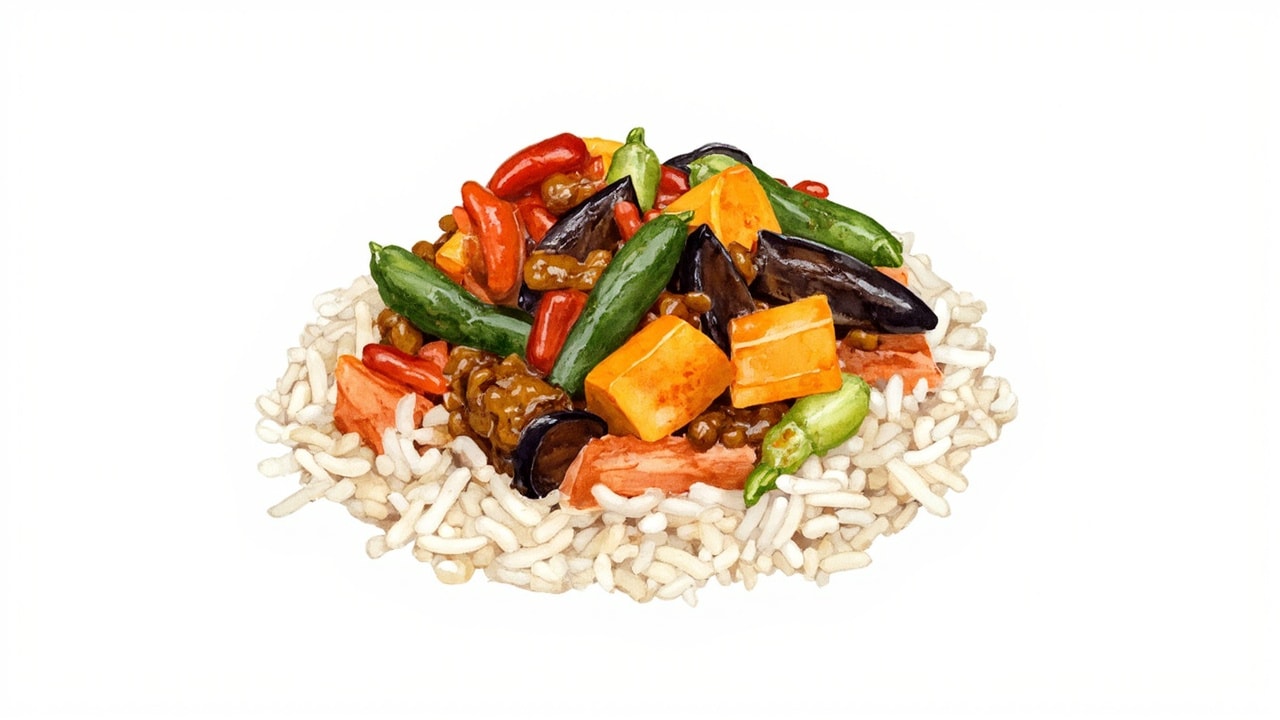
Fluff the jasmine rice with a fork. Spoon a mound of rice into each shallow bowl and ladle the stew alongside, ensuring each portion has a balanced selection of kabocha, eggplant, okra, and broth. Serve immediately while the rice is still steaming.
Chef's Notes
- The staggered addition of vegetables is essential: kabocha takes longest to tenderize, eggplant needs moderate time to break down into creaminess, and okra needs the least heat to remain tender-crisp and brightly colored.
- Bagoong alamang (fermented shrimp paste) is distinct from Thai shrimp paste kapi and from Filipino fish sauce patis. Bagoong is a thick, chunky paste made from small krill-like shrimp fermented with sea salt, providing concentrated umami rather than the sharper fishiness of patis.
- Traditional Ilocano recipes often start with bagnet (rendered pork) fat or pork lard rather than vegetable oil, contributing a smoky richness; the oil version here is a modern, lighter adaptation that lets the shrimp paste lead.
- Resist the urge to stir once the okra has been added. The pods' natural mucilage is released only when they are cut, bruised, or agitated, which can cloud the broth and change the texture of the dish.
- The dish gets better as it rests: the kabocha absorbs broth and the flavors meld, so any leftovers the next day often taste more cohesive than the freshly cooked version.
Storage
Refrigerator: 3 days — Cool within 2 hours of cooking, then store in an airtight container. Okra texture will continue to soften.
Reheating: Reheat gently in a covered pan over low heat with 30ml of water per serving until the stew reaches 74°C (165°F) throughout. Stir minimally to avoid breaking up vegetables.
Troubleshooting
Stew is too watery with thin broth
Cause: Too much water was added or the lid was left off during cooking, allowing excess evaporation or none at all
Fix: Remove the lid and simmer uncovered for 5 minutes to reduce the broth to the desired consistency
Prevention: Use exactly 250ml water and keep the pot covered during all simmering stages; vegetables release additional liquid as they cook
Stew is too salty
Cause: Brands of bagoong alamang vary widely in salinity; some contain added salt or preservatives
Fix: Add 100ml water and a peeled, quartered potato, simmer 10 minutes, then remove and discard the potato which absorbs some excess salt
Prevention: Start with 20g of shrimp paste the first time you make this recipe and taste before adding any fish sauce; never add table salt
Vegetables are mushy and falling apart
Cause: Vegetables were added out of order so delicate ones cooked too long, or the stew was stirred too aggressively
Fix: Cannot be fixed once overcooked; serve over plenty of rice where the texture is less noticeable
Prevention: Add kabocha first, then eggplant and beans, then okra last; stir only between stages, never during
Broth is excessively slimy
Cause: Okra pods were sliced into pieces or stirred vigorously, releasing large amounts of mucilage
Fix: Cannot be reversed once released; a small amount of okra mucilage is traditional and adds body, but over-release cannot be undone
Prevention: Leave okra pods whole, lay them on top of other vegetables, and do not disturb the pot after they are added
Stew tastes flat and lacks umami depth
Cause: Shrimp paste was not bloomed in oil, an insufficient quantity was used, or low-quality paste was substituted
Fix: Off the heat, stir in an additional 10g of bagoong alamang, cover, and rest 5 minutes before serving
Prevention: Always cook the paste with the aromatics for at least 1 minute in oil to release its flavor compounds
Cultural Context
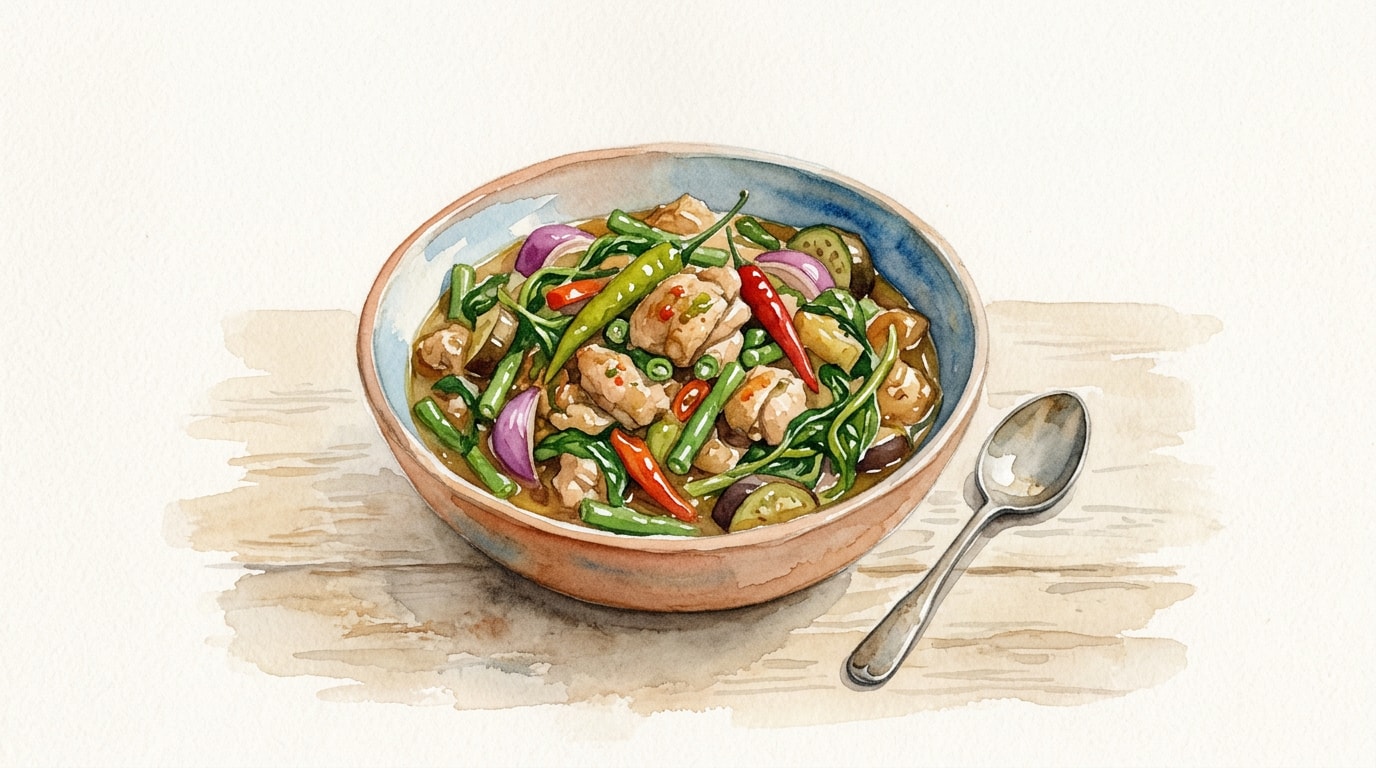
Pinakbet (also spelled pakbet) is a signature vegetable stew of the Ilocano people from the northwestern coast of Luzon in the Philippines, where it emerged as a way to use indigenous and drought-resistant vegetables like bitter melon, eggplant, and calabaza squash. The defining ingredient, bagoong, reflects the historic coastal-inland trade in fermented seafood pastes that shaped cuisines across the Philippine archipelago. While the classic Ilocano version centers bitter melon, the dish's flavor framework of bloomed aromatics, fermented paste, and layered vegetables adapts naturally to whatever seasonal produce is at hand, which is why pinakbet recipes vary so widely from household to household.