Equipment
Ingredients
Soffritto
- 100 g yellow onion, finely diced
- 100 g carrot, finely diced
- 80 g celery, finely diced
- 50 g pancetta, finely diced
Meats
- 300 g ground beef chuck, cold
- 200 g ground pork shoulder, cold
Aromatics and Liquids
- 30 ml olive oil
- 30 g unsalted butter
- 150 ml dry white wine
- 30 g tomato paste
- 400 g crushed tomatoes
- 200 ml whole milk
- 1 bay leaf
- fine sea salt
- freshly ground black pepper
- nutmeg
Pangrattato
- 80 g stale rustic bread, crusts removed, torn into pieces
- 30 ml olive oil
- 1 garlic, finely grated
- 1 lemon zest
- 10 g flat-leaf parsley, finely chopped
Pasta and Finish
- 400 g fresh fettuccine
- 80 g Parmigiano-Reggiano, freshly grated
Nutrition (per serving)
Nutrition is estimated per serving. Nutrients without complete source data are omitted.
Full nutrition
- Calories
- 992 kcal
- Protein
- 39 g
- Carbohydrates
- 56 g
- Fat
- 66 g
- Water
- 324 g
Sources: Aggregated Public Data, USDA FoodData Central
Method
Dice the onion, carrot, and celery into a fine, even brunoise about 5mm (about 1/4 inch) across. Finely dice the pancetta if using. Combine the ground beef and pork in a bowl and keep cold until needed.
Warm the olive oil and butter in a heavy-bottomed pot over medium heat (about 160°C/320°F) until the butter foams. Add the pancetta and render gently for 3 minutes until its fat begins to turn translucent.
Add the diced onion, carrot, and celery to the pot. Cook over medium-low heat (about 140°C/285°F) for 10 minutes, stirring occasionally, until the vegetables are soft, sweet, and just beginning to take on color at the edges.
Add the cold ground meats to the pot. Break them up with a wooden spoon and cook over medium-high heat (about 190°C/375°F) for 8 to 10 minutes, until all liquid has evaporated and the meat is well browned with crispy edges. The internal temperature should reach 71°C (160°F) for food safety.
Pour in the white wine and use a wooden spoon to scrape up any browned bits from the bottom of the pot. Simmer for 3 minutes until the wine has almost completely reduced and the raw alcohol smell has cooked off.
Stir in the tomato paste and cook for 2 minutes, pressing it into the meat mixture until it darkens to a brick red and smells toasted. Add the crushed tomatoes and stir to combine.
Pour in the milk, add the bay leaf, a small grating of nutmeg, and a generous pinch of salt and pepper. Bring to a gentle simmer, then reduce the heat to the lowest setting.
Partially cover the pot and simmer very gently at about 85°C (185°F) for 2 hours, stirring every 20 minutes to prevent sticking. The sauce should barely bubble; adjust the heat as needed. Add a splash of water if the sauce tightens too much.
While the sauce simmers, prepare the pangrattato. Pulse the stale bread in a food processor or grate by hand into coarse crumbs. Heat the olive oil in a small skillet over medium heat (about 170°C/340°F), add the garlic and cook 30 seconds until fragrant but not browned, then add the breadcrumbs.
Toast the breadcrumbs for 5 to 7 minutes, stirring frequently, until deeply golden and crisp. Off the heat, stir in the lemon zest and chopped parsley. Transfer to a plate to cool completely.
Bring a large pot of water to a rolling boil (100°C/212°F), salt it generously (about 15g salt per liter so it tastes like the sea), and cook the fresh fettuccine for 2 to 3 minutes, or dried fettuccine for the package time minus 1 minute, until al dente. Reserve 200ml of pasta water before draining.
Drop the drained pasta directly into the pot of sauce along with a ladle of the reserved pasta water. Stir vigorously over low heat (about 90°C/195°F) for 1 minute until the sauce clings to every ribbon in a glossy emulsion. Loosen with more pasta water as needed.
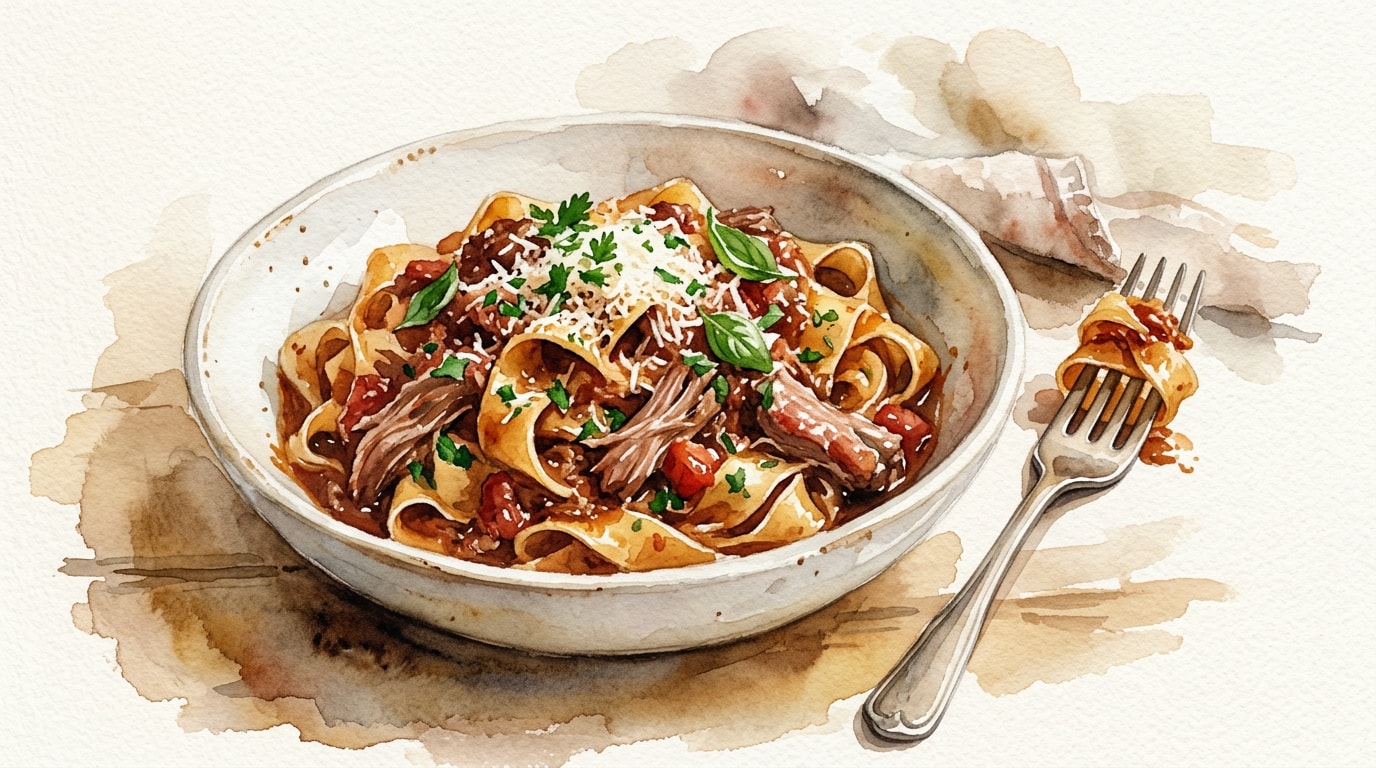
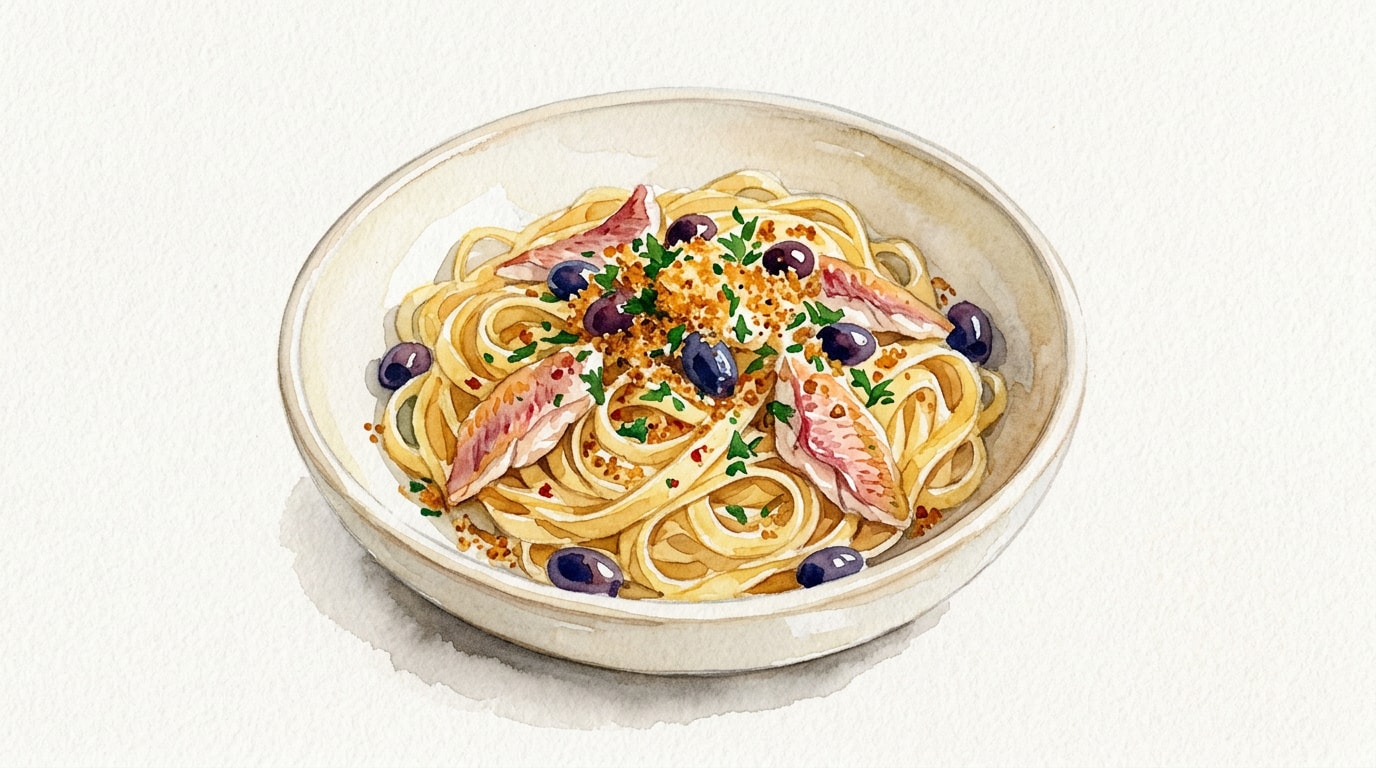
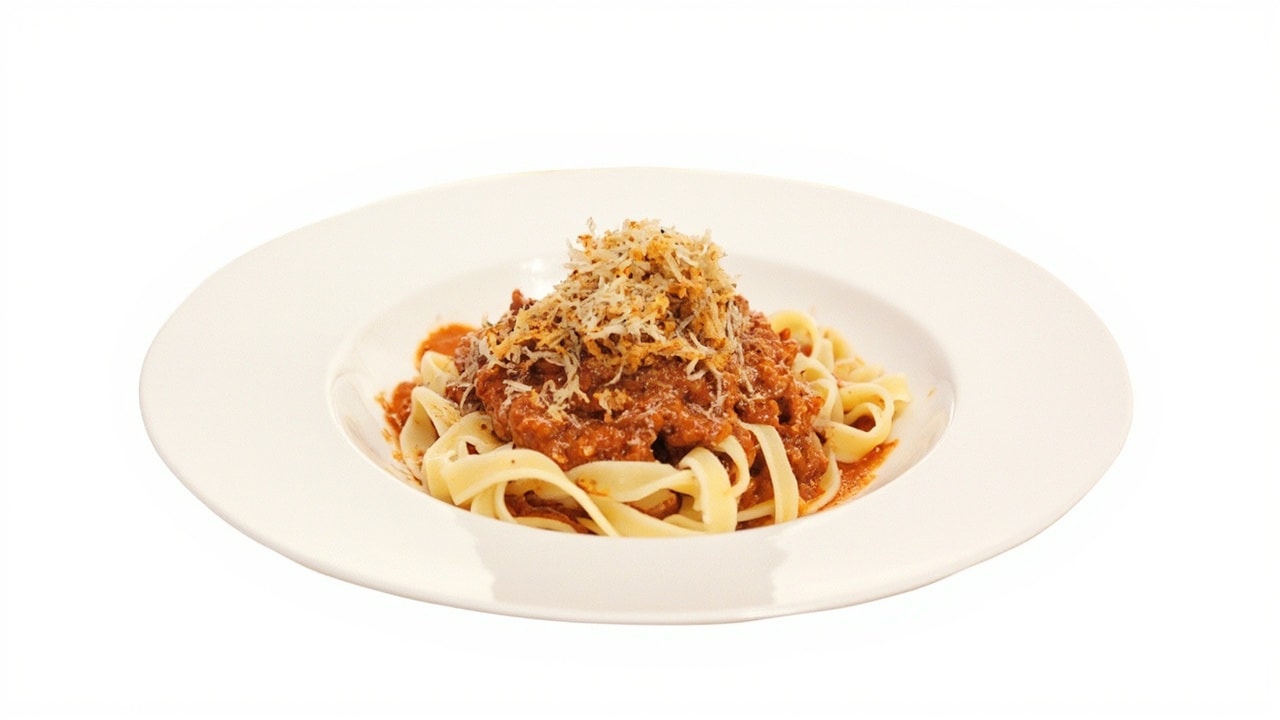
Divide the pasta among warm plates, twirling into nests with tongs. Spoon a little extra sauce over the top, scatter generously with pangrattato, and finish with a heavy grating of Parmigiano-Reggiano and a crack of black pepper. Serve immediately.
Chef's Notes
- Cold meat browns better than warm. Resist the urge to bring it to room temperature; cold fat renders more slowly and lets the surface develop a crust before the interior overcooks.
- The milk in a true Bolognese is not a modern addition. It tenderizes meat proteins through casein and balances the acidity of tomatoes. Whole milk is traditional; cream makes the sauce heavier and duller.
- Toasting tomato paste until it turns brick-red, rather than just stirring it in, removes its raw canned edge and concentrates the natural glutamates for savory depth.
- Pasta water is the only liquid you should use to adjust the sauce. Its starch helps the sauce emulsify and cling to the noodles in a silky coat rather than sliding off into a pool.
- Serve the pasta in warmed bowls. Cold ceramic drops the sauce temperature below the ideal and mutes the aroma of the parmesan and pangrattato.
Storage
Refrigerator: 3 days — Store sauce and pasta separately so the noodles do not absorb the sauce and turn mushy.
Freezer: 3 months — Sauce alone freezes well; freeze before adding pasta for best texture on reheating.
Reheating: Reheat the sauce gently over low heat with a splash of water or milk. Cook a fresh batch of pasta and combine just before serving.
Troubleshooting
Sauce tastes acidic or sharp
Cause: Tomatoes overwhelmed the balance, or the milk was added too late
Fix: Stir in another 50ml of milk and continue simmering 20 minutes; taste and adjust with a pinch of sugar only if still sharp
Prevention: Add the milk before the tomatoes fully reduce and simmer for the full 2 hours
Meat is tough or chewy in the finished sauce
Cause: Simmer was too hot or too short; proteins seized up instead of gently breaking down
Fix: Continue simmering for another 30 to 60 minutes; the meat will soften further with patience
Prevention: Keep the heat at the barest bubble (around 85°C/185°F) and cook for the full 2 hours, stirring occasionally
Sauce is too thin or watery
Cause: Lid was on too tight and trapped condensation, or tomatoes released more liquid than expected
Fix: Remove the lid and simmer uncovered for 15 to 20 minutes to reduce to the right consistency
Prevention: Cook partially covered and finish with the lid off if the sauce looks loose
Pangrattato burns before it crisps
Cause: Heat too high or breadcrumbs left undisturbed too long
Fix: Cannot be fixed. Discard burnt crumbs and start a fresh batch with lower heat.
Prevention: Use medium heat and stir almost continuously once the crumbs go in
Cultural Context
Ragù alla Bolognese is the signature sauce of Bologna in Emilia-Romagna, registered in 1982 by the Accademia Italiana della Cucina with a precise official recipe that includes both milk and a small amount of tomato. The traditional pairing is fresh tagliatelle, not spaghetti; fettuccine is a close cousin from further south and works beautifully with the same ragù. Pangrattato, or toasted breadcrumbs seasoned with garlic, herbs, and citrus, is a frugal southern Italian trick that turns stale bread into a crunchy topping, adding texture and stretching a small amount of cheese or seafood across more portions.