
Equipment
Ingredients
Chocolate Shells
- 200 g bittersweet chocolate, finely chopped
Dark Chocolate Mousse
- 100 g bittersweet chocolate, chopped
- 100 ml heavy cream, chilled
- 50 g crème fraîche, chilled
White Chocolate Mousse
- 100 g white chocolate, chopped
- 120 ml heavy cream, chilled
Raspberry Sauce
- 200 g fresh raspberries
- 40 g caster sugar
- 10 ml lemon juice, freshly squeezed
Nutrition (per serving)
Nutrition is estimated per serving. Nutrients without complete source data are omitted.
Full nutrition
- Calories
- 840 kcal
- Protein
- 8 g
- Carbohydrates
- 72 g
- Fat
- 60 g
- Fiber
- 9 g
- Sugar
- 57 g
- Sodium
- 42 mg
- Saturated Fat
- 37 g
- Trans Fat
- 1 g
- Monounsaturated Fat
- 8 g
- Polyunsaturated Fat
- 1 g
- Cholesterol
- 75 mg
- Potassium
- 218 mg
- Calcium
- 134 mg
- Iron
- 11.3 mg
- Magnesium
- 19 mg
- Phosphorus
- 100 mg
- Zinc
- 0.6 mg
- Vitamin A
- 260 mcg
- Vitamin C
- 15 mg
- Vitamin D
- 0.9 mcg
- Vitamin E
- 1.2 mg
- Vitamin K
- 8 mcg
- Vitamin B6
- 0.1 mg
- Vitamin B12
- 0.3 mcg
- Thiamin
- 0.04 mg
- Riboflavin
- 0.22 mg
- Niacin
- 0.5 mg
- Folate
- 16 mcg
- Water
- 86 g
Sources: Aggregated Public Data, USDA FoodData Central
Method
Melt two-thirds of the 200g bittersweet chocolate over a double boiler until it reaches 45C/113F. Remove from heat, add the remaining chopped chocolate, and stir continuously until the temperature drops to 28C/82F. Briefly return to the double boiler to gently reheat to exactly 31C/88F.
Using a pastry brush, generously coat the inside of a silicone heart mold with the tempered chocolate. Chill for 15 minutes, then apply a second coat focusing on the edges to ensure sturdy walls. Transfer to the refrigerator to set completely.
Combine the fresh raspberries, caster sugar, and lemon juice in a blender. Puree until completely smooth, then press the mixture firmly through a fine mesh strainer into a bowl to extract the seedless sauce. Set aside.
Melt the 100g of bittersweet chocolate for the dark mousse over the double boiler. Remove from the heat and allow it to cool until it feels lukewarm to the touch but remains entirely fluid.
In a mixing bowl, combine 100ml heavy cream and the crème fraîche. Whisk vigorously until the mixture reaches soft peaks.
Add one-third of the whipped cream mixture into the melted dark chocolate and mix gently to lighten it. Delicately fold in the remaining cream mixture until no streaks remain.
Transfer the dark chocolate mousse into a piping bag. Pipe the mousse into the set chocolate heart shells, filling them exactly halfway. Tap the mold gently on the counter to level the mousse, then chill for 30 minutes.
Melt the white chocolate over a clean double boiler and let it cool slightly. In a separate bowl, whisk the remaining 120ml of heavy cream to soft peaks. Gently fold the whipped cream into the melted white chocolate in three additions.
Transfer the white chocolate mousse to a clean piping bag. Pipe the white mousse over the set dark mousse, filling the heart shells completely to the top. Level the tops with an offset spatula and chill for at least 1 hour.
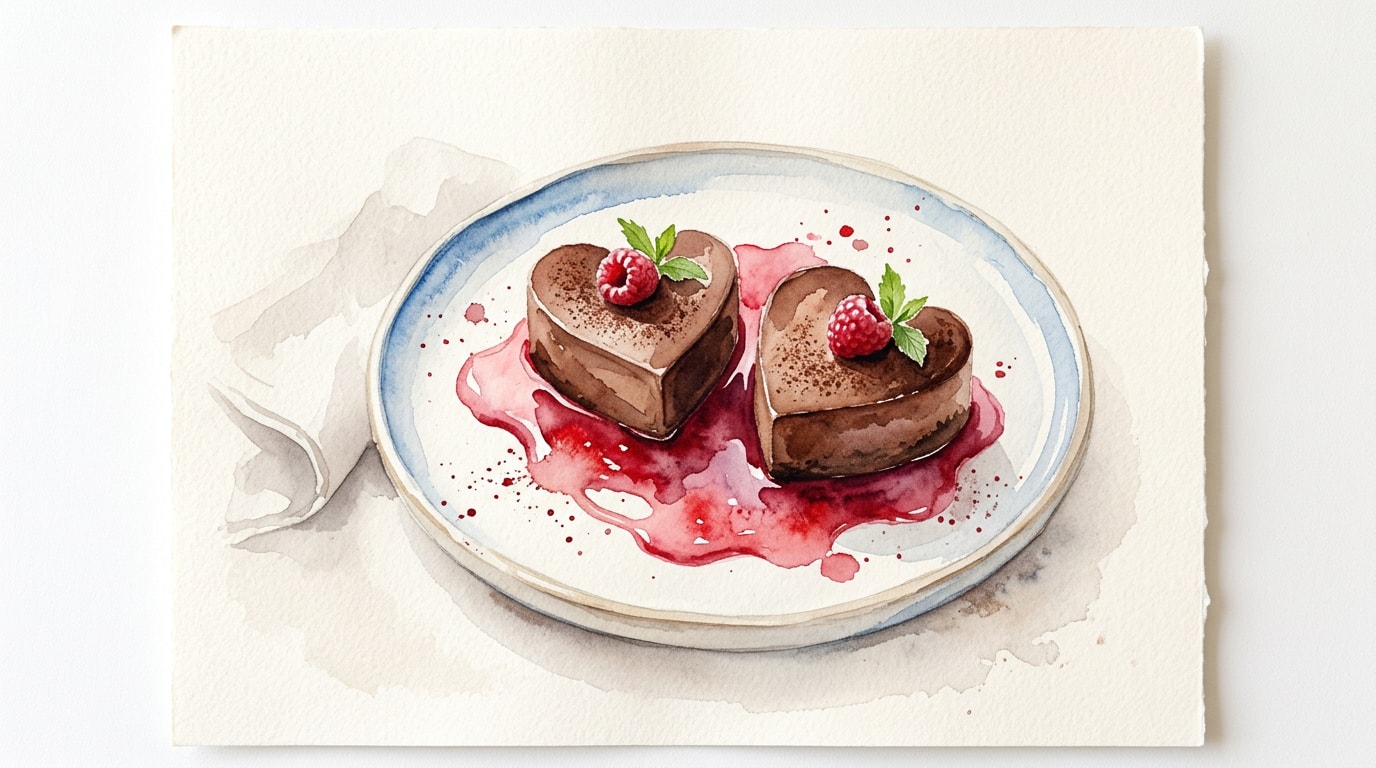
Carefully invert the silicone mold and peel it back to release the chocolate hearts. Place each heart on a dessert plate and elegantly spoon the raspberry sauce around the base before serving.
Chef's Notes
- Crème fraîche introduces a subtle, sophisticated tang to the dark chocolate mousse, effectively cutting through the inherent richness of the bittersweet chocolate.
- For the ultimate glossy finish, ensure your silicone mold is impeccably clean and completely dry before painting the tempered chocolate. A quick polish with a dry microfiber cloth works wonders.
- White chocolate is notoriously heat-sensitive. Always melt it slowly over gently simmering, not boiling, water, and remove it from the heat before it is entirely melted to let residual heat do the rest.
Storage
Refrigerator: 3 days — Keep in an airtight container to prevent condensation on the chocolate shells.
Freezer: 1 month — Freeze in an airtight container. Thaw overnight in the refrigerator before serving.
Troubleshooting
Chocolate shell has dull streaks or white spots
Cause: The chocolate was not properly tempered, causing cocoa butter crystals to separate
Fix: Cosmetic issue only; dust the hearts lightly with cocoa powder or edible luster dust to hide imperfections
Prevention: Ensure precise temperature control and continuous stirring during the tempering process
Mousse becomes grainy and stiff when mixing
Cause: Folding cold cream into chocolate that is too hot, causing the cocoa butter to seize
Fix: Cannot be fixed as a mousse. It can be melted down to use as a dense ganache or hot chocolate base
Prevention: Allow melted chocolate to cool to lukewarm or body temperature before folding in the cream
Shells crack when unmolding
Cause: The chocolate coating was too thin, especially around the edges of the mold
Fix: Patch from the inside with extra melted chocolate if only slightly cracked, or melt down and start over
Prevention: Always apply a second coat of chocolate to the mold, paying special attention to the corners and rims
Cultural Context
The association of chocolate with romance dates back to the Aztec and Mayan civilizations, though it was the Victorians who truly cemented the tradition of giving heart-shaped chocolates on Valentine's Day. This modern dessert elevates that classic gesture by marrying traditional French pastry techniques, like tempering and mousse-making, into an elegant, multi-textured centerpiece.


