Equipment
Ingredients
Main
- 240 g canned chickpeas, rinsed well and thoroughly dried
- 30 ml olive oil
- 2 g ground cumin
- 2 g curry powder, mild or hot depending on preference
- 3 g kosher salt
Nutrition (per serving)
Nutrition is estimated per serving. Nutrients without complete source data are omitted.
Full nutrition
- Calories
- 157 kcal
- Protein
- 6 g
- Carbohydrates
- 17 g
- Fat
- 9 g
- Fiber
- 8 g
- Sugar
- 5 g
- Sodium
- 635 mg
- Saturated Fat
- 1 g
- Monounsaturated Fat
- 6 g
- Polyunsaturated Fat
- 1 g
- Potassium
- 431 mg
- Calcium
- 70 mg
- Iron
- 4.6 mg
- Magnesium
- 3 mg
- Phosphorus
- 4 mg
- Zinc
- 0.1 mg
- Vitamin A
- 0 mcg
- Vitamin C
- 0 mg
- Vitamin E
- 1.2 mg
- Vitamin K
- 5 mcg
- Niacin
- 0.0 mg
- Folate
- 0 mcg
- Water
- 0 g
Sources: Aggregated Public Data, USDA FoodData Central
Method
Drain the chickpeas using a strainer and rinse well under cold water. Spread them out on a thick layer of paper towels and rub them gently to pat them thoroughly dry. Removing excess moisture is essential for achieving a crunchy exterior and preventing oil splatters.
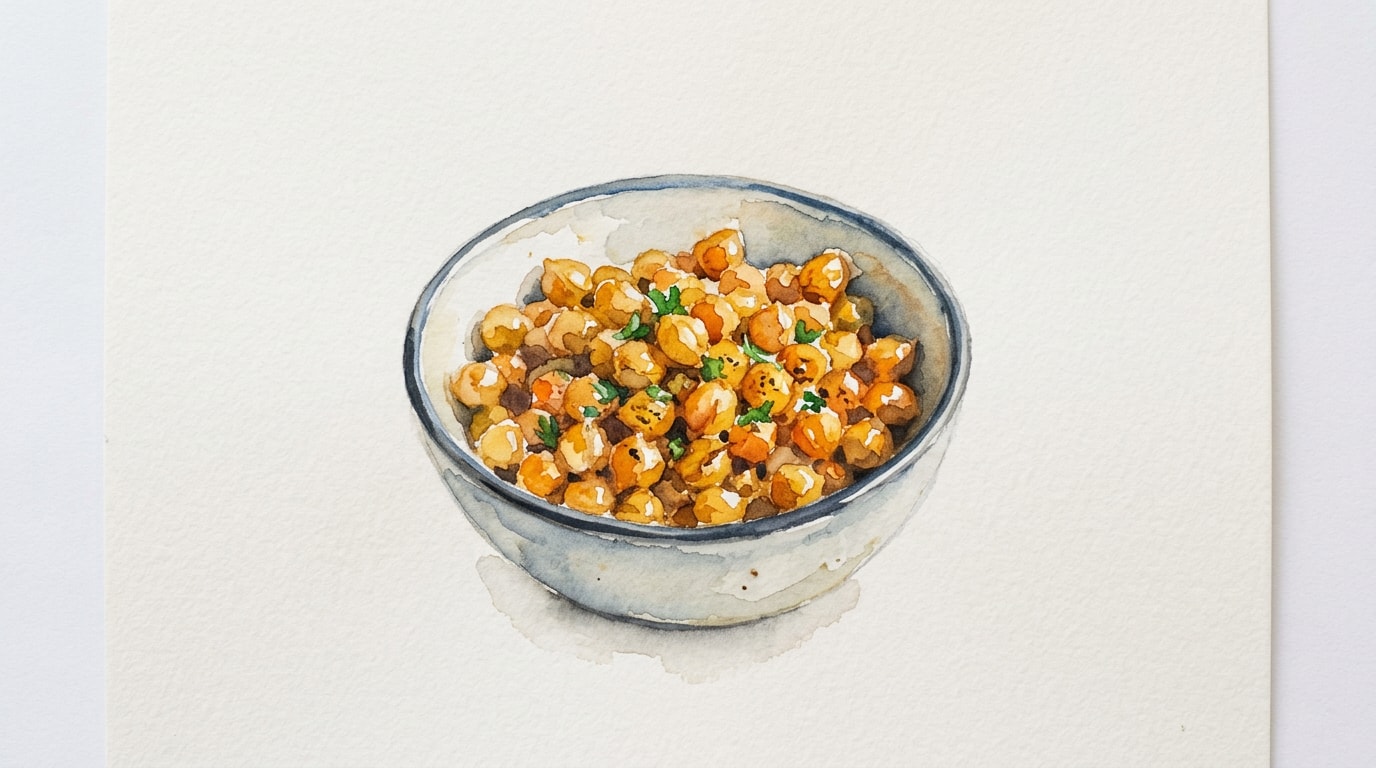
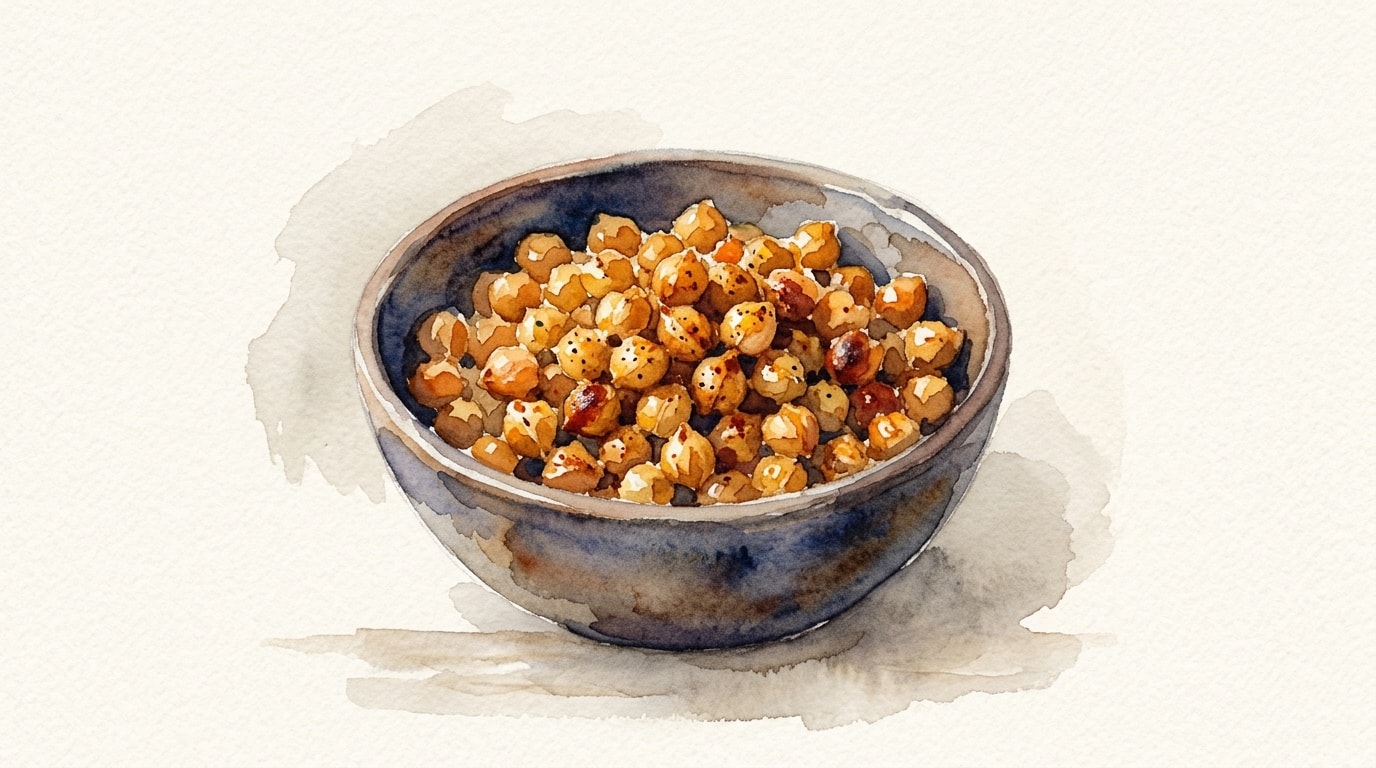
Heat the olive oil in a large skillet over medium-high heat. Add the dried chickpeas in a single layer. Cook for 8 to 10 minutes, shaking the pan or stirring occasionally with a spatula, until the chickpeas are deeply browned, blistered, and crispy on the outside.
Remove the skillet completely from the heat. Sprinkle the ground cumin, curry powder, and kosher salt over the hot chickpeas. Toss well with the spatula to ensure every chickpea is evenly coated in the spices and the residual oil.
Transfer the spiced chickpeas to a paper towel-lined plate to absorb any excess oil, or move them directly to a serving bowl. Allow them to cool for 5 minutes before serving, as their exterior will continue to harden and crisp up as they cool down.
Chef's Notes
- Thoroughly drying the chickpeas is the single most critical step in this recipe. Any residual water will cause the legumes to steam rather than fry, which prevents that desirable crunchy shell from forming.
- Wait to add the spices until the pan is off the heat. Ground spices like cumin and curry powder can burn in a matter of seconds over medium-high heat, resulting in an acrid flavor.
- If the chickpeas pop vigorously out of the pan during cooking, your heat may be slightly too high or they were too wet. Reduce the heat down to medium or use a splatter screen to protect yourself.
- For the best texture, serve these chickpeas within a few hours of making them. While they are safe to eat for days, the crunchy exterior will soften as they absorb moisture from the air.
Storage
Refrigerator: 3 days — Will lose crispness in the fridge. Reheat in a dry skillet over medium heat to restore crunch.
Troubleshooting
Chickpeas are soggy instead of crispy
Cause: Chickpeas were not dried thoroughly before cooking, or the pan was overcrowded
Fix: Return to medium heat and continue cooking for a few more minutes until the moisture fully evaporates
Prevention: Pat the chickpeas completely dry with paper towels and ensure they sit in a single, uncrowded layer in the skillet
Spices taste bitter or burnt
Cause: Spices were added while the skillet was still over high heat
Fix: Cannot be fixed
Prevention: Always remove the pan from the heat entirely before adding ground spices, utilizing only the residual heat to toast them
Cultural Context
Roasted and pan-fried chickpeas, known as leblebi in parts of the Middle East, have been a popular snack in Mediterranean and Levantine cultures for centuries. This modern skillet method offers a faster alternative to traditional oven roasting, fusing classic legume preparation with accessible global pantry staples like curry powder.