
Equipment
Ingredients
Produce
- 500 g cauliflower, cut into small florets
- 3 garlic, whole, peeled
- 30 ml lemon juice, freshly squeezed
Dairy
- 200 g feta cheese, crumbled
- 100 g plain greek yogurt, whole milk
Pantry & Seasonings
- 60 ml extra virgin olive oil
- 2 g dried oregano, crushed
- 1 g black pepper, freshly ground
Nutrition (per serving)
Nutrition is estimated per serving. Nutrients without complete source data are omitted.
Full nutrition
- Calories
- 162 kcal
- Protein
- 6 g
- Carbohydrates
- 6 g
- Fat
- 13 g
- Fiber
- 1 g
- Sugar
- 2 g
- Sodium
- 309 mg
- Saturated Fat
- 5 g
- Trans Fat
- 0 g
- Monounsaturated Fat
- 7 g
- Polyunsaturated Fat
- 1 g
- Cholesterol
- 24 mg
- Potassium
- 236 mg
- Calcium
- 160 mg
- Iron
- 0.6 mg
- Magnesium
- 17 mg
- Phosphorus
- 133 mg
- Zinc
- 1.0 mg
- Vitamin A
- 43 mcg
- Vitamin C
- 32 mg
- Vitamin D
- 0.1 mcg
- Vitamin E
- 1.2 mg
- Vitamin K
- 16 mcg
- Vitamin B6
- 0.3 mg
- Vitamin B12
- 0.5 mcg
- Thiamin
- 0.08 mg
- Riboflavin
- 0.28 mg
- Niacin
- 0.6 mg
- Folate
- 47 mcg
- Water
- 86 g
Sources: USDA FoodData Central
Method
Preheat your oven to 200°C (400°F). Line a baking sheet with parchment paper.
Place the cauliflower florets and whole garlic cloves on the prepared baking sheet. Drizzle with 30ml of the olive oil, sprinkle with the dried oregano and black pepper, and toss until evenly coated.
Roast in the preheated 200°C (400°F) oven for 25 minutes, or until the cauliflower is completely tender and beginning to caramelize at the edges.
Remove the baking sheet from the oven and allow the roasted cauliflower and garlic to cool for 10 minutes. This prevents the hot vegetables from splitting the yogurt.
Transfer the slightly cooled cauliflower and garlic to a food processor. Add the crumbled feta cheese, Greek yogurt, lemon juice, and the remaining 30ml of olive oil. Puree for 2 to 3 minutes, scraping down the sides as needed, until the mixture is entirely smooth and velvety.
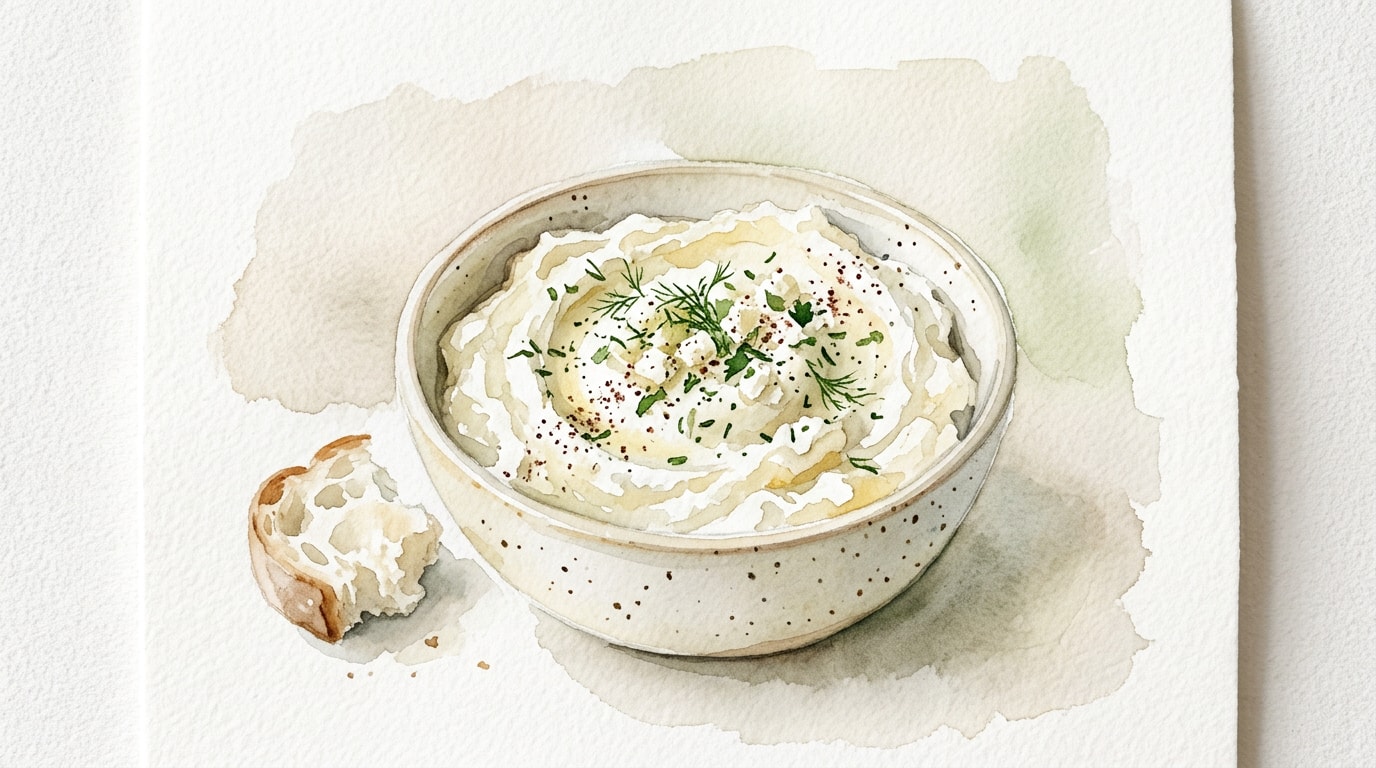
Transfer the dip to a serving bowl. Garnish with an additional drizzle of olive oil, a pinch of crushed oregano, and a few extra feta crumbles if desired. Serve immediately or chill to firm up.
Chef's Notes
- Using a high-quality sheep's milk feta will dramatically improve the depth of flavor and provide a creamier, less grainy texture than standard cow's milk alternatives.
- Roasting the garlic alongside the cauliflower mellows its pungent raw bite, transforming it into a sweet and buttery aromatic that perfectly complements the sharp tang of the feta.
- No added salt is included in the ingredient list because feta cheese is naturally quite briny. Always taste the finished puree before considering adding any salt.
- If you prefer a lighter, fluffier texture, you can add a tablespoon of ice-cold water while the food processor is running to help emulsify the oils and dairy.
Storage
Refrigerator: 5 days — Store in an airtight container to prevent the top from drying out.
Troubleshooting
Dip is too grainy or chunky
Cause: Cauliflower was undercooked or processing time was insufficient
Fix: Add 15ml of warm water or additional yogurt and process for another 2 to 3 minutes until broken down
Prevention: Ensure cauliflower can be easily mashed with a fork before removing from the oven
Dip is too thin or watery
Cause: Cauliflower absorbed too much moisture if steamed instead of roasted, or too much lemon juice was added
Fix: Add more crumbled feta or a small amount of almond flour to thicken, then chill for 1 hour to set
Prevention: Follow the roasting method to draw out moisture and concentrate the cauliflower flavor
Cultural Context
While a traditional Greek mezze spread heavily features iconic dips like Tzatziki, Melitzanosalata, or Tyrokafteri, this cauliflower adaptation nods to modern Mediterranean cooking. It embraces the underlying Greek philosophy of elevating simple, humble vegetables with robust local cheeses, high-quality olive oil, and fragrant wild herbs.


