Equipment
* optional
Ingredients
Pasta
- 360 g spaghetti, dry
- 20 g sea salt
Aromatics and Vegetables
- 150 g shiitake mushrooms, stemmed and sliced
- 80 g baby spinach, washed, roughly chopped if leaves are large
- 4 garlic, minced
- 3 scallion, thinly sliced on the bias, whites and greens separated
- 15 ml neutral oil
Creamy Gochujang Sauce
- 300 g silken tofu, drained on paper towels for 10 minutes
- 50 g gochujang, Korean red chili paste
- 25 ml soy sauce
- 15 ml toasted sesame oil
- 10 ml rice vinegar
- 10 ml maple syrup
- 15 g miso paste, white or mild yellow miso
- fine sea salt
Garnish
- 8 g toasted sesame seeds, white or mixed black and white
- 5 ml toasted sesame oil
- 2 g nori seaweed, thinly shredded
Nutrition (per serving)
Nutrition is estimated per serving. Nutrients without complete source data are omitted.
Full nutrition
Only basic nutrition values are available for this recipe. More detailed nutrient data is incomplete.
- Calories
- 333 kcal
- Protein
- 13 g
- Carbohydrates
- 44 g
- Fat
- 12 g
- Sodium
- 1206 mg
Sources: Aggregated Public Data, USDA FoodData Central
Method
Bring 2.5 liters of water to a rolling boil in a large pot. Add 20g sea salt once boiling.
Add 360g spaghetti and cook, stirring occasionally, until al dente according to package directions (usually 8-10 minutes). Reserve 200 ml of pasta water before draining.
While pasta cooks, drain 300g silken tofu on paper towels for 10 minutes to remove excess water. Slice the shiitake (150g) into 5 mm pieces, mince the garlic (4 cloves), and slice the scallion (3 stalks) separating whites from greens.
Heat 15 ml neutral oil in a large skillet over medium heat (about 175°C/350°F) until shimmering. Add the scallion whites and minced garlic. Sauté for 45 seconds until fragrant but not browned.
Add 150g sliced shiitake to the skillet in a single layer. Sauté without stirring for 2 minutes, then stir and cook 2-3 minutes more until the edges are golden and any liquid has evaporated.
Add 80g baby spinach to the skillet. Toss with tongs for 45 seconds until just wilted and glossy. Remove the skillet from the heat.
In a high-speed blender, combine the drained silken tofu (300g), 50g gochujang, 25 ml soy sauce, 15 ml toasted sesame oil, 10 ml rice vinegar, 10 ml maple syrup, and 15g miso (if using). Blend on high for 60-90 seconds until completely silky with no visible specks.
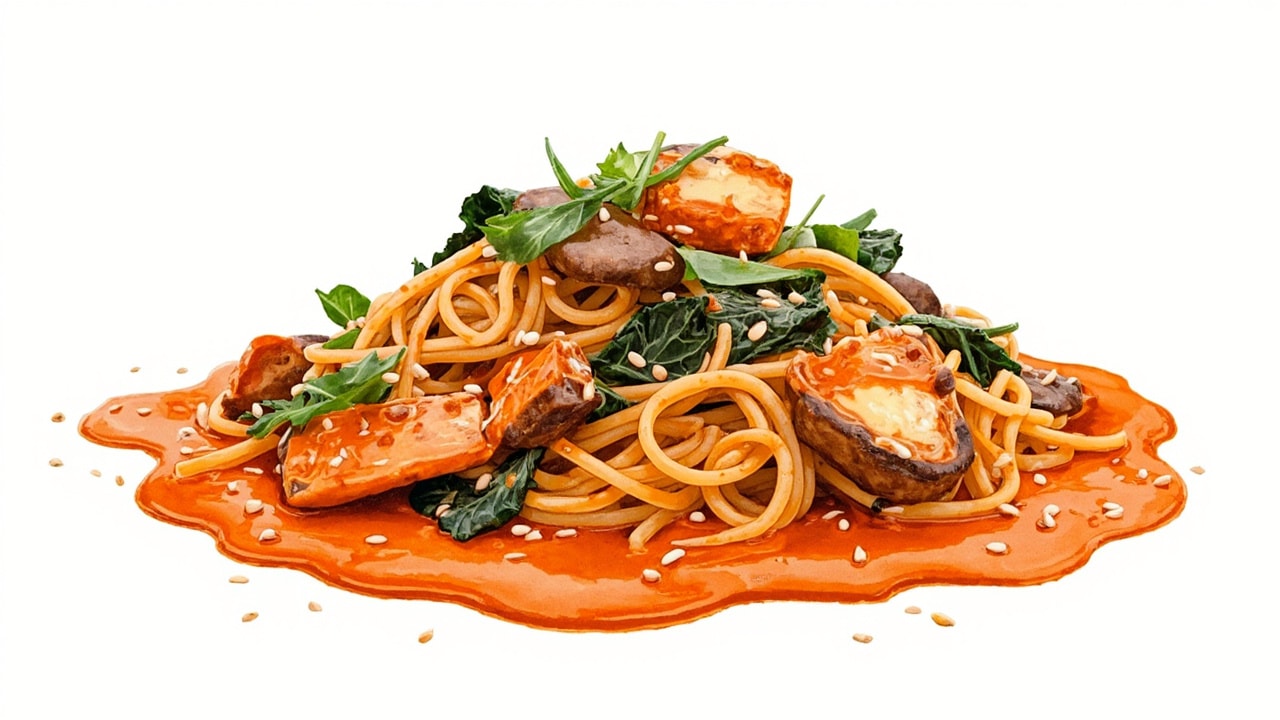
Drain the pasta and immediately add it to the skillet with the vegetables. Pour the tofu-gochujang sauce over the top. Add 100 ml of the reserved hot pasta water. Toss vigorously over low heat (about 65°C/150°F) for 1-2 minutes until the sauce clings evenly to every strand.
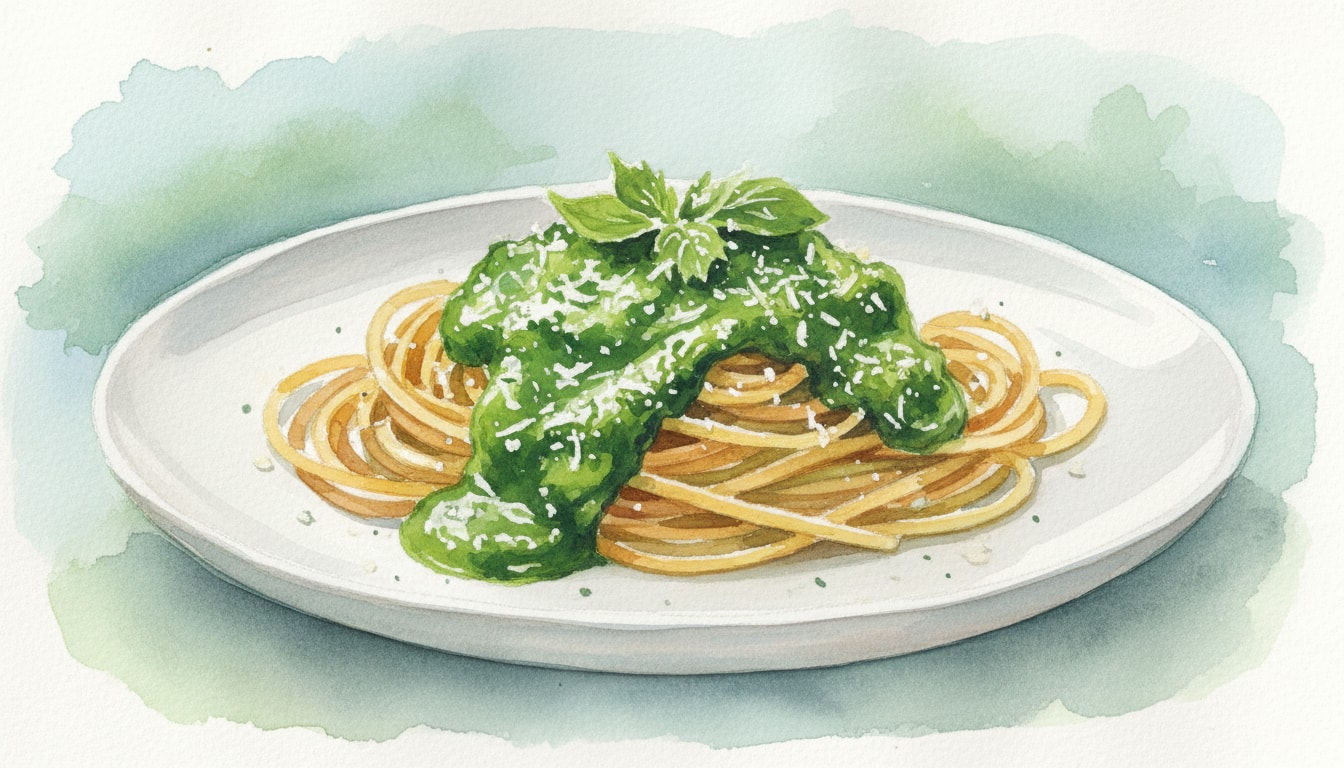
Taste and adjust salt (start with 2g). Divide among four warm bowls. Top with reserved scallion greens, 2g shredded nori (if using), 8g toasted sesame seeds, and a 5 ml drizzle of toasted sesame oil. Serve immediately.
Chef's Notes
- Drain the silken tofu thoroughly; even a thin film of extra water can thin the sauce and dull the gochujang color.
- Reserve more pasta water than you think you need. The cloudy, starchy liquid is the natural emulsifier that lets a dairy-free sauce cling to long pasta strands.
- Warm the sauce gently. Tofu proteins seize and turn grainy once they cross about 80°C/175°F, so the final toss should happen off the burner or over the lowest possible flame.
- Balance is everything in gochujang-based sauces: the paste brings sweet, spicy, and savory all at once. Taste the blended sauce before combining, and adjust the sweet-acidic edges with maple syrup or rice vinegar rather than reaching for more chili.
- For a more substantial meal, fold in 100g of pan-seared cubed extra-firm tofu at the end for added protein and textural contrast.
Storage
Refrigerator: 3 days — Store in an airtight container. Sauce thickens when cold; loosen with a splash of warm water when reheating.
Reheating: Reheat gently in a nonstick pan over low heat with 30-60 ml of water, stirring until creamy. Do not microwave on high.
Troubleshooting
Sauce is thin and pools at the bottom of the bowl
Cause: Not enough pasta water was used, or pasta water was not starchy enough
Fix: Toss the sauced pasta over low heat for another minute, adding pasta water 30 ml at a time until the sauce clings
Prevention: Cook pasta in ample water and reserve a full 200 ml of the cloudy water before draining
Sauce tastes harsh or bitter
Cause: Garlic was browned too dark, or sesame oil was overheated
Fix: Add 10 ml maple syrup and 15 ml extra soy sauce to round out the bitterness
Prevention: Keep heat at medium and pull aromatics off heat before they color past pale gold
Sauce looks grainy or separated
Cause: Sauce was boiled or held at high heat, causing tofu proteins to break
Fix: Cannot be fully fixed; blend a fresh batch and combine with the pasta off heat for a rescue
Prevention: Always warm the sauce gently below 80°C/175°F and combine off the heat when possible
Heat level is flat or one-dimensional
Cause: Insufficient gochujang or imbalance between spicy, sweet, and acidic elements
Fix: Stir in an extra 10g gochujang and a 5 ml squeeze of rice vinegar to lift the finish
Prevention: Taste the sauce before tossing and adjust with more gochujang, rice vinegar, or maple syrup
Pasta sticks together in clumps
Cause: Insufficient water, no stirring during the first minutes, or pasta sat too long after draining
Fix: Rinse briefly under warm water and toss immediately with sauce over low heat
Prevention: Use at least 2.5 liters of water and stir within the first 2 minutes of cooking
Cultural Context
This dish belongs to a growing wave of Korean-Italian fusion that has flourished in home kitchens and contemporary restaurants over the past decade, marrying the comforting starch-forward traditions of Italian pasta with the bold, fermented heat of Korean pantry staples. Gochujang, a fermented red chili paste central to Korean cooking for centuries, lends the sauce its signature sweet-spicy backbone, while silken tofu stands in for cream in a nod to the long Korean appreciation for soft tofu (soondubu) as a luxurious, comforting ingredient.