
Equipment
Ingredients
Produce
- 800 g cauliflower, cut into medium florets
- 150 g yellow onion, diced
- 15 g garlic, minced
Spices and Herbs
- 3 g ground turmeric
- 2 g fresh thyme, leaves picked and roughly chopped
- 5 g fresh chives, finely sliced
Liquids and Dairy
- 30 ml olive oil
- 15 g unsalted butter
- 800 ml vegetable broth, warm
- 100 ml heavy cream, room temperature
Nutrition (per serving)
Nutrition is estimated per serving. Nutrients without complete source data are omitted.
Full nutrition
- Calories
- 264 kcal
- Protein
- 6 g
- Carbohydrates
- 18 g
- Fat
- 20 g
- Fiber
- 5 g
- Sugar
- 7 g
- Sodium
- 676 mg
- Saturated Fat
- 9 g
- Trans Fat
- 0 g
- Monounsaturated Fat
- 9 g
- Polyunsaturated Fat
- 1 g
- Cholesterol
- 36 mg
- Potassium
- 755 mg
- Calcium
- 87 mg
- Iron
- 1.7 mg
- Magnesium
- 41 mg
- Phosphorus
- 130 mg
- Zinc
- 0.8 mg
- Vitamin A
- 166 mcg
- Vitamin C
- 103 mg
- Vitamin D
- 0.4 mcg
- Vitamin E
- 1.6 mg
- Vitamin K
- 37 mcg
- Vitamin B6
- 0.5 mg
- Vitamin B12
- 0.1 mcg
- Thiamin
- 0.17 mg
- Riboflavin
- 0.21 mg
- Niacin
- 1.4 mg
- Folate
- 123 mcg
- Water
- 431 g
Sources: Aggregated Public Data, USDA FoodData Central
Method
Preheat the oven to 200°C/400°F. Toss the cauliflower florets with the olive oil on a baking sheet and season generously with salt and pepper. Roast for 20 minutes until the edges are golden brown and the stems are tender.
In a large pot or Dutch oven, melt the unsalted butter over medium heat. Add the diced onion and saute for 5 minutes until soft and translucent. Stir in the minced garlic and cook for 1 additional minute until aromatic.
Stir the ground turmeric and fresh thyme into the onion mixture. Cook for 30 seconds to lightly toast the spices, which deepens their earthy flavor profile.
Add the roasted cauliflower to the pot, reserving a few small florets for garnish if desired. Pour in the warm vegetable broth. Bring the mixture to a gentle simmer, cover, and cook for 10 minutes to allow the flavors to meld.
Remove the pot from the heat. Using an immersion blender, carefully puree the soup until entirely smooth. If using a stand blender, process in batches and return to the pot.
Stir in the heavy cream. Taste and adjust seasoning with additional salt and pepper as needed. Gently warm over low heat for 2 minutes if the soup has cooled, ensuring it does not boil.
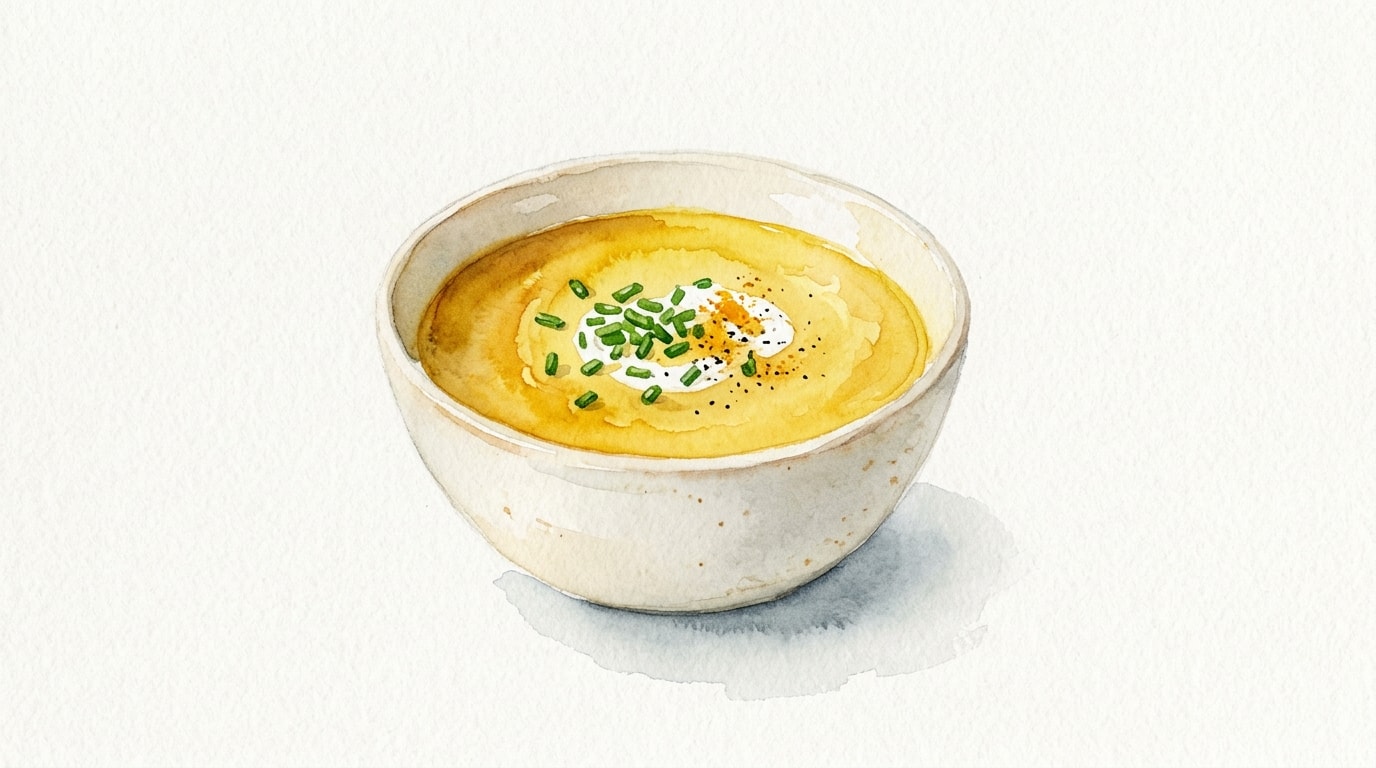
Ladle the hot soup into bowls. Garnish with the sliced chives and any reserved roasted cauliflower florets before serving.
Chef's Notes
- Roasting the cauliflower beforehand deepens the flavor profile immensely, adding nutty and caramelized undertones that boiling alone cannot achieve.
- Adjust the turmeric cautiously. Its earthy flavor can quickly overpower the delicate nature of the cauliflower if measured too heavily.
- If preparing this soup in advance, hold off on adding the heavy cream until you are reheating it just before serving to ensure the brightest flavor and best texture.
- For an extra layer of depth, grate a tiny amount of fresh nutmeg into the soup at the very end of cooking.
Storage
Refrigerator: 4 days — Store in an airtight container once completely cooled.
Freezer: 3 months — Thaw overnight in the refrigerator before reheating. The cream may separate slightly upon freezing; whisk vigorously when reheating.
Reheating: Gently reheat on the stove over medium-low heat, whisking constantly to maintain the emulsion. Do not boil.
Troubleshooting
Soup has a grainy or gritty texture after blending
Cause: Cauliflower was undercooked or the blender used was not powerful enough to break down the fibers
Fix: Pass the soup through a fine-mesh sieve for a silkier mouthfeel
Prevention: Ensure the cauliflower stems are completely tender before blending
Soup splits or looks curdled
Cause: The soup was allowed to boil vigorously after the heavy cream was added
Fix: Remove from heat immediately and blend vigorously with an immersion blender to re-emulsify
Prevention: Only heat the soup gently on low after adding dairy
Cultural Context
Cauliflower soup is a long-standing staple in British cuisine, particularly cherished during the cooler, damp autumn months. The addition of turmeric in this recipe reflects the deep, historical influence of Indian spices on modern British home cooking, transforming a traditional comfort dish into something vibrant and warming.


