Equipment
* optional
Ingredients
For the Cure
- 4 duck legs, fresh, skin on
- 40 g kosher salt, coarse
- 10 g granulated sugar
- 5 g black peppercorns, lightly crushed
- 4 bay leaves, dried or fresh
- 5 g fresh thyme, whole sprigs
- 4 garlic cloves, smashed
For Confit Cooking
- 700 g duck fat, melted, plus extra if needed to submerge
For the White Beans
- 300 g dried navy beans, rinsed and sorted
- 1500 ml cold water
- 1 yellow onion, small dice
- 2 carrot, small dice
- 2 celery stalks, small dice
- 3 garlic cloves, minced
- 30 ml olive oil
- 30 g tomato paste
- 200 g crushed tomatoes
- 1 bay leaf
- 3 g fresh thyme, tied in a bundle
- 8 g fine sea salt
- 2 g black pepper, freshly ground
For Finishing and Assembly
- 30 g fresh breadcrumbs
- 10 g fresh parsley, finely chopped
- 15 g reserved duck fat, melted
Nutrition (per serving)
Nutrition is estimated per serving. Nutrients without complete source data are omitted.
Full nutrition
Only basic nutrition values are available for this recipe. More detailed nutrient data is incomplete.
- Calories
- 2373 kcal
- Protein
- 86 g
- Carbohydrates
- 72 g
- Fat
- 254 g
Sources: Aggregated Public Data, USDA FoodData Central
Method
In a mixing bowl, combine the kosher salt, sugar, crushed peppercorns, bay leaves, thyme sprigs, and smashed garlic. Stir until the sugar and salt are evenly distributed.
Pat the duck legs thoroughly dry with paper towels. Rub the salt mixture generously over each leg, pressing it into the skin and under the flesh where possible. Arrange the legs in a single layer in a non-reactive dish just large enough to hold them snugly.
Cover the dish with plastic wrap and refrigerate for 24 hours, turning the legs once at the halfway point. The salt will draw moisture from the duck, creating a concentrated brine.
Place the dried navy beans in a large bowl and cover with 1.5L of cold water. Allow them to soak for 12 to 16 hours at room temperature, or up to 24 hours in the refrigerator. The beans should roughly double in size and the skins should wrinkle slightly.
Remove the duck legs from the cure and rinse each one thoroughly under cool running water, rubbing away all visible salt and aromatics. Pat completely dry with paper towels and bring to room temperature for 30 minutes before cooking.
Melt the duck fat in a heavy-bottomed pot over low heat until liquid but not hot, about 50°C/120°F. Place the duck legs in the pot skin-side up, ensuring they fit in a single layer. Pour in enough additional melted fat to completely submerge the legs. Heat gently until the fat reaches 90°C/195°F, then reduce to maintain this temperature. Cook undisturbed for 2 hours, monitoring the temperature with a thermometer.
Test the duck for doneness: the meat should pull easily from the bone with no resistance, and an instant-read thermometer inserted into the thickest part (avoiding bone) should read at least 74°C/165°F. Carefully lift the legs from the fat with a slotted spoon and place on a plate. Strain the fat through a fine-mesh strainer into a clean container and reserve.
Drain the soaked beans and discard the soaking liquid. Place them in a large saucepan, cover with 1.5L of fresh cold water, and bring to a gentle boil. Reduce heat and simmer for 30 minutes until the beans are just tender but still hold their shape.
While the beans simmer, prepare the aromatic base. Dice the onion, carrot, and celery into uniform 5mm pieces (a fine mirepoix). Mince the garlic cloves separately.
In a wide saucepan or Dutch oven, heat the olive oil (or duck fat) over medium heat until shimmering. Add the diced onion, carrot, and celery and cook gently for 8 minutes, stirring occasionally, until softened and translucent but not browned.
Add the minced garlic and tomato paste to the vegetables. Stir continuously for 2 minutes until the tomato paste darkens slightly and becomes fragrant, coating the mirepoix.
Pour in the crushed tomatoes and stir to combine. Cook for 3 minutes until the mixture thickens and the raw tomato aroma dissipates. Add the bay leaf and thyme bundle.
Drain the par-cooked beans and add them to the tomato-vegetable mixture. Pour in just enough water (about 500ml) to barely cover the beans. Bring to a gentle simmer, season with 8g of salt and the black pepper, and cook uncovered for 45 to 60 minutes, stirring occasionally, until the beans are completely tender and the liquid has reduced to a thick, stew-like consistency that coats the back of a spoon.
Position an oven rack in the upper third of the oven and preheat to 200°C/400°F. Remove the duck legs from the plate and pat the skin thoroughly dry with paper towels. Heat a small skillet over medium heat and place the legs skin-side down. Cook for 4 to 5 minutes until the skin is deep golden brown and crisp. Flip and warm the flesh side for 1 minute.
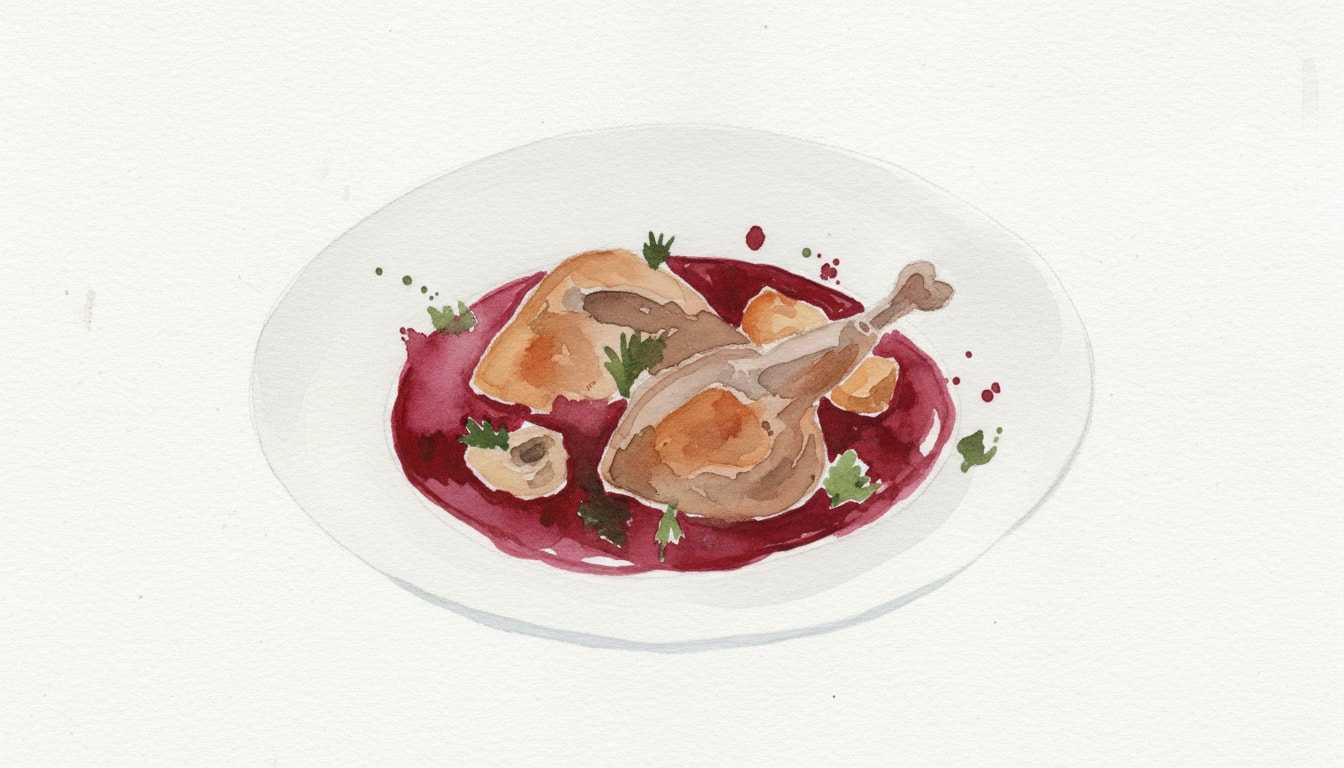
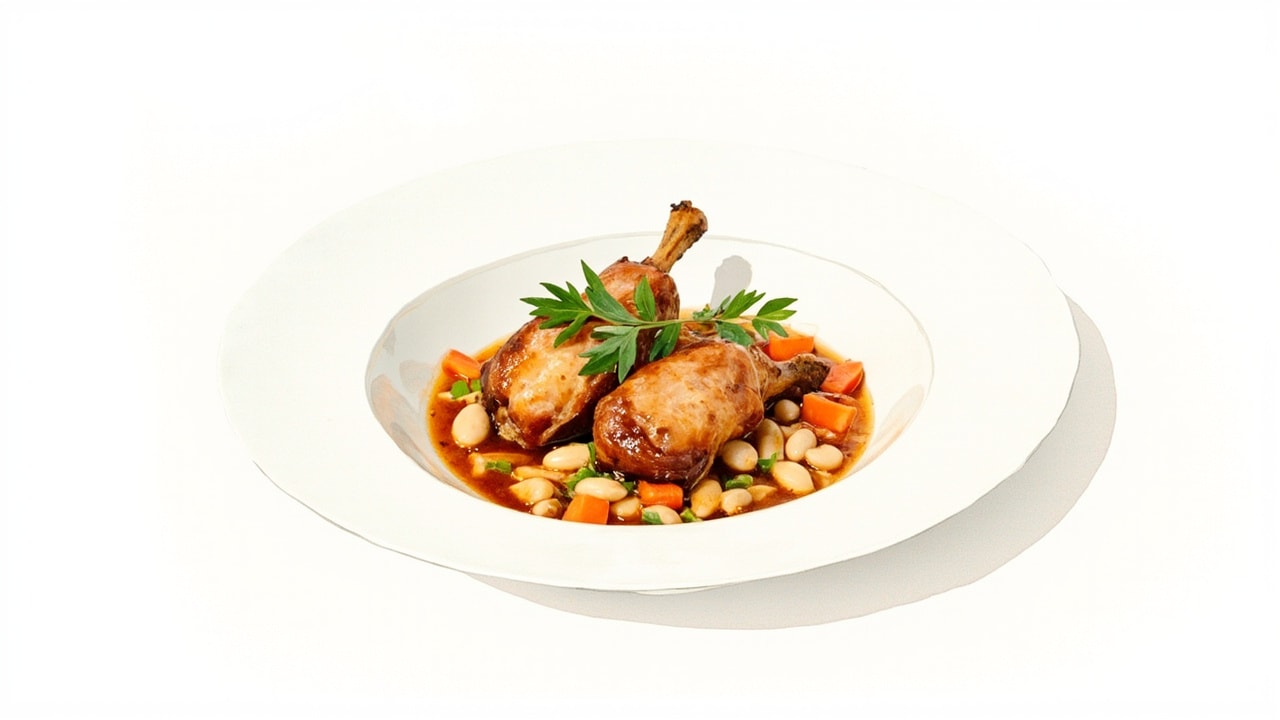
Spoon two-thirds of the bean ragoût into an oven-safe casserole dish. Nestle the four crispy duck legs on top, then spoon the remaining beans around and between them. If using breadcrumbs, scatter them over the surface and drizzle with 15g of melted duck fat.
Bake uncovered in the preheated oven for 25 to 30 minutes until the beans are bubbling vigorously around the edges and the surface (or breadcrumb topping) is golden brown and crisp. The duck should register 74°C/165°F internally.
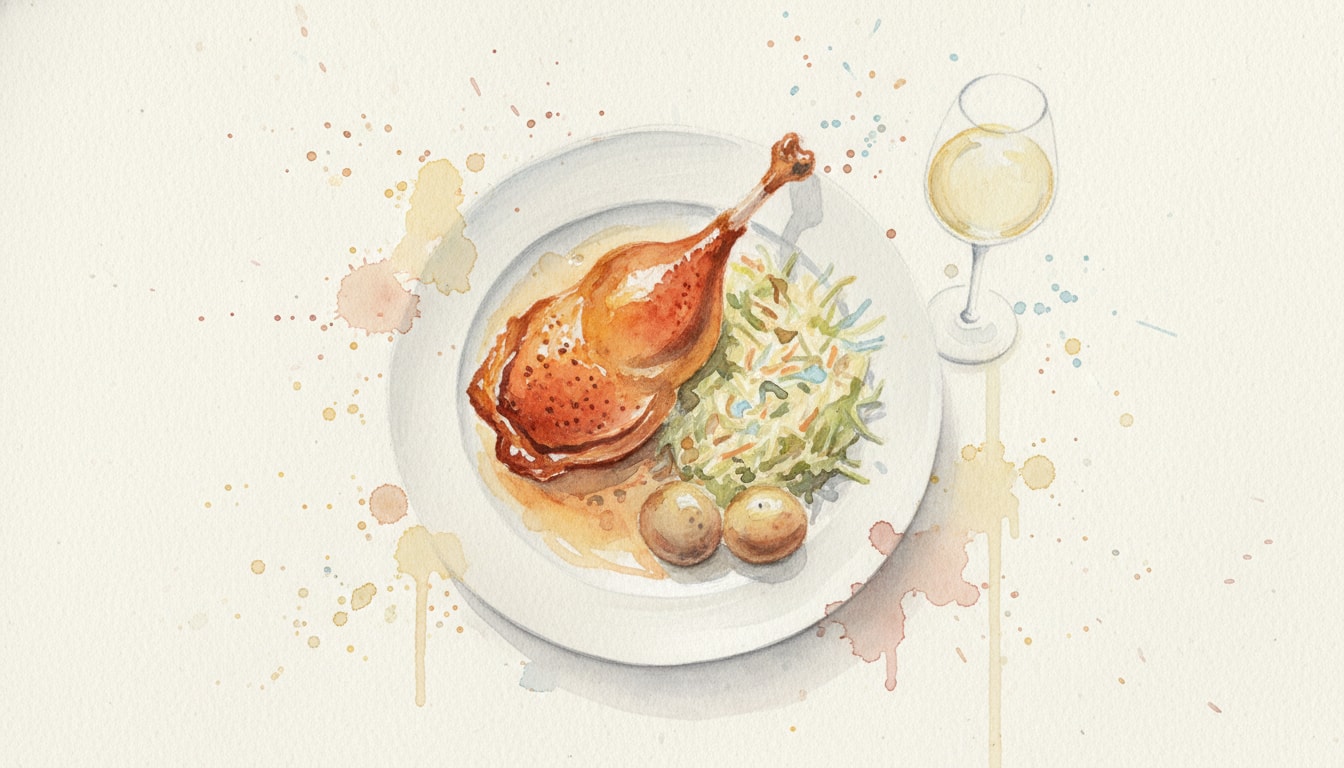
Remove from the oven and let rest for 5 minutes. Remove and discard the bay leaf and thyme bundle. Scatter the chopped parsley over the top and serve directly from the casserole, plating each portion with one duck leg and a generous mound of beans.
Chef's Notes
- The 24-hour cure serves a dual purpose: it seasons the duck deeply and begins the preservation process that gives confit its name (from the French 'confire,' meaning to preserve).
- Cooking duck submerged in its own rendered fat creates an oxygen-free environment that, combined with the salt cure, allowed this technique to preserve meat for months before refrigeration existed. The strained, cooled fat becomes a precious cooking medium for future dishes.
- For an even more layered bean dish, replace half the cooking water with the strained liquid from the confit pot once the duck is removed. This captures soluble proteins and duck essence into the beans.
- Navy beans (also called haricots blancs or pea beans) are traditional in southwestern French cooking. If unavailable, cannellini or Great Northern beans work well, though their texture will be slightly softer.
- The dish improves dramatically when made a day ahead; the beans absorb the duck flavor overnight and the texture becomes more cohesive on reheating.
Storage
Refrigerator: 4 days — Store duck legs submerged in their cooking fat in a sealed container for traditional confit keeping. Keep beans in a separate sealed container. Consume within 4 days.
Freezer: 3 months — Cooked duck legs in fat freeze exceptionally well. Beans can be frozen separately. Thaw overnight in the refrigerator before reheating.
Reheating: Reheat gently in a 160°C/325°F oven, covered, until warmed through to an internal temperature of 74°C/165°F. Crisp the skin under the broiler for 2-3 minutes if desired.
Troubleshooting
Duck meat is tough after confit cooking
Cause: The fat temperature was too high, causing the muscle fibers to seize, or the legs were not fully submerged during cooking
Fix: Return the legs to clean, warm fat at 85°C/185°F and cook for another 45-60 minutes until tender. High heat damage to proteins cannot be undone, but undercooked confit can be rescued.
Prevention: Maintain fat at 85-90°C/185-195°F using a thermometer and ensure legs stay submerged with a weight if necessary
Duck is too salty after curing
Cause: The salt-to-meat ratio was too high, or curing time exceeded 30 hours
Fix: Soak the rinsed legs in cold water for 1 hour, changing the water once. Pat dry before confit cooking. Cannot remove salt fully if over-cured.
Prevention: Weigh your salt carefully (about 3% of the meat weight) and rinse thoroughly under running water after curing
Beans remain hard or gritty after cooking
Cause: Old beans (over 1 year) or beans salted too early in the cooking process
Fix: Continue simmering with additional hot water for 30-60 more minutes. If beans are extremely old, they may never soften.
Prevention: Use beans purchased within the past year and only add salt once beans are partially tender
Bean ragoût is too watery
Cause: Insufficient reduction time, or too much cooking liquid added at the start
Fix: Simmer the beans uncovered for an additional 10-15 minutes, or bake the assembled dish for 10 extra minutes to drive off moisture
Prevention: Add cooking liquid gradually and aim for a thick, spoon-coating consistency before assembly
Duck skin is soft or rubbery after baking
Cause: The skin was not crisped separately before assembly, or it was covered too long during baking
Fix: Remove the duck legs, place on a sheet pan skin-side up, and broil 10-15cm from the heat for 2-3 minutes until crackling
Prevention: Always sear the skin in a hot skillet before placing legs in the casserole, and bake uncovered
Final dish tastes flat or one-dimensional
Cause: Insufficient seasoning, or the bean cooking water was bland
Fix: Stir 2-3g of flaky sea salt and a small squeeze of lemon juice into the finished beans to brighten flavors
Prevention: Season in layers: salt the bean cooking water lightly, season the mirepoix, and finish with flaky salt on top
Cultural Context
This dish draws directly from the cuisine of southwestern France, particularly the Languedoc region where the city of Castelnaudary claims to have invented cassoulet in the 14th century during the Hundred Years' War. While a true cassoulet layers multiple preserved meats and sausages with white beans, this streamlined version focuses on the essential partnership that defines the region's peasant cooking: confit de canard (salt-cured duck preserved in its own fat) served over tender haricots blancs. The technique of confit preservation emerged from practical necessity; without refrigeration, submerging cooked meat in cooled fat allowed rural families to store duck through the winter, transforming a luxury ingredient into everyday nourishment through skill and patience.