
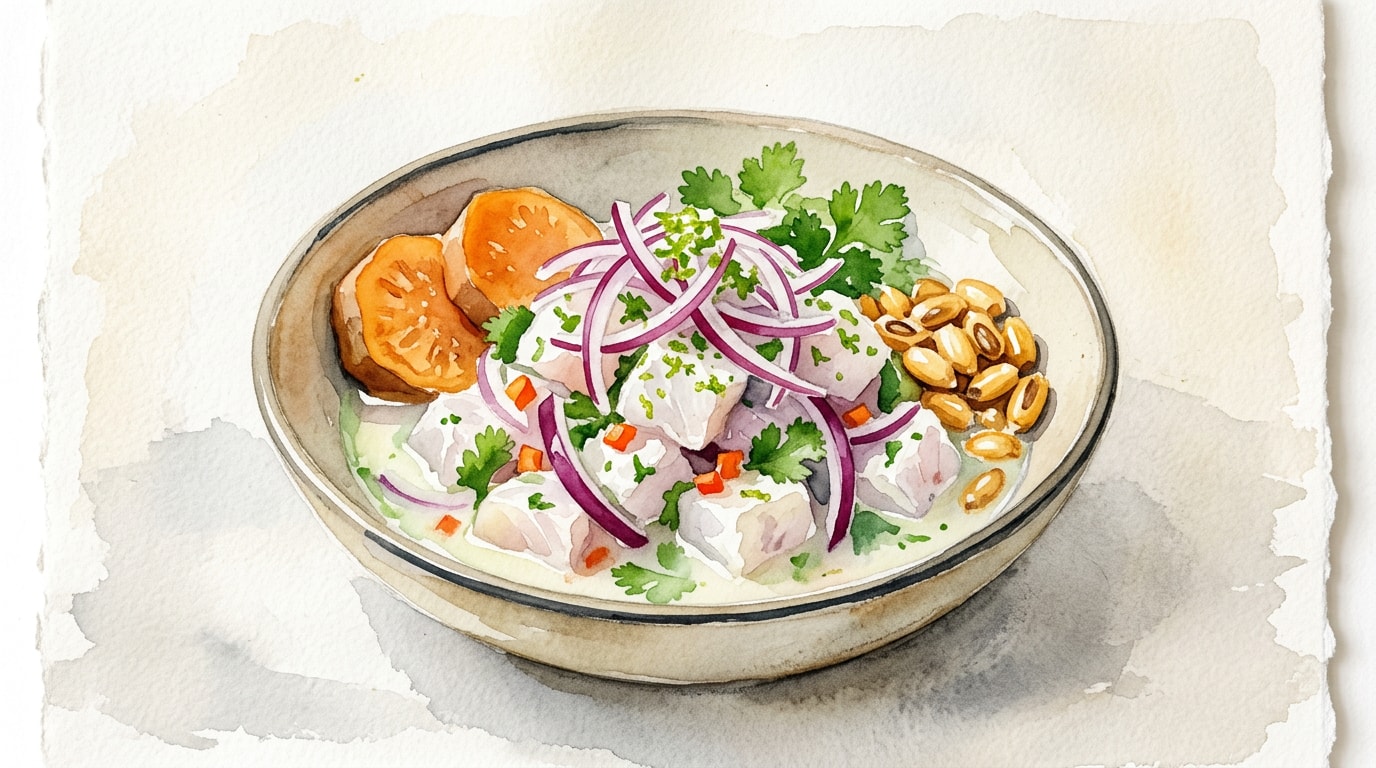
Equipment
* optional
Ingredients
Ceviche Base
- 500 g firm white fish, skinless and boneless, extremely fresh
- 3 g fine sea salt
Curing Liquid & Aromatics
- 150 ml lime juice, freshly squeezed, chilled
- 1 red onion, thinly sliced
- 1 fresh red chilli, finely chopped
- 15 g fresh coriander, roughly chopped
Nutrition (per serving)
Nutrition is estimated per serving. Nutrients without complete source data are omitted.
Full nutrition
- Calories
- 189 kcal
- Protein
- 24 g
- Carbohydrates
- 6 g
- Fat
- 7 g
- Fiber
- 1 g
- Sugar
- 2 g
- Sodium
- 358 mg
- Saturated Fat
- 1 g
- Monounsaturated Fat
- 3 g
- Polyunsaturated Fat
- 3 g
- Cholesterol
- 75 mg
- Potassium
- 504 mg
- Calcium
- 47 mg
- Iron
- 0.7 mg
- Magnesium
- 48 mg
- Phosphorus
- 353 mg
- Zinc
- 1.3 mg
- Vitamin A
- 60 mcg
- Vitamin C
- 18 mg
- Vitamin D
- 15.0 mcg
- Vitamin E
- 0.5 mg
- Vitamin K
- 12 mcg
- Vitamin B6
- 0.4 mg
- Vitamin B12
- 1.3 mcg
- Thiamin
- 0.21 mg
- Riboflavin
- 0.17 mg
- Niacin
- 3.9 mg
- Folate
- 30 mcg
- Water
- 153 g
Sources: USDA FoodData Central
Method
Thinly slice the red onion and place it in a bowl of ice water. Let it soak for 10 minutes to remove its harsh, pungent bite while retaining its crunch.
Using a very sharp knife, cut the white fish into uniform 1.5cm cubes, ensuring all pieces are roughly the same size for even curing.
Place the diced fish in a chilled, non-reactive mixing bowl. Add the fine sea salt and gently mix. This seasons the fish and opens its pores to better absorb the citrus.
Pour the freshly squeezed lime juice over the salted fish, ensuring all pieces are submerged. Transfer to the refrigerator at 4°C/39°F.
Drain the red onions thoroughly from the ice water and pat them dry with a clean paper towel.
Remove the fish from the refrigerator. Gently fold the drained red onions, chopped chilli, and fresh coriander into the fish and lime juice mixture.
Use a slotted spoon to portion the ceviche into chilled serving bowls. Drizzle a couple of tablespoons of the curing liquid (leche de tigre) over each portion and serve immediately.
Chef's Notes
- Always use the highest quality, freshest fish you can source. Ask your fishmonger specifically for fish suitable for raw consumption.
- The curing liquid left over at the bottom of the bowl is highly prized and known as 'leche de tigre' (tiger's milk). Many choose to serve it in small shot glasses alongside the dish.
- Non-reactive bowls (glass, ceramic, or stainless steel) are critical. Plastic can harbor flavors, and reactive metals like aluminum or copper will react with the acid and taint the dish with a metallic taste.
- Salting the fish a minute or two before adding the citrus helps draw out excess moisture and allows the flesh to absorb the lime juice more efficiently.
Storage
Refrigerator: 4 hours — Best consumed immediately. Fish texture will become overly firm and powdery if stored longer.
Troubleshooting
Fish texture is rubbery, chalky, or dry
Cause: The fish was left in the highly acidic lime juice for too long, essentially overcooking the proteins.
Fix: Cannot be fixed
Prevention: Strictly time the curing process and do not exceed 20 minutes before serving.
Ceviche tastes bitter
Cause: Squeezing the limes too hard extracts bitter essential oils from the rind, or white pith was included.
Fix: Cannot be fixed
Prevention: Squeeze limes gently by hand, leaving a small amount of juice behind, rather than using heavy mechanical force.
Cultural Context
Ceviche is widely considered the national dish of Peru, boasting pre-Columbian origins where indigenous populations cured local catch with the juice of the tumbo fruit. Today, it stands as a global representation of South American gastronomy, celebrated for its minimal intervention approach that respects and elevates pristine coastal ingredients.


